Tuesday, July 7, 2015

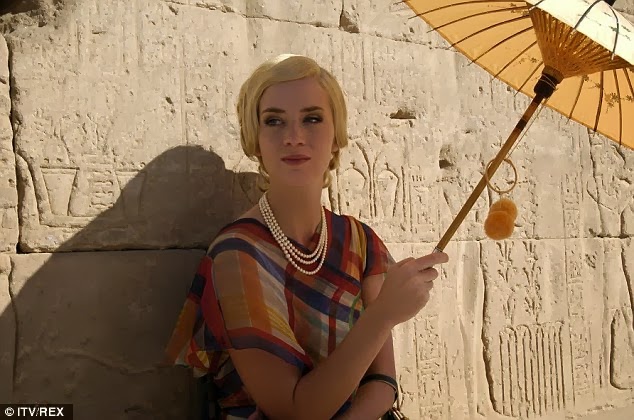
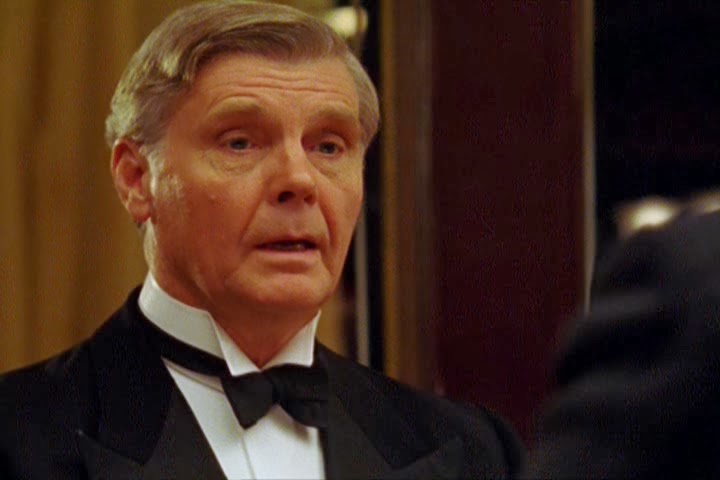
"DEATH ON THE NILE" (2004) Photo Gallery


Below are images from "DEATH ON THE NILE", the 2004 television adaptation of Agatha Christie's 1937 novel.  The movie starred David Suchet as Hercule Poirot:


"DEATH ON THE NILE" (2004) Photo Gallery


Sunday, July 5, 2015

List of Favorite Movie/Television Productions About the AMERICAN REVOLUTION/FOURTH OF JULY

History_Fourth_of_July_History_SF_still_624x352

Below is a list of my favorite movie and television productions about the American Revolution and/or the Fourth of July holiday: 


LIST OF FAVORITE MOVIE/TELEVISION PRODUCTIONS ABOUT THE AMERICAN REVOLUTION/FOURTH OF JULY

593738_original

"John Adams" (2008) - Produced by Tom Hanks and directed by Tom Hooper, this seven-part award winning miniseries about the second U.S. president is set between the eve and during the American Revolution and his death in 1826. The miniseries is based on David McCullough's 2001 biography. Paul Giamatti and Laura Linney starred as John and Abigail Adams.


kinopoisk.ru-TURN-2387588

"TURN: Washington's Spies" (2014-Present) - Craig Silverstein created this AMC television series about the Culper Spies ring during the American Revolution. The series stars Jamie Bell as Abe Woodhull.


maxresdefault

"National Treasure" (2004) - Jon Turteltaub directed this adventure/heist film about the search for a massive treasure that had been gathered over the centuries and hidden by American Freemasons during the American Revolution. Nicholas Cage starred.


diehard4_5979

"Live Freed and Die Hard" (2007) - Bruce Willis returned in this fourth "DIE HARD" movie about Detective John McClane's attempt to stop a cyber terrorist from hacking into the Federal government's computers with the help of a computer hacker, during the Fourth of July holiday. Directed by Len Wiseman, the movie co-starred Justin Long and Timothy Olyphant.


17764

"1776" (1972) William Daniels, Howard DaSilva and Ken Howard starred in this entertaining adaptation of the Broadway musical about the signing of the Declaration of Independence. Peter H. Hunt directed.


kinopoisk.ru-Independence-Day-1730008

"Independence Day" (1996) - Jeff Goldblum, Will Smith and Bill Pullman starred in this epic science-fiction adventure about a group of people surviving an alien invasion during the Fourth of July holiday. Roland Emmerich directed.


kinopoisk.ru-The-Patriot-1807831

"The Patriot" (2000) - Mel Gibson and Heath Ledger starred in this historical drama about the experiences of a South Carolina farmer and his family during the American Revolution. Roland Emmerich directed.


6a00e5500c8a2a883301676005fb0c970b-800wi

"Johnny Tremain" (1957) - Robert Stevenson directed this adaptation of Esther Forbes' 1944 novel about the experiences of a young apprentice during the few years before the outbreak of the American Revolution. Hal Stalmaster, Luana Patten and Richard Beymer starred.


crossing3

"The Crossing" (2000) - Jeff Daniels starred as George Washington in this television drama about the Continental Army's Delaware River crossing and the Battle of Trenton. The movie was directed by Robert Harmon.


72409

"April Morning" (1988) - Chad Lowe, Tommy Lee Jones and Robert Urich starred in this television adaptation of Howard Fast's 1961 novel about the coming-of-age for a Massachusetts adolescent during the Battle of Lexington and Concord. Delbert Mann directed.

Saturday, July 4, 2015

"THE MAN WITH THE GOLDEN GUN" (1974) Review


"THE MAN WITH THE GOLDEN GUN" (1974) Review

What can I say about 1974’s "THE MAN WITH THE GOLDEN GUN"? It is not the worst James Bond movie I have ever seen. I can think of at least two or three of which I have a lower opinion. But I do believe that it is the worst Roger Moore film in the franchise. 

Apparently screenwriter Tom Mankiewicz believed the same. He made the decision to bow out of adapting Ian Fleming's 1965 novel, before the script could be finished. The plot for "THE MAN WITH THE GOLDEN GUN" focused on the Solex Agitator - a device which can harness the power of the sun. Before Bond could investigate the death of scientist who was thought to be in possession of information crucial to the creation of the Solex Agitator, he has to find out why hitman Francisco Scaramanga had sent a golden bullet to him. 

It turns out that Scaramanga’s long-suffering mistress, Andrea Anders, had sent the bullet to Bond, hoping that he would kill the hitman. Eventually, Bond teams up with MI-6 agents Mary Goodnight and Lieutenant Hip against Francisco Scaramanga - The Man with the Golden Gun and his employer, billionaire Hai Fat. Eventually Scaramanga kills Hai Fat and become the sole possessor of the Solex Agitator. He also kills Andrea and kidnaps Goodnight. Bond tracks Scaramanga to an island of mainland China, where the action finally culminates in a duel between the two men - Bond's Walther PPK against Scaramanga's Golden Gun.

I must admit that the movie’s plot seemed interesting. It certainly did not seem like the disappointment that "LIVE AND LET DIE" turned out to be. I thought it was a lot better than the plot created by Fleming for his 1965 novel. The problem with"THE MAN WITH THE GOLDEN GUN" is that it was so poorly executed . . . especially by director Guy Hamilton. There seemed to be a lack of style or substance in how the movie was directed. 

Roger Moore’s performance did not help matters. After his impressive debut in his previous movie, many Bond fans made a fuss over the fact that Moore’s Bond seemed nothing like Connery’s Bond. Which led to Moore being forced to attempt a recapture of Connery’s style. And it did not work. He came off as false and almost wooden. Only two scenes saved Moore’s performance from being a complete bust – his encounter with the Macao gunsmith, Lazar ("Speak now or forever hold your piece.") and the Bond/Scaramanga confrontation during luncheon on the assassin’s island when Bond expresses his dislike of Scaramanga’s suggestion that the British agent is nothing more than a fellow assassin. 

Speaking of Scaramanga, EON Productions had the good fortune to cast Christopher Lee (the future Count Dooku and Sarauman) as the movie’s main villain, expert assassin Francisco Scaramanga. The scene that featured Scaramanga's recollection of a pet elephant produced a very poignant performance from Lee. In fact, only Lee and South Korean actor, Soon-Tek-Oh (who portrayed MI-6 agent Lieutenant Hip) seemed to be the only two cast members who gave consistently excellent performances throughout the entire film. 

I certainly cannot say the same about the other supporting cast members. Herve Villachaise (four years before "FANTASY ISLAND") simply annoyed me. Maud Adams seemed to be her usual wooden self. Britt Ekland, although a good actress, had the bad luck to portray the annoyingly clumsy Mary Goodnight. Bernard Lee seemed a bit over-the-top in his constant annoyance toward Bond and Hip. Even worse, I never understood M's willingness to blame an innocent Bond for the death of government scientist Dr. Gibson. Desmond Llewellyn's portrayal of Q struck me as equally annoying as M seemed to find him. I do not even recall the quality of Lois Maxwell’s brief performance as Moneypenny.

I must admit that cinematographers Ted Moore and Oswald Morris beautifully captured the exotic allure of Southeast Asia. It seemed a pity that John Barry could not produce a memorable score and that Don Black wrote what I consider to be the second worst Bond theme song (performed by Lulu) in the franchise’s history. Oh well. Nothing is perfect. Unfortunately for"THE MAN WITH THE GOLDEN GUN", it was far from perfect.  But it was still entertaining.


R.I.P. Sir Christopher Lee (1922-2015)


Friday, July 3, 2015

"Breath of the Undead" [PG-13] - 15/15


"BREATH OF THE UNDEAD"

Epilogue

Saundra Gilroy, also known as Dhea of the Khand Order, disconnected her cell phone and smiled to herself. She then reached for her desk telephone and dialed another number. Seconds later, a familiar voice answered, "Arthur Winslow, speaking." 

"Artemus? This is Dhea. Of the Khand Order. I have some news for you."

The other daemon's voice radiated anticipation. "Alonzo Giovanni?"

Dhea replied, "I had just received a call from him. He's interested in borrowing money from the Twenty-Two Group."

Artemus smugly continued, "Good. It seems that my little blackmail scheme has worked. When you had told me about your deal with Mr. Decker and his connections with the Giovanni family, I knew that an opportunity had presented itself. When will you see him?"

"Tomorrow." Dhea paused, as she contemplated her next question. "When would you like for me to sell Mr. Giovanni's contract to you?"

A pause followed before Artemus answered, "As soon as he signs it. Mr. Giovanni's contract might come in handy . . . in case a plan of mine doesn't work. Good day, Dhea. And thank you."

"It's always a pleasure to help you, Artemus. I look forward to the day when you become the new Source." The two daemons bid each other good-bye.

----------- 

Inside his private study, William Bourgh's cell phone rang. The judge picked it up and answered it. "Hello?"

"Judge Bourgh," a familiar voice replied. "It's me, Cedric Lloyd. I called to find out if you had learned the news."

Bourgh's mind went momentarily blank. "The news?"

"Come now, Your Honor," Lloyd chided. "I'm sure that you know of whom I speak. His body was found inside a dumpster, in San Mateo. It was on the news, this afternoon."

Oh yes. Ronald Wong. Two FBI agents had informed him of Wong's death, this morning. They had also reported Curt Decker's death. "Yes, I had heard."

"The offer still stands, Your Honor," Lloyd continued. "And Wong is no longer in a position to pose as a threat to you."

Bourgh sighed. He had already destroyed the material that arrived in that large, yellow envelope several days ago. However, Bourgh felt certain that Cedric Lloyd's client possessed copies. Along with the promise of shares in the Magan Corporation, the judge had come to a final decision. "I'll be more than happy to help your client, Mr. Lloyd. What do I need to do?"

The attorney's voice radiated triumph. "Good! I understand that you'll be free, tomorrow afternoon. I suggest that you come by my office at the Winslow Building around two o'clock. It is located on the 11th Floor. We'll draw up papers for your employment . . . and your shares. Until tomorrow, Your Honor."

"Right." Bourgh immediately hung up. Then he sunk his head into his hands and sighed. Despite his past affairs and shady dealings, he felt as if he had finally sunk into an abyss.


THE END

Wednesday, July 1, 2015

"TOMORROWLAND" (2015) Photo Gallery

kinopoisk.ru-Tomorrowland-2568163

Below are images from the new Disney science-fiction adventure, "TOMORROWLAND". Directed by Brad Bird, the movie starred George Clooney, Britt Robertson and Hugh Laurie: 


"TOMORROWLAND" (2015) Photo Gallery

012


021


022


48526c048e9ce9ca9e4ab1f9d0bd1a84


052015_Tomorrowland-feature-feat-3.1


1412886755783_wps_6_Tomorrowland_US_Teaser_Tr


Britt1


girl


kinopoisk.ru-Tomorrowland-2533186


kinopoisk.ru-Tomorrowland-2568161


kinopoisk.ru-Tomorrowland-2579333


kinopoisk.ru-Tomorrowland-2579334


kinopoisk.ru-Tomorrowland-2579335


kinopoisk.ru-Tomorrowland-2582288


kinopoisk.ru-Tomorrowland-2582439


kinopoisk.ru-Tomorrowland-2582443


kinopoisk.ru-Tomorrowland-2582444


kinopoisk.ru-Tomorrowland-2582445


kinopoisk.ru-Tomorrowland-2593050


kinopoisk.ru-Tomorrowland-2593058


kinopoisk.ru-Tomorrowland-2593059


kinopoisk.ru-Tomorrowland-2593061


kinopoisk.ru-Tomorrowland-2593062


kinopoisk.ru-Tomorrowland-2593063


tomorrowland-jetpack-1024x591


Tomorrowland-Movie-Stills-Wallpaper

Tuesday, June 30, 2015

"MAD MEN": The Waste of a Potential Character

MM_604_JA_1210_0859


"MAD MEN": THE WASTE OF A POTENTIAL CHARACTER

After the character of Dawn Chambers was introduced on "MAD MEN" during Season Five, some fans and critics had expressed disappointment at the series' failure to dip into her character. However, many of them - especially those writers from the SLATE online magazine, who with article after article, continue to defend creator Matthew Weiner's handling of race issues on the show. Even non "SLATE" articles such as this one get into "defend Matthew Weiner" game, claiming that "MAD MEN" is the wrong series to begin the topic of race. And honestly, I got pretty sick and tired of it all. 

Race has really been a problem for Americans to deal with, let alone confront for God knows how long. It certainly seems to be a problem with Matthew Weiner. During an appearance on PBS's "CHARLIE ROSE", guest host Gayle King asked the following question:

"As you move through time, I’m wondering will we see some black people?"

Weiner gave this answer:

"I do feel like I’m proud of the fact that I am not telling a wish fulfillment story of the real interaction of white America and black America. … How is [integration] coming into their lives? [Black people] in the service industry, they’re in entertainment, and this is how people are experiencing civil rights, on television. Hopefully when we get to the part of the ’60s [where race is more clearly addressed on the show], you won’t have trivialized the contribution of someone like Martin Luther King. I don’t think people understand what that impact is, to have a world leader, an international figure who is an African-American who is telling the truth and poetic — Don hears the speech, “I Have A Dream,” and he turns off the radio. It’s just a news event. They don’t even know. If I was telling a story of the black experience, it would be very different. But I’m very proud of the fact I’m not doing this guilty thing.

Like you see a movie about California in 1970 and you see black and white kids going to school together. Guess what? There was no integration in California public schools until, like, 1972. It’s a shameful part of our past. Guess what? It’s real."


I suspect that Weiner was trying to simplify a situation that proved to be a lot more complex and chaotic. Yes, the California public schools did become officially desegregated by 1972. But Weiner failed to point out that a good number of them had ended segregation long before 1972. I should know. I had attended grade school in Southern California between 1971 and 1974. There were already African-Americans and Latinos kids attending school with white kids at Lankershim Elementary School in North Hollywood, California; a Los Angeles suburban district in the San Fernando Valley by the beginning of the 1970s. I do not recall any conflict between white and minority kids at the school I had attended during that period. Nor do I recall any white parents protesting against the idea of their children attending school with minority students. Hell, only the mentally and physically disabled kids were segregated from the rest of the school's students. Frankly, I find Weiner's simplified comments about segregation in California schools a cheap way to excuse for his failure to directly address race on "MAD MEN".

After Dawn Chambers was introduced as Don Draper's new secretary . . . nothing really happened. She was merely regulated to the background, except in one episode called (5.04) "Mystery Date", in which fear over racial violence near Harlem led her to spend the night at Peggy's apartment. Viewers learned nothing about Dawn. They did learn for the second time during the show's history that Peggy was capable of subversive racism. After "Mystery Date", Dawn was shoved into the background. She did not emerge as a major player in an episode until Season Six's (6.04) "To Have and to Hold". In this episode, Dawn clashed with former office manager-turned-partner Joan Harris after Harry Crane's secretary, Scarlett, convinced her to punch the latter's time card in her absence. The incident not only led to an embarrassing conflict between Joan, Harry and the other partners; it also led Joan to leave Dawn in charge of the time cards and with the key to the office supply closet. Although Dawn expressed gratitude for the new responsibilities, Joan warned her that she might not be so grateful in the foreseeable future. In this one scene, Weiner set up the possibility of some kind of conflict between Dawn and the firm's white secretaries. And as the season unfolded, Weiner did nothing to exploit this possible story line. Instead, Dawn resumed her role as a background character.  In the end, nothing really happened to Dawn by the series finale.  She remained an office manager after McCann-Erikson swallowed up Sterling Cooper & Partners in Season Seven's (7.11) "Time & Life".  However, her chances of surviving with McCann-Erikson remains to be seen. 

Now, one might bring up the topic of the episode that followed "To Have and to Hold" - namely (6.05) "The Flood". In this episode, the show's various characters learned of activist Martin Luther King's assassination in Memphis, Tennessee in April 1968. "The Flood" featured reactions and points-of-view from many of the show's white characters. Although the episode also featured the reactions of Dawn and Peggy Olson's secretary, Phyllis; it never explored the assassination from their viewpoints. Many critics and fans defended this aspect of the episode, labeling it original. I merely rolled my eyes in disgust. Would it have really killed him to convey Dawn's own personal perspective on the assassination? Even for one lousy scene? 

After Dawn receded into the background once more, the show continued on its merry way. The last time Weiner brought up the topic of race - in more than a few seconds - occurred in the episode (6.08) "The Crash", when Don and Megan Draper's Park Avenue apartment was invaded by a middle-class African-American woman who happened to be a thief. "Aunt Ida", ladies and gentlemen. This home invasion occurred while Don and Megan were gone and the Draper children were staying at their father's home. And while actress Davenia McFadden gave a memorable performance, I found myself wondering what on earth had Weiner meant by getting to the point where race is more addressed on the show? In a potential storyline that was dropped by the following episode? In an episode about Martin Luther King's assassination in which audience never get a personal peek into a black woman's view on the event? Or in an episode in which the main character's apartment is robbed by a middle-aged thief, who happened to be black? "MAD MEN" had just finished its penultimate season, which was set in 1968. And it has yet to unveil the black perspective of one or two characters on the show. Not really. Not with any real depth.

Of course, one encounters the excuses made by critics and other fans. Excuses such as:

*Blacks in the 1960s only worked in service occupations.
*Dawn is a minor character.
*Both racism and gender are side issues on the show.
*Dawn is not intimately connected with a main character (as if this was an excuse to minimize her character).
*The number of blacks and other minorities in the advertising industry was less than 5% during the 1960s.
*Matthew Weiner can write about what he wants. "MAD MEN" is his show.


The above are only a handful of excuses I have encountered in the past. Allow me to address them.

*Blacks in the 1960s only worked in service occupations. - Contrary to social myths, middle-class and wealthy African-Americans have existed in the United States since the Colonial Era. Their numbers may have been a lot smaller than the middle-class and wealthy white Americans, but they have existed for over three centuries. And yes, there were African-Americans who have worked in advertising since the mid-1950s. The argument that a black copywriter or executive in a 1960s advertising agency would be unrealistic does not hold water for me; especially since the series featured a 20-21 year-old woman with no college degree and EIGHT MONTHS of secretarial experience becoming a copywriter by the end of the first season - a situation that I find ten times more unrealistic.

*Dawn is a minor character. - Really? Then why did Matthew Weiner even bothered to include her in the series' cast of characters, if she was mainly there to serve as background? And why on earth would he waste the show's only black character (since Carla's departure) as a minor character, when he could have easily used her to explore race issues on a personal basis?

*Both racism and gender are side issues on the show. - Race has been treated as a side issue on "MAD MEN". Gender issues have been fully explored, thanks to characters such as Peggy Olson, Betty Francis (formerly Draper), Joan Harris and Megan Draper.

*Dawn is not intimately connected to a main character. - Since when was sex the only liable excuse to explore any character? Dawn did not need a romance or tryst with the main character or one of the major supporting characters to have a bigger role. As I had previously stated, she has been the only major minority character on "MAD MEN" for the past two seasons. That fact alone should be a good excuse to explore race in the workplace . . . or at the now dubbed Sterling Cooper & Partners.

*The number of blacks and other minorities in the advertising industry was less than 5% during the 1960s. - That is true. But that is not a good excuse to exclude a story line for Dawn or any other potential minority character. The number of women in the advertising industry was just as low or almost as low. That did not stop Weiner from exploring gender issues or allowing the 21 year-old Peggy Olson to become a copywriter with no college degree and eight months of secretarial experience, Joan from becoming a partner with the firm or Megan from becoming a copywriter following her marriage to Don.

*Matthew Weiner can write about what he wants. "MAD MEN" is his show. - I have no argument with that excuse. "MAD MEN" is Weiner's show to do what he please. But if Weiner is only interested in exploring race from a limited point of view, why did he bother to include Dawn to the cast of character in Season Five? What was the point? But if Weiner can do whatever he wants with the show, as a viewer I can either praise or complain about any aspect of his show. Which is what I am now doing.

Speaking of Weiner, I am drawn back to that comment he made on "CHARLIE ROSE". In his comment, Weiner said:

"I do feel like I’m proud of the fact that I am not telling a wish fulfillment story of the real interaction of white America and black America. … How is [integration] coming into their lives? [Black people] in the service industry, they’re in entertainment, and this is how people are experiencing civil rights, on television."

What wish fulfillment story? No one is demanding that the employees of Sterling Cooper & Partners or McCann-Erikson accept Dawn without any bigotry on their part. No one is demanding that the series' white characters behave with any political correctness when they are around Dawn. Some of us would be interested to know Dawn on a personal basis and watch how she deals with racism in the workplace. Was that so damn hard for Weiner to fathom? Apparently, Weiner suffers from the same myopic view that all black Americans only worked as servants or entertainers before the 1970s.

After Season Six, Weiner had one more chance to explore Dawn's world from a persona point-of-view.  Needless to say . . . he failed.  Miserably.  My instincts that Weiner would continue his usual shuck-and-jive regarding Dawn and race issues proved to be right.  I should have known that Weiner would not be able to rectify six seasons of treating race as a minor issue with one last season.  Poor Teyonah Parris. Weiner had a perfect opportunity to explore race with her character. Instead, he simply wasted her time -except in one episode - for three seasons.  

Whatever feelings I had about the series when it first began had somewhat eroded with Weiner's reluctance to fully explore the issue of race and his treatment of one or two other characters.  Perhaps other fans of "MAD MEN" had not mind. As I have stated earlier, Americans are generally reluctant to confront the issue of race - even to this day. They are especially reluctant to face the fact that racism is alive and well in the United States, despite the presence of a president of African descent in the White House. This is very apparent in many of the show's fans and critics. They either make excuses for Weiner's failure with race issues or pretend that such issues do not exist. I came across several articles on the Internet about "To Have and to Hold". Very few articles explored Dawn's role in that episode. Some of them briefly mentioned her presence. And some pretended that her presence had a bigger impact in that episode (and others) than it truly did. I even came across one article that featured a photograph of Dawn and Joan from that episode. But it never mentioned Dawn's name, let alone her situation with Joan and Scarlett. I found that a joke.

For a series that explored the nation's changing social scene throughout the 1960s, I find its creator's reluctance or refusal to explore one of the biggest social issues of that decade remarkably short-sighted and a major blight on the series' reputation as one of the finest in television history. The ABC series "HOMEFRONT" told a story about a small Ohio town in the years following the end of World War II. This series only lasted two seasons and featured "MAD MEN" cast member John Slattery. Yet, it not only explored gender, class and religious issues, but also race without any of Weiner's pussyfooting. Between the acting, writing and willingness to confront social issues on all levels, "HOMEFRONT" makes "MAD MEN" resemble a portrait of mediocrity in my eyes.