
Below are images from "TOWARDS ZERO", the BBC's 2025 adaptation of Agatha Christie's 1944 novel. Directed by Sam Yates and adapted by Rachel Bennette, the three-part miniseries starred Matthew Rhys:
"TOWARDS ZERO" (2025) Photo Gallery


,%20Ella%20Lily%20Hyland%20(Audrey%20Strange)%20and%20Oliver%20Jackson-Cohen%20(Nevile%20Strange)%20-%20Courtesy%20of%20BritBox%20.jpg)


.jpeg)
.jpeg)
.jpeg)
.jpeg)


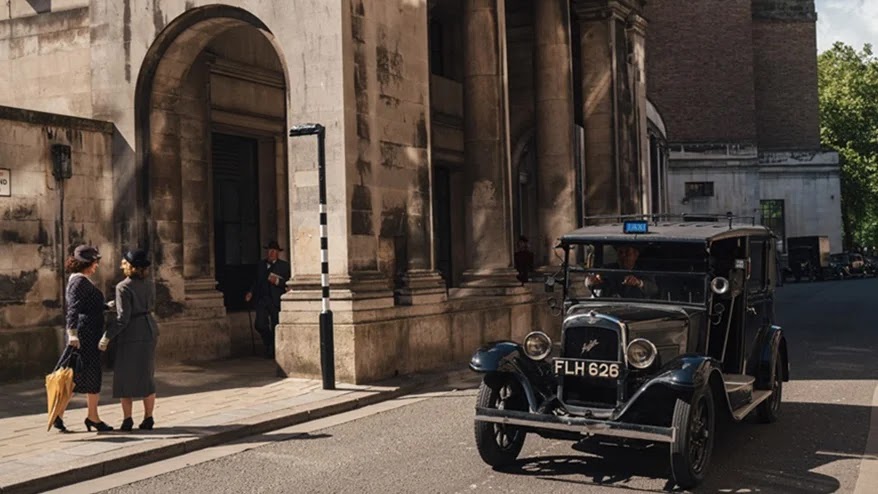


Below are images from "TOWARDS ZERO", the BBC's 2025 adaptation of Agatha Christie's 1944 novel. Directed by Sam Yates and adapted by Rachel Bennette, the three-part miniseries starred Matthew Rhys:
"TOWARDS ZERO" (2025) Photo Gallery

"POLDARK" SERIES THREE (2017) EPISODES SIX TO NINE
I have a confession to make. Viewing the BBC's current adaptation of Winston Graham's "Poldark" literary series has become increasingly difficult over the past year or two. Although I had expressed a good deal of admiration for show runner Debbie Horsfield's adaptation of Graham's first three novels, I began expressing a good deal of wariness as the series progressed into her adaption of the fourth and fifth novels.
I did not like Horsfield's adaptation of the second half of Graham's 1953 novel, "Warleggan: A Novel of Cornwall, 1792-1793". My opinion of the show runner's adaptation of Graham's 1973 novel, "The Black Moon: A Novel of Cornwall, 1794-1795" was even lower. Because of this, I had faced Horsfield's adaptation of the 1976 novel, "The Four Swans: A Novel of Cornwall, 1795-1797" with a great deal of trepidation.
Episode Six picked up where Episode Five left off - near the end of "The Black Moon". Following Ross Polark's rescue of Dwight Enys and other prisoners-of-war from France, he is regarded as a hero within his parish, much to the annoyance of his nemesis, banker George Warleggan. Even more annoying to George was the refusal of his cousin-in-law, Morwenna Chynoweth, to marry the man of his choice - the morally bankrupt and toe sucking Reverend Osborne Whitworth. But when Drake Carne, Morwenna's love and Ross' younger brother-in-law, is framed by George for stealing Geoffrey-Charles Poldark's bible (it was a gift), the young woman caves in and agrees to marry Whitworth. Meanwhile, Dwight's wedding to heiress Caroline Penvenen is delayed, due to his physical and emotional recovery from his ordeal. Several months later, a wedding is held for the couple and attended by the local gentry and aristocracy - including the Poldarks, the Warleggans and the Whitworths. Meanwhile, Ross is courted by a local baronet named Sir Francis Basset to run for office as a Member of Parliament (MP). The Warleggans and other local merchants clash with Sir Francis' rival, the aristocratic Viscount Falmouth, by refusing to his candidate for political office. The Warleggans turned to Sir Francis, who agrees to support George's campaign for MP. As for George, he has one last clash with Agatha Poldark over her desire to hold a birthday party to celebrate turning 100 years old. This clash leads to an exchange of spite in which George reveals that she will only turn 98 years old . . . and in which Agatha hints that his son Valentine was not an eight month-old baby and might have a different father - possibly Ross.
For reasons that still boggles me, Debbie Horsfield had decided to re-structure Winston Graham's saga by mixing at least the last third of "The Black Moon" with the first third of "The Four Swans". Why she thought this was necessary, I have no idea. Was this her way of attempting to trim the series' adaptation of "The Four Swans"? Perhaps not, because she plans to complete her adaptation of "The Four Swans" in Series Four. But why did she feature Dwight's post-war emotional problems, his and Caroline's wedding reception, and Sir Francis Basset's attempt to recruit Ross for Parliament, (all of which occurred in "The Four Swans") before Aunt Agatha Poldark's death (which occurred in "The Black Moon")? Why did she do that? Was this supposed to improve Graham's tale? Because it did not. It eventually occurred to me Horsfield had dragged "The Black Moon" narrative into the one for "The Four Swans", because of her unnecessary and badly written additions that played out between Episodes One to Five.
The end of the series' adaptation of "The Black Swan" made a good deal of Episodes Six and Seven seem a bit anti-climatic. But there were at least two or three scenes that impressed me. And they involved veteran actress Caroline Blakiston, who portrayed Agatha Poldark. One scene focused on Ross' clandestine visit to Trenwith to see his great-aunt. The scene involved subtle and rather touching performances from both Blakiston and Aidan Turner, who did a great job in conveying the affection and love between the two characters. The next scene featured George's decision not to hold Agatha's birthday party and her toxic hint about young Valentine's true father. The scene conveyed all of the dislike and spite that the pair held for each other, thanks to the marvelous performances of Blakiston and Jack Farthing. This particular scene was capped by another in which a dying Agatha tried to warn her former great-niece-in-law, Elizabeth Warleggan, about her act of indiscretion. This moment provided Blakiston with a great death scene and she was ably supported by a first-rate performance from Heida Reed.
Many fans of Winston Graham's saga have regarded the title of his 1976 novel as a metaphor for the four major female characters in this story:
*Caroline Penvenen Enys
*Morwenna Chynoweth Whitworth
*Demelza Carne Poldark
*Elizabeth Chynoweth Poldark Warleggan
I must confess that I was not that impressed by the handling of Caroline Enys character in the 1977 adaptation. I hate to say this, but I found the portrayal of Caroline in this new adaptation equally problematic. Like the 1977 series, this adaptation failed to explore the problems that plagued the Enys couple. Yes, Horsfield touched upon Dwight's problems with Post-traumatic stress disorder (PTSD). But his problem was quickly solved within one episode, thanks to Ross' suggestion that fellow prisoner-of-war Hugh Armitage to provide some company to poor Dwight. I found Horsfield's quick solution to Dwight's emotional problem rather shallow and rushed. But what really irritated me was that she had failed to adapt the conflict that developed between Caroline and Dwight over his medical practice.
In "The Four Swans", Dwight had been spending a great deal of his time with his patients - too much, as far as Caroline was concerned. In fact, the novel seemed to indicate that Caroline harbored a low opinion of Dwight's profession and could not understand his reluctance to embrace the role of a landowner. Not once did Horsfield explore this story arc. And I understand why. It did not portray Caroline in a positive light and it made her look like a bigger snob than she did in "Jeremy Poldark: A Novel of Cornwall, 1790-1791". More importantly, this story arc revealed that even Ross could be a snob himself. Instead of understanding Dwight's loyalty to his patients, Ross advised Dwight to adhere to Caroline's wishes. In her never-ending efforts to whitewash popular characters like Caroline and especially Ross, Horsfield ignored this particular story arc.
Horsfield did a better job portraying Morwenna Chynoweth Whitworth's marriage to the odious Reverend Osborne Whitworth. In Episode Six, Morwenna finally capitulated and married the upper-class vicar after her cousin-in-law, George Warleggan blackmailed her by threatening to charge her beloved Drake Carne with the theft of a bible that had been given to the latter by young Geoffrey Charles. I noticed that Horsfield changed the circumstances surrounding Morwenna's decision to marry Osborne. Instead of George using Drake's arrest for theft, Graham's novel featured Morwenna's mother being summoned to Trenwith for a long talk with the younger woman. In the end, Mrs. Chynoweth convinced (or coerced) Morwenna to become Mrs. Whitworth. I must admit that I slightly prefer Horsfield's take on this story arc. I found it less complicated . . . even if it made George look like an ultimate villain.
But I have two complaints. One of them featured Morwenna and Osborne's wedding night. Both the 1977 series and this recent adaptation conveyed Osborne's sexual assault upon Morwenna after she had given birth to their son, Conan. But also like the previous adaptation, it had failed to adapt his sexual assault upon his bride on their wedding night, which was featured in "The Black Moon" novel:
"So supper ended, and in a panic she complained or sickness after the ride and asked if tonight she might go early to bed. But the time of waiting, the time of delay was over; he had already waited too long. So he followed her up the stairs and into the bedroom smelling of old wood and new paint and there, after a few perfunctory caresses. he began carefully to undress her, discovering and removing each garment with the greatest of interest. Once she resisted and once he hit her, but after that she made no protest. So eventually he laid her naked on the bed, where she curled up like a frightened snail.
Then he knelt at the side of the”bed and said a short prayer before he got up and began to tickle her bare feet’ before he raped her."
To this day, I never understood why this scene from "The Black Moon" was deleted from both the 1970s series and the current one. What were the reasons for Anthony Coburn, Morris Barry and Debbie Horsfield for deleting it from their adaptations of the novel? Because it featured rape? Yet, both adaptations had no problems with including Osborne's rape of Morwenna after she gave birth to their son. In the case of the current "POLDARK" series, I would have found it difficult to believe the emotional and sexual distress that Morwenna had suffered during her marriage to Whitworth if it had not been for one scene that featured him intimidating the former into a sexual quickie before they could attend the Enys-Penvenen nuptials. Frankly, I found myself feeling slightly intimidated as well, thanks to Christian Brassington's performance. But the ironic thing is that there was no such scene in "The Four Swans". But . . . why did Horsfield add that scene, and yet deleted the Whitworths' honeymoon scene from the novel? What was the point? My second problem with Morwenna's story arc centered around the depiction of Osborne's affair with his sister-in-law, Rowella Chynoweth. One, it felt slightly rushed in compare to how the 1977 series portrayed it. Also, Brassington's screen chemistry with the actress who portrayed Rowella, Esme Coy, did not exactly impress me. While everyone contemplated on whether Rowella was truly attracted to Osborne or not, I just could not invest my interest in their affair.
I was very disappointed with Horsfield's portrayal of Elizabeth Warleggan in Episodes One to Five of Series Three. Very disappointed. The only thing Horsfield got right about Elizabeth in those episodes was her support of George's efforts to coerce her cousin Morwenna into marrying Osborne Whitworth. Otherwise, Horsfield subjected viewers to her portrayal of Elizabeth as a cold mother to her newborn Valentine and an alcoholic/drug addict. As everyone know, George and Elizabeth continued their efforts to coerce Morwenna to marry Osborne in Episode Six, until George finally succeeded by blackmailing Morwenna, when he threatened to have Drake convicted for theft. Unaware of George's blackmailing scheme, Elizabeth seemed satisfied that Morwenna had settled into her marriage with Osborne. She also expressed concern for Morwenna's health after the latter had given birth. I enjoyed how actress Heida Reed conveyed Elizabeth's firm insistence that Dwight Enys examine poor Morwenna, instead of another doctor, after the latter gave birth to a son. And the actress' chemistry with actor Harry Marcus, who portrayed the young Geoffrey Charles, struck me as very charming and spot on. There were two scenes in which Reed had the opportunity to shine as Elizabeth.
One of those scenes involved Elizabeth's encounter with Ross at Sawle Church . . . the very encounter that Prudie Paynter had witnessed in Episode Eight. I have to be honest. I found this scene rather disappointing. Although this moment featured Elizabeth and Ross alone together, it struck me as rather mute. Come to think of it, neither Reed or Aidan Turner shone in this scene. And both have managed to create a very strong screen chemistry in the past. Reed and Turner's performances seemed a bit too restrained for my tastes. And I believe the problem stemmed from Horsfield's attempt to re-write Ross' rape of Elizabeth in Series Two as consensual sex. For the Sawle Church yard scene, gone was Elizabeth's bitter anger over the rape and Ross' unwillingness to accept that he had done wrong. Instead, the scene was shot as a semi-romantic encounter between two former lovers discussing the child they had conceived. Not only did this scene failed to work for me, I found it very frustrating. It was clearly another effort made by Horsfield and the BBC to deny that Ross was guilty of rape. I find this effort to whitewash Ross' character in this story arc increasingly repellent.
On the other hand, I was very impressed by the scene featuring Elizabeth's emotional argument with George over Drake Carne, Ross and Agatha Poldark. Both Reed and Jack Farthing gave superb performances in which Elizabeth conveyed exactly how strong-willed she could be. While many have regarded Elizabeth as weak, I never did. I have always believed that she was willing to be the traditional and supportive wife, due to her upbringing. This willingness to be the traditional wife led Elizabeth to commit the second biggest mistake in her life (marrying Francis was the first) - support George's efforts to marry her cousin Morwenna off to Osborne Whitworth. But I have noticed that the older she became, the more Elizabeth was willing to reveal the steel beneath the passive manner. This should have been indicative in Elizabeth and Ross' reunion at Sawle Church. And this especially seemed to be the case in Elizabeth's showdown with her husband George in Episode Nine. A good deal of Elizabeth's confrontation centered around her attempt to convince George that Valentine was his son. Personally, I do not blame her. It is bad enough that a good deal of the saga's fandom seemed to regard her as some kind of manipulative whore and blame her for the night of May 9, 1793. George had already given an inkling of his cold behavior, following Agatha's revelation about Valentine's paternity. But Elizabeth also included her own disapproval of his treatment of Drake Carne and his use of Tom Harry as his personal henchman during their quarrel. The scene, thanks to Farthing's emotional outburst, made me realize how much George loved Elizabeth.
It took me a while to even consider the following . . . that many of Debbie Horsfield's changes to Graham's story had a lot to do with the characters of three people - Ross Poldark, Demelza Poldark and George Warleggan. It seemed to me that most of Horsfield's changes were all about idealizing both Demelza and Ross (to a certain extent); and magnifying George's villainy.
Ross became dangerously close to becoming a Gary Stu (male version of Mary Sue) in these four episodes. Episode Six began with him raising crops on his estate to feed those out-of-work miners from the Warleggans' Wheal Leisure. No such thing had occurred in "The Four Swans". All Ross did was offer jobs to some unemployed miners to work at his mine, Wheal Grace. Remember the story arc of George's aversion to toads? Well, Ross' actions clearly labeled him as a bully. And yet, Horsfield portrayed this revelation in a semi-comic moment. Why? Considering the present view of bullying, why expose Ross as a childhood bully in a semi-humorous manner? That was nothing in compare to what happened at Dwight and Caroline's wedding. Instead of the reception being all about the happy couple, Horsfield used this event to celebrate Ross' heroics in France. Yes, I realize that Ross was responsible for Dwight and Caroline being able to wed. But honestly? Why was it so necessary for her to pound this into audience by having the wedding guests celebrate Ross' heroics, instead of the bride and groom?
Another aspect of Ross' portrayal in these four episodes that I found laughable was this attitude toward him running as a candidate for Parliament. Everyone - from Demelza to Sir Francis Basset - seemed to regard Ross as a potential political savior for Cornwall. Even the media had been pushing this idea in various articles about the upcoming Season Four. And yet . . . Ross Poldark never struck me as the type of who could be regarded as a successful politician. He has always seemed too impatient, temperamental and judgmental. Lord Falmouth seemed to be the only person who did not regard Ross as some political savior. He simply wanted to use Ross as a tool to punish the Warleggans for rejecting his political clout.
Ross spent most of these four episodes rejecting the idea of running for Parliament. Do you want to know what finally led him to consider the job? Local miners threatening a riot for much needed grain. And yes . . . this did NOT happened in "The Four Swans". There was riot in the novel. Miners even stole from the grain stores. However, Ross had been ordered, as commander of the local militia, to arrest the leaders of riot. And one of them was hung. However, Horsfield changed this story arc by having Ross and his militia platoon confront the rioters before they could steal the grain. Ross used this moment to finally declare his intent to run for Parliament. By this point, I was ready to shove my fist into the television screen. Was Horsfield really that concerned over viewers seeing Ross arrest the rioters before one of them was hung? To the point that she had to create this ludicrous situation? I have always considered the hanging as a sign of the price Ross would be forced to pay for associating himself with political sponsors like Sir Francis Band Lord Falmouth. I am not saying that Horsfield had portrayed Ross as a perfect person. His personal flaws were on display. But I noticed that she only seemed willing to display his flaws whenever Demelza was concerned.
If it were not for the story arc that featured Demelza Poldark's relationship with Royal Navy officer, Lieutenant Hugh Armitage, I believe I would have found it difficult to like her during the second half of Series Three . . . or to stop regarding her as the series' Mary Sue. It seemed as if Horsfield tried too hard to transform Demelza into some 21st century feminist icon. And I found this rather odd, considering that she is a character from a story set during the late 18th century. There were scenes featuring Demelza that made my teeth clinch. They include:
*Demelza behaving like an action girl, as she raced through the countryside on horseback to prevent her younger brother Drake from being beaten by George Warleggan's henchmen. No such scene was in "The Four Swans". Drake's unconscious body was found by some local people.
*Demelza sang at one of the soirees hosted by Sir Francis Basset. Horsfield has been giving actress Eleanor Tomlinson chances to display her singing talent throughout the series' run. I had no problem with this during the Trenwith Christmas dinner sequence back in Series One. Her performance served the story. But after two years of Horsfield pausing the narrative to inject moments of Tomlinson's singing skill for the sake of idealizing Demelza's character has become too much to bear.
*One scene featuring Demelza offering tea and sympathy to Morwenna for the end of the latter's relationship with Drake. The two characters never interacted with each other until the latter half of the 1977 novel, "The Angry Tide: A Novel of Cornwall, 1798-1799". This little moment struck me as nothing more than another cheap and unnecessary change made by Horsfield to make Demelza's character look sympathetic.
The story arc regarding her and Hugh Armitage made her seemed less of a Mary Sue . . . somewhat. The excellent performances of Eleanor Tomlinson and Josh Whitehouse certainly helped. The pair managed to create a first-rate screen chemistry. More importantly, I thought they did a great job in conveying Demelza and Hugh's sexual interest in each other. After all, Hugh must have been the first man of her generation to harbor any sexual interest in her. Ross is a decade her senior and had married her in the first place for reasons other than love. Worse, Demelza had spent the previous seasons being pursued and pawed by lustful older men like Sir Hugh Bodrugan and Captain McNeil, who seemed to regard her as easy prey due to her class origins. Does this mean I supported Demelza's act of adultery, like so many? No. I understood why she did it. But I still believe she did the wrong thing. I am not a supporter of the "eye for an eye" mentality. While a good number of fans cheered Demelza for paying back Ross for his infidelity in Series Two, I only felt contempt toward her. She had lowered herself to his level. Well . . . almost. At least Demelza's act of infidelity was not tainted by rape.
But I also had two problems with this story arc. In "The Four Swans", Demelza had made the decision to have that one afternoon of sex with Hugh on her own, despite Jud Paynter informing her of an interaction between Elizabeth Warleggan and Ross at the Sawle Church. In this adaptation, Demelza was egged on by Nampara's housekeeper, Prudie Paynter, who had witnessed Ross' interaction with Elizabeth. This twist by Debbie Horsfield not only struck me as unnecessary, but a lame attempt to shift some of the blame for Demelza's infidelity to Prudie. I mean . . . come on! Really? Even worse, this entire sequence ended with Ross waiting at Nampara, confused by Demelza's non-appearance. Now, I found this confusing. Why did Horsfield took a scene from near the end of "The Four Swans" and tacked it on the ending of Series Three - especially since she had not finished adapting the novel? Why did she do this? To end the season with a cliffhanger? To have everyone wondering if Demelza would return to Ross? Of course she would! Where in the hell else can she go? To Verity? To her stepmother? Caroline and Dwight? How long could Demelza's "visits" to those households have lasted? Stay with Hugh? Considering his health issues, how long would that situation have lasted? I am still wondering why Winston Graham and Debbie Horsfield had Ross speculating on whether Demelza had left him or not in the first place. He should have known that as an 18th century wife, her prospects outside of her position as his wife were not that great.
I have one last complaint about Demelza . . . and it concerns one of her costumes in the image below:

Why? Why did Demelza wear the above house dress that exposed her cleavage in this fashion during the daytime? And she wore this outfit so often . . . even away from the house. Why? No respectable woman during this period in history - regardless of class - would wear such a outfit. Unless she was prostitute displaying her wares. Costume designer Howard Burden should have known better . . . or done his homework.
During my article for Episodes One to Five, I had expressed my displeasure at what I saw was Debbie Horsfield transforming George Warleggan into a one-note villain. I never understood why Horsfield thought this was necessary. Fortunately, most of George's questionable actions in Episodes Six to Nine could be traced to both "The Black Moon" and "The Four Swans" . . . including his emotionally distant behavior with Elizabeth and his violent harassment of Drake Carne. Blackmailing Morwenna into marrying Osborne seemed to be the only act that had been created by Horsfield. And I had already mentioned my only problem with it. I do have one major problem with Horsfield's portrayal of George in these later episodes. Remember the grain riot that Ross was ordered to snuff out? The owners of the grain stores were nameless merchants in the 1976 novel. In "POLDARK", George owned the grain stores. Why? I have not the foggiest idea. To magnify George's villainy even further . . . when it was not necessary? To establish that Ross need to run for Parliament in order to single-handedly "save" Cornwall from the Warleggans? Sigh. I am afraid this might be the case. Horsfield seemed to have transformed this entire story arc into a morality play for ten year-olds.
There were other aspects of Series Three's second half that I noticed. The four episodes also featured Drake Carne's childish retaliation against George for disrupting his romance with Morwenna. He did so by placing toads - something that George loathed - into Trenwith's pond. Horsfield added a twist to this story by establishing George's revulsion to toads. Ross and a few others boys used to shove toads down his breeches when they were kids in order to punish George and the Warleggans for trying to attain a higher social position. Harry Richardson, who portrayed Drake Carne, gave a nice performance, but he did not exactly float my boat, so to speak. And Drake's actions led to George retaliating in one of the worst possible ways - being framed for the theft of Geoffrey-Charles' Bible. Sam Carne's burgeoning attraction to Tholly Tregirls' daughter Emma. Despite Tom York and Ciara Charteris's competent performances, I must admit that I could not maintain any strong interest in this story arc. There were also the story arc regarding the political rivalry between Sir Francis Basset and Lord Falmouth. I have nothing against the performances of both John Hopkins and James Wilby as the two politically-inclined landowners. Both were excellent. But to be honest, this story arc really belonged to Ross and George.
In the end, Debbie Horsfield managed to disappoint me in her adaptation of Winston Grahams' novels from the 1970s - "The Black Moon" and "The Four Swans". These two novels, along with 1977's "The Angry Tide: A Novel of Cornwall, 1798-1799", are regarded by many as the best in his twelve-novel series. And yet, Horsfield has proven herself incapable of adapting these novels with any semblance of subtlety or intelligence. She has transformed two of Graham's best novels into borderline romance novels. God only knows what she will do to "The Angry Tide" in Series Four.


.GIF)


