Showing posts with label marion cotillard. Show all posts

Sunday, September 23, 2012

"THE DARK KNIGHT RISES" (2012) Review


"THE DARK KNIGHT RISES" (2012) Review

After seven years, Christopher Nolan's three-movie saga about the D.C. Comics character, Batman, finally came to an end. The saga that began with 2005's "BATMAN BEGINS", ended with this year's "THE DARK KNIGHT RISES".

The new movie, set seven years after 2008's "THE DARK KNIGHT", began with the aerial kidnapping of a nuclear scientist by an escaped terrorist named Bane. The scene shifted to Gotham City, where a fund-raiser was being held at Wayne Manor. The only person missing was millionaire Bruce Wayne, who had given up his vigilante activities as Batman after claiming he had murdered former District Attorney Harvey Dent. During the fundraiser, Bruce caught a maid breaking into his private safe. She turned out to be a resourceful cat burglar named Selina Kyle. Aside from a necklace that once belonged to Bruce's late mother, Selina did not steal any other object from the safe.

Curious over Selina's actions, Bruce resumed his Batman alter ego and tracked down Selina. He discovered that she had been hired by a rival corporate CEO named John Daggett to lift and steal his fingerprints. Bruce also learned that Daggett had hired the terrorist Bane to attack Gotham's stock exchange and bankrupt Wayne Enterprises. And along with Police Commissioner James Gordon and Wayne Enterprises executive Lucius Fox, Bruce also discovered that Bane was a former member of the League of Shadows and planned to continue Henri Ducard's (aka Ra's al Ghul) goal of Gotham City's destruction. Bruce asked fellow millionaire Miranda Tate to take control of Wayne Enterprises to ensure that Daggett and Bane will not gain control of their clean energy project, a device designed to harness fusion power.

Re-reading the above made me realize that Christopher and Jonathan Nolan had created a very complicated plot. For me, the plot became even more complicated two-thirds into the movie. "THE DARK KNIGHT RISES" obviously exists under the shadow of its two predecessors - "BATMAN BEGINS" and "THE DARK KNIGHT". I would say that this especially seemed to be the case for the 2005 movie. Batman and James Gordon's decision to lie about the circumstances behind Harvey Dent's death in the second movie had a minor impact upon this third movie. But Bruce's relationship and later conflict with Ra's al Ghul seemed to be the driving force behind his conflict with Bane in this third film.

I had heard rumors that Christopher Nolan was initially reluctant to make a third BATMAN movie. Personally, I found that rumor a bit hard to believe, considering how "THE DARK KNIGHT" ended with Batman accepting the blame for Harvey Dent's crimes and death. But there were certain aspects of the script he wrote with his brother Jonathan that made me wonder if he had truly been reluctant. There were certain aspects of "THE DARK KNIGHT RISES" that I found troubling.

It seemed a pity that the second movie ended with Batman and Jim Gordon's decision to lie about the circumstances behind Dent's death. I found their decision unnecessary back in 2008 and I still do. The impact behind their lie proved to be hollow. It merely kept Batman off Gotham City's streets and led Mayor Anthony Garcia and the city to pass a strong anti-criminal law that proved to be hollow following Bane's arrival in Gotham City. I also found Bane's mid-air kidnapping of a nuclear scientist and escape from a U.S. marshal (portrayed by Aidan Gillen) rather somewhat idiotic. I understood that Bane needed that scientist to weaponize the Wayne Enterprise device.  But I never understood why that U.S. marshal failed to take the trouble to identify the hooded prisoner (Bane) before boarding the plane.  In the end, the movie's opening sequence struck struck me as unnecessarily showy. Was this the Nolan brothers' way of conveying Bane's role as a badass to the audience? If so, I was too busy trying to comprehend the villain's dialogue to care. I understood why Batman had not been seen in Gotham for so long. But what was the reason behind Bruce Wayne's disappearance from the public eye?  His physical state was not really that severe.  Rachel Dawes' death? Rachel's death did not stop him from going after the Joker and Harvey Dent in the last movie's half hour. Was it an injured leg? How did he injured it? And why did Gotham's citizens failed to put two-and-two together, when both Bruce and Batman finally appeared in the public eye a day or two apart after many years? The only person who managed to discover Bruce's alter ego - namely Officer John Blake - did so through a contrived reason.

For me, the movie's real misstep proved to be Bane's three-month control over Gotham City. As a former member of Henri Ducard's League of Shadows, he planned to achieve his former leader's goal of destroying Gotham City. And he planned to use Wayne Enterprise's energy device to achieve this. One - why not simply build or snatch his own nuclear device? Why go through so much trouble to get his hands on the energy device? Why did Wayne Enterprises create a device that not only saved energy, but could be used as a bomb, as well? And why did it take three months before the device could become an effective bomb? The Nolans' script could have frustrated Bane's attempts to acquire the bomb during that three-month period . . . or anything to spare the audiences of that second-rate version of the French Resistance. The latter scenario seemed so riddled with bad writing that it would take another article to discuss it. And what was the point of the presence of Juno Temple's character Jen? What was she there for, other than being Selina's useless and cloying girlfriend? And Wayne Enterprises executive Lucius Fox was last seen declaring his intentions to leave the corporation for good, following Batman's misuse of cell phones in "THE DARK KNIGHT". In this movie, he is back, working for Wayne Enterprises. What made him change his mind?

But not all was lost. I found Bruce's introduction to Selina Kyle very entertaining and sexy. Even better, the incident served as Batman's re-introduction to Gotham City and allowed him to discover Bane's plans regarding Wayne Enterprises and the energy device. One of the more interesting consequences of "THE DARK KNIGHT" proved to be Rachel Dawes' last letter to Bruce. Its revelation by Alfred Pennyworth after seven years led to an emotional quarrel between the millionaire and the manservant and their estrangement. At first, I had balked at the idea of Bane carrying out Ra's al Ghul's original goal to destroy Gotham. After all, why would he continue the plans of the very person who had him kicked out of the League of Shadows? But a surprising plot twist made Bane's plan plausible . . . even when I continue to have problems with his three-month occupation of Gotham.

Many critics had lamented the lack of Heath Ledger's Joker in the movie. As much as I had appreciated and enjoyed Ledger's performance in the 2008 movie, I did not need or wanted him in "THE DARK KNIGHT RISES". Tom Hardy's performance as the terrorist Bane was good enough for me. Mind you, I found it difficult to understand some of his dialogue. And when I did, he sounded like the now aging Sean Connery. But I cannot deny that Bane made one scary villain, thanks to Hardy's performance and intimidating presence. Before I saw the movie, I never understood the need for Marion Cotillard's presence in the film. I thought her character, Miranda Tate, would merely be a bland love interest for Bruce. Not only did Cotillard ended up providing a subtle and intelligent performance, her Miranda Tate proved to be important to the story as the co-investor in the energy device and for the plot twist in the end.

"THE DARK KNIGHT RISES" provided some solid performances from other members of the cast. Matthew Modine shined as the ambitious and arrogant Assistant Police Commissioner Peter Foley, who proved to be capable of character development. Another solid performance came from Brett Cullen, who portrayed a lustful congressman that had the bad luck to cross paths with Selina Kyle. Both Michael Caine and Morgan Freeman continued their excellent performances as Bruce Wayne's "heart" and "mind", manservant Alfred Pennyworth and Wayne Enterprises executive Lucius Fox.

In the end, the movie was fortunate to benefit from four outstanding performances. One came from Gary Oldman's excellent portrayal of the now weary, yet determined police commissioner, James Gordon. His guilt over the Harvey Dent lie and discovery of Batman's true identity provided Oldman with some of his best moments in the trilogy. Another came from Joseph Gordon-Levitt, who was superb as Gotham City beat cop John Blake. The actor did a wonderful job of balancing Officer Blake's intelligence, passion for justice and disgust toward the bureaucracy.

When I learned that Anne Hathaway would end up being the fifth actress to portray Selina Kyle aka Catwoman, I must admit that I had my doubts. Then I remembered that Hathaway was an Oscar nominee, who has also done action before. Watching her sexy, yet complicated performance as the complex cat burglar removed all of my doubts. She was superb and her sizzling screen chemistry with star Christian Bale made me wish Selina had been Bruce's love interest throughout the movie. Speaking of Bruce Wayne, Bale returned to portray the Caped Crusader for the third and final time. I must admit that I found his performance more subtle and complex than his performances in the previous two movies. Bale did an excellent job in re-creating a slightly aging Bruce Wayne/Batman, who found himself faced with a more formidable opponent.

I was a little disappointed to see that "THE DARK KNIGHT RISES" lacked the Chicago exteriors of the 2008 movie. In the end, Gotham City resembled a collection of East Coast and British cities. But I cannot deny that I found Wally Pfister's photography very eye catching. And Hans Zimmer's entertaining score brought back memories of his earlier work in both the 2005 and 2008 movies.

I have a good deal of complaints about "THE DARK KNIGHT RISES". It is probably my least favorite entry in Christopher Nolan's Batman trilogy. For me, the movie's main problem centered around the script written by Nolan and his brother Jonathan. But despite its flaws, the movie still managed to be both entertaining and intriguing. It also has an excellent cast led by the always superb Christian Bale. It was not perfect, but "THE DARK KNIGHT RISES" did entertain me.

Sunday, July 29, 2012

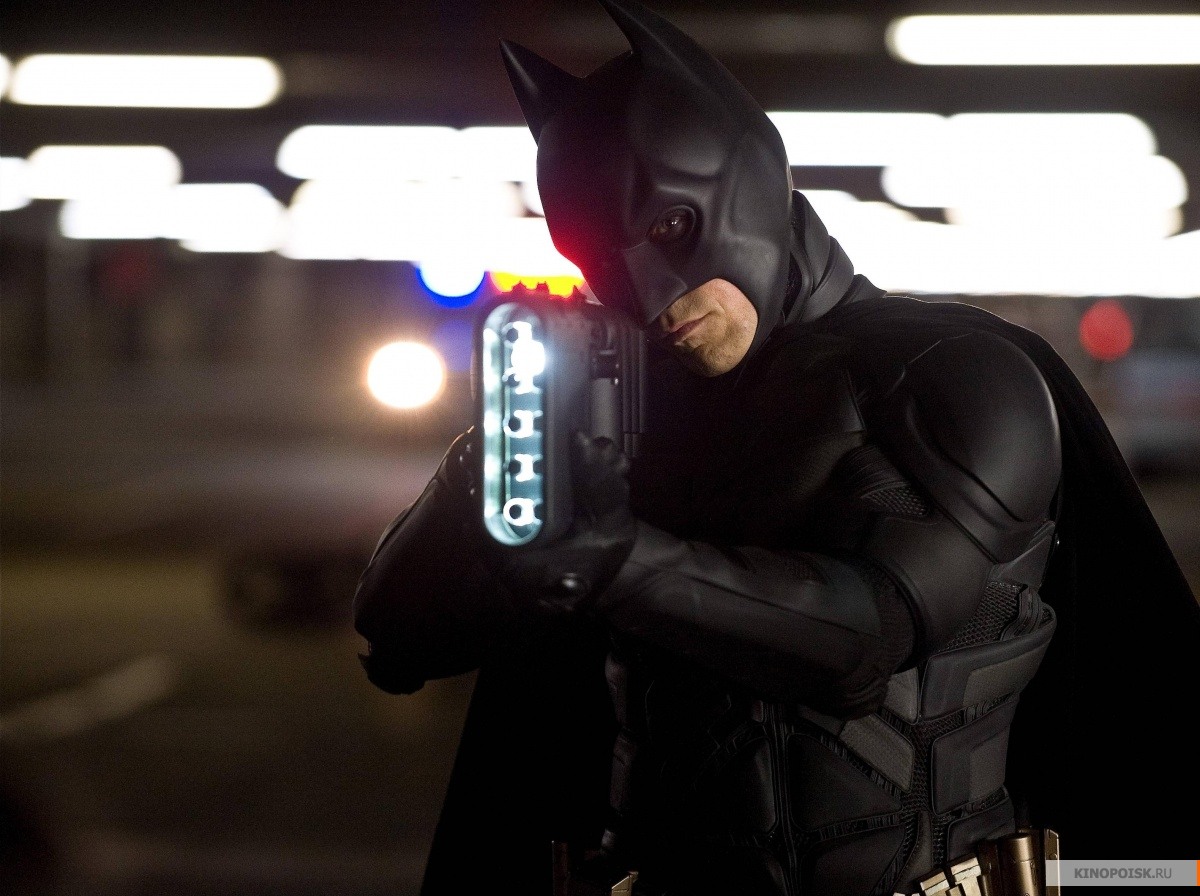
"THE DARK KNIGHT RISES" (2012) Photo Gallery


Below are images from Christopher Nolan's last installment in his BATMAN trilogy, "THE DARK KNIGHT RISES".  Christian Bale stars at Bruce Wayne aka the Batman:


"THE DARK KNIGHT RISES" (2012) Photo Gallery


Monday, November 14, 2011

"CONTAGION" (2011) Review


"CONTAGION" (2011) Review

When I first saw the trailer for Steven Soderbergh's new movie, "CONTAGION", it brought back some old memories. I found myself remembering Wolfgang Peterson' 1995 film, "OUTBREAK", which starred Dustin Hoffman; and the influenza pandemic that terrified the world's population two years ago. With those in mind, I decided to check out Soderbergh's new movie.

"CONTAGION" is a medical thriller about the rapid progress of a lethal contact transmission virus that kills within days. As the fast-moving pandemic grows, the worldwide medical community races to find a cure and control the panic that spreads faster than the virus itself. And as the virus spreads around the world, ordinary people struggle to survive in a society coming apart. The movie began with a Minnesota woman named Beth Emhoff returning home after a business trip to Hong Kong and a side trip to Chicago to cheat on her second husband with an old flame. Two days later, she collapses from a severe seizure before dying in a hospital. Her husband, Mitch Emhoff, returns home and discovers that his stepson - Beth's son - has died from the same disease. Other people who have had contact with Beth eventually die in China, Great Britain and Chicago, leading medical doctors from the Centers for Disease Control and Prevention and the World Health Organization to investigate the origin of the disease.

While watching "CONTAGION", I noticed that its narrative bore a strong resemblance to the one featured in Soderbergh's 2000 Oscar winning movie, "TRAFFIC". I noticed that "CONTAGION" had failed to generate the same level of interest that the 2000 movie managed to do. And I find this ironic, considering that I seemed to prefer this movie over the Oscar winning film. I do not mean to say that "TRAFFIC" was the inferior movie. As far as I am concerned, it was a superb film. But I simply preferred "CONTAGION" more. It could be that I found a viral pandemic to be a more interesting topic than drug trafficking, due to the events of 2009. And I found that particular subject scarier.

And I cannot deny that "CONTAGION" scared the hell out of me. The idea that a new disease could spring up and spread throughout the world's population so fast practically blows my mind. And I have to say that both Soderbergh and the movie's screenwriter, Scott Burns, did a great job in scaring the hell out of me. What I found even scarier were the various reactions to the disease. Soderburgh and Burns did a great job in conveying factors that drove mass panic and loss of social order, the difficulties in investigating and containing a pathogen and the problems of balancing personal motives and professional responsibilities. Another amazing aspect about "CONTAGION" is that Soderbergh and Burns avoided the usual cliché of portraying the pharmaceutical industry or the military as the villains. Instead, everyone - the government agencies, politicians at every level and even the public at large - are portrayed in an ambiguous light. Looking back on "CONTAGION", I realized that I only had one minor complaint - Soderbergh's direction did come off as a bit too dry at times.

Soderbergh and his casting director managed to gather an exceptional job for the cast. Cast members such as Marion Cotillard, Gwyneth Paltrow, Bryan Cranston, Elliot Gould, Chin Han, Sanaa Lathan, Jennifer Ehle John Hawkes and Enrico Colantoni gave very solid performances. But I found at least five performances truly memorable. One came from Jude Law, who portrayed an aggressive freelance journalist named Alan Krumwiede, who convinces some of his readers to use a a homeopathic cure based on Forsythia, on behalf of companies producing the treatment. I found Law's character so annoying that I did not realize how skillful his performance was, until several hours after I saw the movie. Kate Winslet gave a very poignant performances as Dr. Erin Mears, a CDC doctor who is forced to face the consequences of the political agendas of a local government and the disease itself. Laurence Fishburne did an exceptional job in conveying the ambiguous situation of his character, CDC spokesman Dr. Ellis Cheever, who found himself torn between his duties with the agency, keeping certain aspects about a possible cure from the public, and his desire to ensure his wife's safety. But I believe the best performance came from Matt Damon, who portrayed the widower of the doomed Beth Emhoff. Damon was superb in portraying the many aspects of Emhoff's emotional state - whether the latter was grieving over his wife's death, dealing with her infidelity, or ensuring that he and his daughter remain alive despite the increasing chaos and death that surrounded them.

I did not know whether I would enjoy "CONTAGION", but I did . . . much to my surprise. Not only did I enjoyed it, the movie scared the hell out of me. And I cannot think of any other director, aside from Steven Soderburgh, who can do that with such a dry directorial style. I do look forward to seeing this movie again when it is released on DVD.

Saturday, September 24, 2011

"CONTAGION" (2011) Photo Gallery


Below are images from Steven Soderbergh's new thriller about a pandemic virus called "CONTAGION":


"CONTAGION" (2011) Photo Gallery


Wednesday, September 1, 2010

More Thoughts on "INCEPTION"


MORE THOUGHTS ON "INCEPTION"

I just recently saw "INCEPTION" for the third time and a few more thoughts came to me:

*After Saito had awaken aboard the Kyoto train, I noticed a slight smirk on his face. Earlier, he claimed that Cobb and Arthur's failed extraction on him had been an audition. Had he been aware of Cobb's assignment to do an extraction job on him from the beginning?


*Cobb first admitted to Saito and Arthur that he had experience with inception. Yet, he never admitted to whom he had pulled an inception job upon, until later in the movie. And that person turned out to be Mal. Since Mal was the only person upon he had done an inception job, who taught him how to do one? His father-in-law? Or are all those familiar with lucid dreaming and dream incubation, trained to perform an inception?


*While watching Arthur and Eames interact during the planning stages of the inception, I got the instinct feeling that those two were competing for Cobb's respect and confidence - like two rival siblings competing for "Dad's" affection.


*I also noticed something else - namely the expression on Ariadne's face after Arthur had kissed her. Her expression seemed to be a mixture of false outrage, amusement and a little thrilled.


*What exactly is Cobb's totem? Everyone knows that the spinning top was Mal's totem. Was Cobb's totem a wedding ring? I noticed that whenever he was in a dream state, he wore a wedding ring on his left hand. Yet, whenever he was in what was regarded as the real world, he did not wear a wedding ring. Cobb certainly did not wear a wedding ring after he and Saito finally awakened on the Sydney-to-Los Angeles flight.

Monday, August 16, 2010

"INCEPTION" (2010) Review


"INCEPTION" (2010) Review

It still amazes me at how director/writer Christopher Nolan’s films manage to generate a great deal of emotion from filmgoers and critics. This has certainly been the case for his latest work, the science-fiction drama called ”INCEPTION”.

Inspired by the experiences of lucid dreaming and dream incubation, ”INCEPTION” told the story of Dom Cobb, a dream “extractor” who enters the dreams of others in order to obtain information that is otherwise inaccessible. After failing to extract corporate secrets from a Japanese businessman named Saito, Cobb is hired by the latter to perform the act of ”inception” - the secret implant of an idea into a target’s mind – on the son of Saito’s terminally ill corporate rival, one Robert Fischer. Saito’s object is to convince Fischer to break up his father’s corporate empire in order to prevent it from becoming a monopoly and threatening the businessman’s own corporation. If Cobb manages to succeed, Saito promises to use his influence to clear the younger man of murdering his wife, so that he can reunite with his children.

Cobb assembles a team to achieve Saito’s objectives. They are:

*Arthur, the Point Man – who is also Cobb’s partner, and responsible for researching the team’s target

*Ariadne, the Architect – a graduate student who is recruited to construct worlds in which dreams take place

*Eames, the Forger – has the ability to take the form of others in order to manipulate the dreamer

*Yusuf, the Chemist – who formulates the drugs needed to sustain the team members’ dream states

*Saito, the Client/Observer – who decides to become part of the team


Despite assembling a skillful crew, Cobb encounters a few difficulties. One, Arthur had failed to discover that their mark, Fischer, had been trained in lucid dreaming and creating mental defenses. His mind manages to manifest armed personnel, which attacks the team in downtown Los Angeles, after they kidnap him in Yusuf’s dream. This leads to disaster for Saito, who is wounded during a gun battle. Due to Saito’s wounds, the rest of the team discovers that Cobb had failed to inform them that they could end up in limbo if they die in a dream state, due to the drugs given to them by Yusuf. Worst of all, Cobb has to deal with the manifestation of his dead wife, Mal (the Shade), whose presence in the dreams could end up threatening the assignment.

There had been a good deal of hype surrounding ”INCEPTION” before it hit the theaters in mid July. Surprisingly, I had been unaware of it. I merely wanted to see it due to Nolan’s role as director and writer, and from what I had seen in the movie trailer. I had no idea on how I would react to the film, considering my reactions to 2006’s ”THE PRESTIGE” and 2008’s ”THE DARK KNIGHT”. Do not get me wrong. I enjoyed both movies very much. But it took me a while to understand the plot to ”THE PRESTIGE” and I have never liked the last 30 minutes of ”THE DARK KNIGHT”.

In the end, I not only understood ”INCEPTION”, I enjoyed it. Hell, I more than enjoyed it. I loved it. It is one of the most original movies I have seen in years. I found it very rare to see a movie that used unusual visuals to convey a main character’s emotional story. Through the use of dreams, the team manages to allow Robert Fischer to face his demons regarding his father and to finally put them aside, so that he can learn to be his own man. But more importantly, the Fischer assignment finally allows Cobb to face his own demons and guilt over his wife’s suicide.

The concepts of lucid dreaming and dream incubation are nothing new in movies or television. Both topics have been used in movies like ”THE MATRIX” and television series like "BABYLON FIVE", ”BUFFY THE VAMPIRE SLAYER” and ”STAR TREK VOYAGER”. With the amazing special effects supervised by Chris Corbould and Wally Pfister’s beautiful photography, Nolan managed to take these concepts to another level. And he did it without resorting to 3-D photography (thank you God!) or slow motion action (with the exception of one scene). The special effects were especially put to good use in scenes that featured a fight scene between Arthur and an unnamed man inside a high-priced hotel corridor, Cobb and Ariadne’s dream experiences on Parisian streets; and the Limbo world first created by Cobb and Mal.

Nolan had gathered an impressive group of actors and actresses for his cast. Veteran actors Michael Caine, Postlethwaite and Tom Berenger portrayed father figures (literally or otherwise) for at least two of the major characters and gave solid performances – especially Berenger, who portrayed Robert Fischer’s godfather and business associate. Dileep Rao, last seen in the 2009 blockbuster ”AVATAR”, had the good fortune to be cast in a larger role as Yusef, the Chemist. His character provided sedatives for the team to use in order to easily go into dream state. And I must say that I enjoyed Rao’s sly, yet humorous performance very much.

I have been aware of Tom Hardy since his two-episode appearance in the HBO miniseries, ”BAND OF BROTHERS”. But his portrayal of Eames the Forger is probably the first role in which he truly impressed me. Like Rao, he projected a sly sense of humor, mingled with a sharp wit and a hint of arrogance. And dear God! That man has a voice to die for. Cillian Murphy’s role as the Mark, Robert Fischer, seemed like a far cry from his villainous Dr. Jonathan Crane aka the Scarecrow in Nolan’s two BATMAN movies. Yet, the actor did an excellent job in his subtle portrayal of a man disappointed by what he deemed as his father’s lack of love toward him and his own insecurities that he may be unable to live up to his father’s shadow or expectations of him. Marion Cotillard proved to be quite an enigma in her portrayal of Mal, Cobb’s late wife. In some scenes, she projected a quiet, self-assurance as her character tried to manipulate her husband into accepting his dreams of her as reality. In others, she projected the melancholy of a woman teetering on the edge of suicide. And there were moments when Cotilllard conveyed a sense of subtle menace, whenever someone threatened Cobb’s memories of her. It was a very effective performance.

Another complex performance came from Ken Watanabe, who portrayed Cobb’s client, Saito. Judging from Watanabe’s portrayal of Saito, one would have felt certain that he would end up as the movie’s villain. Yet, thanks to Nolan’s script and Watanabe’s performance, Saito proved to be a complex individual that developed an interesting relationship with Cobb. The latter formed another interesting relationship with the team’s Architect, a college graduate named Ariadne. And Ellen Page did an excellent job in portraying Ariadne’s sense of wonder at her introduction of the world of lucid dreaming. More importantly, Page was effective in portraying what I believe was the movie’s emotional center – the one person who was able to help Cobb deal with his demons regarding Mal. Joseph Gordon-Levitt’s role as Arthur, Cobb’s main partner, should finally set him on the road to stardom. He gave a wonderful performance as the team’s pragmatic Point Man, whose job was to provide background information on Fischer. He was cool, sardonic, dashing and surprisingly a pretty solid action man. His fight in the dream state hotel corridor might prove to be the talk of moviegoers and critics for months to come.

But the one man who held this movie together, other than Nolan, turned out to be leading man Leonardo DiCaprio. I could, in many words, praise his performance as Dom Cobb, the team’s leader and extractor/inceptor. I could describe the emotional complexity of his portrayal of a man who remained torn by his wife’s death and his longing to reunite with his children and his efforts to keep his demons in check and prevent them from affecting his jobs. I could also praise DiCaprio for handling the movie’s action sequences like a born-again Bruce Willis. But why bother? All one has to do is watch the actor upon the movie screen. Personally, I believe that he may have given one of the better performances of his career, so far. In short, DiCaprio was phenomenal.

I tried to think of something to complain about ”INCEPTION” and only ended up with one. It seemed to me that two-thirds into the movie, its pacing began to drag. Which seemed odd, considering while the movie focused upon scenes featuring Eames’ dream – the snow fortress – I found myself squirming in my seat in an attempt to stay awake. Some of the action sequences seemed to go on a little too long by this point. Fortunately, the movie moved on to its final scenes, starting in the Limbo City dream sequence and my attention became revived.

There have been many discussions and debates over the movie’s final scene – namely Cobb’s reunion with his children and the last shot featuring the spinning top. Many claim the last shot was an indicator that the entire movie had been a dream and that Cobb remained stuck in a dream state. Others believe the spinning top – Mal’s totem – was nothing more than a red herring. As far as they were concerned, Cobb had genuinely reunited with his kids. Personally, I have no idea if the entire movie was a dream or not. A part of me feels it should not matter. What mattered to me was that Cobb finally learned to let go of Mal . . . and put his guilt over her death behind him. And by turning his back on Mal’s spinning top, I believe he had finally achieved this.

As far as movies go, the summer of 2010 has not been a memorable one for me. But it has not been a complete bust. I have seen a good number of entertaining movies. Yet, only a handful has truly impressed me. As far as I am concerned, the one movie that seemed to rise ahead of the others is Christopher Nolan’s new opus - ”INCEPTION”.