"THE AVENGERS: ENDGAME" (2019) Review
After eleven years, three phases and twenty-two movies, a certain era in the Marvel Cinematic Universe (MCU) came to an end with the release of "THE AVENGERS: ENDGAME". This movie became a major win for both Walt Disney Studios and Marvel Films at the box office and for fans who saw this as the culmination of the Infinity Stones story arc.
Directed by Anthony and Joe Russo, "THE AVENGERS: ENDGAME" began nearly a day after the events of the franchise's previous chapter, "THE AVENGERS: INFINITY WAR". After years of searching for the Infinity Stones, Thanos managed to achieve his goal by using the stones and a gauntlet to wipe out half of the universe's living beings with a snap. Among the victims of his snap was the family of former Avengers Clint Barton aka Hawkeye. Nearly a day later found the surviving Avengers and the only surviving member of the Guardians - Rocket the Raccoon - return to the Avengers headquarters in upstate New York. The only two survivors on Titan - Tony Stark aka Iron Man and Nebula - had began their trip back to Earth and get lost in deep space. They were eventually rescued by Captain Marvel, who had earlier returned to Earth to contact the deceased Nick Fury. While Iron Man recovers from his ordeal, the other Avengers - Steve Rogers aka Captain America, James Rhodes aka War Machine, Bruce Banner aka the Hulk, Natasha Romanoff aka Black Widow, and Thor - along with Rocket and Carol Danvers aka Captain Marvel - track down Thanos to an unknown planet where they found him badly wounded from his use of the Infinity stones and starting a farm. The superheroes had planned to take the stones and gauntlet from him and used them to restore those who had died from the Snap. Unfortunately, Thanos reveals he had destroyed them to prevent further use. An enraged Thor decapitates Thanos.
After being trapped in the quantum realm for five years - minutes before Thanos' Snap - Scott Lang aka Ant-Man is finally freed through the intervention of a rat. He reunites with his now adolescent daughter, Cassie, and learns about the Snap. He travels to New York and meets with the Avengers with his idea on how to reverse Thanos' Snap - using time travel via quantum physics. The Avengers plan to go back in time, collect the Infinity Stones, create a gauntlet and use it to reverse the Snap. They eventually recruit both a grieving Hawkeye, who had become a violent vigilante, and a reluctant Tony Stark into their scheme, who eventually finds a way to create a time machine. With Bruce and Rocket's help, along with Hank Pym's technology, Tony builds the time machine and the Avengers go back to various periods in time to collect the Infinity Stones.
It was not difficult for me to surmise how this final plot involving the Infinity Stones would play out. I knew that the first movie would end in disaster with many characters being killed from the Snap. And I had suspected that the surviving Avengers would resort to time travel to reverse Thanos' action. I had accurately guessed this narrative, because I have seen other versions of it in other time travel movies, television shows and fan fiction. In fact, I had written a "CHARMED" fan fiction series featuring three stories with a similar scenario. Also, the D.C. Comics television series, "D.C.'S LEGENDS OF TOMORROW" had created a similar scenario in its last three or four Season Two episodes involving an artifact called the Spear of Destiny. So, I am the last person who would compliment the narratives for both "INFINITY WAR" and "ENDGAME" for being original.
There were aspects of "THE AVENGERS: ENDGAME" that I actually enjoyed or impressed me. Being a long time fan of the MCU, I must admit that when I saw the movie in the theaters, I had experienced something of a thrill watching the Avengers travel to different periods in the franchise's history - the Chitauri invasion in 2012's "THE AVENGERS", Asgard in 2013's "THOR: THE DARK WORLD" and Morag in 2014's "GUARDIANS OF THE GALAXY". The time travel sequence also featured a visit to Vormir in 2014 and another to the old S.H.I.E.L.D. base in 1970 New Jersey.
There were dramatic moments in the film that also impressed me. I enjoyed the brief scene between Scarlett Johansson's Black Window and Jeremy Renner's Hawkeye, as the latter attempts to convince the latter to give up his vigilante activities and rejoin the Avengers. I also enjoy Thor's emotional encounter with his mother Frigga on the day of her death, thanks to Chris Hemsworth and Rene Russo's performances. I enjoyed the humor that evolved from 2023 Steve Rogers' encounter with the 2012 Steve as the former tries to get his hands on the Tesseract. I thought Chris Evans gave a very skillful and comedic performance in this scene. Another excellent dramatic scene featured Tony Stark's meeting with his father, Howard at the S.H.I.E.L.D. base in 1970 . . . just before Tony's own birth. I thought it was very emotional and heartfelt and featured first-rate performances from both Robert Downey Jr. and John Slattery. I also found the reunion between 2023 Nebula and 2014 Gamora very satisfying, emotional and slightly tense, thanks to excellent performances from Zoe Saldana and Karen Gillian. Why is it that when these two share the screen, they managed to knock it out of the ballpark? Also, I found Gillian's scenes with Don Cheadle very satisfying as their characters - Nebula and War Machine land on Morag to prevent Peter Quill aka Star Lord from getting his hands on the Power Stone. I enjoyed how Rhodey and Nebula discussed her struggles to overcome her questionable past with Thanos.
Considering this is a MCU movie, there are bound to be some interesting action sequences. For me, the best action scenes featured Evans' Captain America. The first proved to be that crazy fight scene between a younger and earnest Captain America and the older, yet more jaded version inside the Stark Tower building in 2012 Manhattan. I have no idea how the special effects team managed to achieve that brawl, but my hats off to them. Another sequence that impressed me featured Captain America's fight against the 2014 Thanos and the latter's minions during the Battle of Earth, the film's final battle at the Avengers' Compound. First of all, I found it impressive. Second of all, I found Captain America's use of Thor's hammer, Mjolnir, very satisfying considering that it seemed foreshadowed in 2015's "THE AVENGERS: AGE OF ULTRON". And finally, this sequence ended on an emotional and even more satisfying note when a portal opened near Steve with Sam Wilson's comment, "On your left", signalling the arrival of those Marvel heroes who had been dead for five years. Really . . . great moment. Captain Marvel's fight with Thanos proved to be mildly satisfying, but I really enjoyed Scarlet Witch's fight with the Mad Titan. I found it very satisfying that she really made him sweat before he resorted to crying for help from his minions.
"THE AVENGERS: ENDGAME" had proved some satisfying moments and excellent performances. And yet . . . it was not enough. The great moments and performances were not enough to overcome my overall negative view of the movie. In the end, "THE AVENGERS: ENDGAME" proved to be one of the most disappointing MCU movies I have ever seen. And a great deal of this disappointment centered around Christopher Markus and Stephen McFeely's screenplay.
First of all, there were minor aspects of Markus and McFeeley's screenplay that bothered me. Not long after her arrival at the Avengers Compound, Captain Marvel was sent by the group to search for Iron Man and Nebula. How did the Avengers know that the pair was alive? They were the only post-Snap survivors on Titan. For all they knew, Tony had been snapped. How did Captain Marvel know where to find them? I wish the movie had provided a few more details on the development of this scenario. How was Rocket able to extract the Reality Stone (the Aether) from Dr. Jane Foster's body without alerting her in 2013 Asgard? How did Captain America return the Aether into her body . . . again, without alerting her? Was she drugged at the time? I also noticed in the sequence featuring Scott Lang's return to San Francisco, the city seemed to look trashed from Thanos' snap . . . after five years. In other words, the City of San Francisco managed to construct a "Wall of the Vanished" featuring names of those who had been killed by the Snap. But it was unable to clean up the city? I saw damaged cars, littered streets, damaged buildings not only in San Francisco, but also in New York City. Seriously? Most Humans spent those five years wallowing in the loss of lives without bothering to clean up the damage? Thanos had killed off half of the universe, not three-fourths of it. There should have been enough people around to commence upon the clean up of most, if not all, major cities. However, these are minor issues I have with the film in compare to the following.
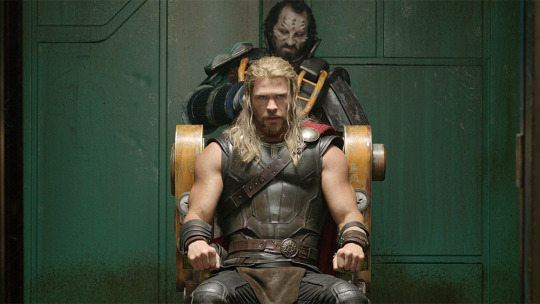
One of my bigger issues regards Thor Odinson, King of Asgard since the death of his older sister in "THOR: RAGNAROK". One, the MCU continued its inconsistency regarding Thor's power level. There is also the matter of the continuing issue of Thor's encounters with Thanos. Since the death of his older sister near the end of "THOR: RAGNAROK", Thor Odinson has been the official King of Asgard. Which meant that at this point, he should have been powerful enough to take on Thanos in a fight. He could not even take on Thanos' minions at the beginning of "INFINITY WAR", yet with his new Stormbreaker axe, he had no trouble taking on the Mad Titan wearing an Infinity Gauntlet (with all six stones). However, in "ENDGAME", he could not take on 2014 Thanos . . . with Stormbreaker. Captain America had given Thanos more problems with Mjolnir. Were audiences expected to accept that Thor's recent weight gain made it exceedingly difficult for him to fight Thanos? As the Allfather, should his weight have mattered?
Speaking of Thor's weight gain and recent drinking . . . what exactly was he drinking? Alcohol from Earth? I doubt very much that Thor had the chance to get his hands on Asgardian booze, considering that the planet no longer existed. So . . . audiences are expected to believe that Earth-created liquor can have an effect on a powerful Asgardian like Thor, let alone any Asgardian? The movie made it clear that the recent traumas he had experienced, along with guilt for his failure to immediately kill Thanos in Wakanda, had led him to depression and alcoholism. Unfortunately, every time it seemed the movie is about to delve into Thor's psyche, the screenplay undermines the scene with too much humor. It is basically a repeat of the overuse of humor in "THOR: RAGNAROK", only in this film, McFeely and Markus constantly bombarded audiences with jokes about Thor's weight. Fat jokes. I just . . . I found it all very frustrating to watch.
Another characterization I had a problem with was Dr. Bruce Banner aka the Hulk. Or . . . "Smart Hulk". Whatever. I had two problems with the Hulk's characterization in this film. Apparently, during the five years between the Snap and most of the film, Bruce had learned to balance his two identities - the reserved scientist and the raging green being. How did it happen? When did Bruce learn to balance his multiple natures? Inquiring minds would love to know. Unfortunately, McFeely and Markus' screenplay told audiences what had happened to him. The screenplay did not bother to show what happened. I found this very frustrating. And what made my frustration worse was that this new Bruce/Hulk balance act manifested in a new look for the character:

What in the hell? Was this ham-fisted visual image of the "Smart Hulk" really necessary? All the movie had to do was show Bruce transform into the Hulk, while keeping his emotions and intelligence in control. Would that have been too difficult for Kevin Feige and the Russo Brothers to do?
And then we have Tony Stark aka Iron Man. Most people would raise an eyebrow or two over labeling Tony's character arc as a problem. He was. At least to me. There were times when I had felt as if I was watching an ode to Tony Stark. I found this very frustrating. McFeely and Markus had allowed Tony to be the one who found the way for them to time travel. Why him? Tony was basically a weapons or tech engineer. He does not even have a doctorate. I do not know about Rocket, but I certainly believe Bruce Banner should have been the one to achieve this. The film also focused a lot on Tony's family life - past and present. And the film also allowed him to be the one to deliver the death blow on Thanos. Following his death, Tony was given a major funeral in which nearly every MCU character still alive that had appeared in the last eleven years had attended. Another Avenger had died in this film. But for some reason, McFeely and Markus thought it was not necessary to include that person's funeral. This really pissed me off. But what really pissed me off was the following scene after Tony and Nebula's return to Earth, early in the film:
Tony Stark: What we needed was a suit of armor around the world! Remember that? Whether it impacted our precious freedoms or not, that’s what we needed!
Steve Rogers: Well, that didn’t work out, did it?
Tony Stark: I said we’d lose. You said, "we’ll do that together too." Guess what, Cap? We "lost," and you weren’t there. But that’s what we do, right? Our best work after the fact? We’re the "Avengers?" Not the Prevengers, right?
Kevin Feige, the Russo Brothers, Christopher Markus and Stephen McFeely have constantly informed fans and the media that Tony Stark had matured and developed as a character by "ENDGAME". Really? The above rant had failed to convince me. All Tony did was make excuses for his unexpected creation of Ultron and his ridiculous idea about creating androids to police the Earth's atmosphere. He also blamed Steve Rogers for Thanos' victory, because the latter "wasn't there". What I had hated about this rant is that no one had bothered to tell Tony he was wrong. His idea of an army of robots patrolling Earth's space led him to unintentionally creating Ulton. And the latter led to the whole mess surrounding the Sokovia Accords and some of the Avengers being on the run. Yet, no one had bothered to tell Tony that despite all of that . . . most of the Avengers had managed to reunite in Wakanda in time to fight Thanos' army. He was the only Avenger - past and present - that was missing at the time. Also, the rejection of the Sokovia Accords by Steve and other Avengers like Sam Wilson and Wanda Maximoff had NOTHING to do with Thanos' victory. In fact the Sokovia Accords, a useless and badly handled story arc since it was first introduced back in 2016, played no role in Thanos' victory whatsoever. What was the damn point of this scene? I eventually learned that Tony's rant against Steve was improvised by Downey Jr. If so, my dislike of both the character and the actor has greatly increased. I thought it was nothing more than an ego trip on the actor's part because he could not deal with his beloved Tony Stark being wrong about anything.
Another major issue I had with the film was its handling of the female characters. I really do not know what to say about this. I will give the movie credit exploring Gamora and Nebula's relationship a little further in this movie. But I had a problem. The Gamora that Nebula had to convince to betray Thanos was the former's 2014 self . . . the same woman who was already secretly plotting to prevent Thanos' possession of the Infinity stones even before the "GUARDIANS OF THE GALAXY" narrative had begun. Why on earth would she be reluctant to betray Thanos at this point in her life? I was also disappointed that neither woman had played a major role in 2014 Thanos' defeat. Instead, Nebula's biggest moment was when she killed her younger self to save Hawkeye's life. Killed her younger self? Yeah . . . more on that later.
Both Nebula and Gamora had fared better than many other women MCU characters. First, there is Cassie Lang. What happened to her during those five years after the Snap? Did her mother and step-father, Maggie and Jim Paxton, also survive? Hope van Dyne, who had been killed with her parents by the Snap, returned to fight in the battle against Thanos. Basically, her role in the film was a cameo appearance . . . along with other MCU women characters like Pepper Potts, Okoye, and Princess Shuri. I was surprised to discover that Shuri had been killed by the Snap. This was never revealed in "INFINITY WAR" and the MCU kept her fate a mystery during the year between the two films. Why? I have no idea. Captain Marvel, who had received such a build up near the end of "INFINITY WAR" and her own solo film, "CAPTAIN MARVEL", was basically used as a tool to rescue Tony Stark and Nebula. She disappeared for most of the film, only to return for the final Battle on Earth. During this conflict, she briefly fought against Thanos before he stopped her with the Power Stone. Overall, I found Captain Marvel's presence in the film rather limited and disappointing. Wanda Maximoff aka the Scarlet Witch was another who personally fought against Thanos. And although I found her role in that fight impressive, she was not used for anything else. Another woman character wasted. The movie provided a scene in which all or most of the MCU women played "hot potato" with the new Infinity gauntlet, resulting in one shot of them all lined up:

For me, it was nothing more than the franchise's attempt to pander at feminists and erase any charges of sexism on its part.
One of the movie's biggest failures for me proved to be its handling of Natasha Romanoff aka Black Widow. Following 2018 Thanos' death, she was the only Avenger who went out of her way to take charge of the organization and lead both old and new members like War Machine and Captain Marvel to monitor both the Earth and the universe beyond. Yet, after Ant-Man had made his time travel suggestion and Iron Man returned to the fold, Natasha immediately relinquished her role as the Avengers' leader. WHY? Was it that important to the screenwriters, the Russo Brothers and Kevin Feige that a man - whether it was Captain America, the Hulk or Iron Man - become the leader of this new operation? When the team broke up to pursue the Infinity Stones in the past, Natasha and her oldest friend, Clint Barton went to Vormir to get the Soul Stone. I am certain many knew what happened. Natasha committed suicide . . . pardon me, "sacrificed herself" in order for Clint to get his hands on the stone. At this point, I developed a deep hatred for the MCU.
It was bad enough that McFeely and Markus changed the Soul Stone's backstory in order to provide emotional conflict for Thanos, when he sacrificed Gamora for the stone. Matters got worse when Natasha had to die . . . for the stone. Vormir had become Planet of the Fridged Women. Many fans claimed that Natasha was not fridged since she had sacrificed herself. Morons. Natasha had died so that her male colleagues could experience a few moments of grief and anger over her death. Worse, Natasha did not receive an on-screen funeral like Tony. And she died because McFeely and Markus believed that Clint should live because he had a family (sexist motherfuckers) and because they had no idea that a Black Widow solo film had been planned, let alone announced. But Feige did. Yet, he still allowed Natasha's death to remain in the movie.
Speaking of the stones, the Hulk got the Time Stone from Doctor Strange's former teacher, the Ancient One. During the Chitauri's invasion of Manhattan. It was stated or hinted that the Ancient One was at the New York Sanctum of her order in order to protect it during the Chitauri's invasion. Where was the sorcerer who should have been there? You know . . . the one who ended up being killed in "DOCTOR STRANGE". Where was he? Did the Ancient One felt he was not up to the task?
But what I felt really sunk "THE AVENGERS: ENDGAME" was its portrayal of time travel in its narrative. Some naysayers had a problem with the screenwriters using time travel to reverse the deaths in the previous movie. I have enjoyed many movies involving time travel. I did NOT enjoy how this trope was used in the film. When Scott Lang first pushed the idea for time travel, Bruce Banner made it clear that one cannot change the timeline. He stated that by changing the past, one only creates an alternate timeline. I realized there is no clear rule regarding time travel. I also realized that Bruce's rule was basically a theory . . . even in real life. I also realize that this real life theory has never been proven one way or the other. However, I thought it unnecessary for the screenwriters to insult previous time travel movies and television series in order to convince moviegoers to mindlessly accept this theory. And I thought this was a shitty theory for fictional stories.
Bruce's time travel rule or theory allowed the movie's writers to evade any consequences that the Avengers might have to face from time travel . . . other than Natasha Romanoff's death on Vormir. I also noticed that this theory had conflicted with previous examples of time travel in the franchise's past productions:
1. In 2016's "DOCTOR STRANGE", Doctor Stephen Strange used the Time Stone to create a time loop in order to browbeat the villainous Dormammu into leaving Earth.
2. During Season Five of "AGENTS OF S.H.I.E.L.D.", Phil Coulson and his S.H.I.E.L.D. team was forced into the future where most of the Earth had been destroyed. When they returned back in time to 2018, they managed to prevent this future by defeating the person responsible for this grim future, Glenn Talbot aka Graviton and save Earth.
3. In "THE AVENGERS: INFINITY WAR", Thanos used the Time Stone to reset time and re-create the Mind Stone, which Scarlet Witch had previously destroyed, so that he can take it from Vision and place it in his gauntlet.
And if these contradictions were not enough, I also realized that the screenwriters had decided to use this new theory for the sake of nostalgia. They scattered the Avengers throughout time to get the Infinity Stones and allow moviegoers visit different moments in the MCU's history. At first, I liked it. Then I realized that this was unnecessary. All they had to do was go back to a specific point in time and prevent Thanos from getting his hands on the first Infinity stone that he had managed to grab - namely the Power Stone. And that would mean revisiting Xandar. Either Rocket or Nebula (especially the latter) could have informed the Avenges on where to go. Between Thor and Captain Marvel, Thanos could have ended up dead. Instead, I found myself watching these series of messy and nostalgia-laden time travel trips, including that God-awful journey to Vormir.
Bruce's time travel theory had created another problem . . . confusion. When 2014 Thanos had become aware of the Avengers' plans to reverse his future Snap, he and his army went nine years into the future to stop them. During this confrontation, the older Nebula prevented the 2014 Nebula (or "Evil" Nebula) from killing Hawkeye . . . by killing the latter. I am still trying to wrap my head over this. Some fans have claimed that one of the two Nebulas came from an alternate timeline. Really? Which one? So . . . Thanos, his army and Nebula did not time travel? They entered an alternate timeline? Both? If one of the Nebulas were from an alternate timeline, how was the 2014 Nebula's cybernetic implant was able to link with those from the 2023 Nebula? When did one of them become part of an "alternate timeline"?
If you thought this was messy, try wrapping your brain over the situation regarding Steve Rogers aka Captain America. Following Thanos' defeat and Tony's funeral, Steve took the Infinity Stones and used the quantum time machine to go back to the past and return them, Loki's scepter and Mjölnir from where in time the Avengers got them. I simply could not imagine how he would react to seeing Natasha's body on Vormir, let alone meeting Red Skull again. Or let alone infusing the Reality Stone back into Jane Foster's body on Asgard. But after returning the stones, the scepter and the hammer; Steve decided to go back further into time to 1945 and reunite with Peggy. Apparently, he spent the next 78 years with her before returning to 2023 as an old man and handing over his shield to Sam Wilson.
Huh. So . . . did this older Steve spend those 78 years in an alternate universe? If so, how did he return to the original timeline . . . or universe? The movie never explained. Did Steve do anything to change "his timeline" - like prevent S.H.I.E.L.D. from recruiting the likes of Arnim Zola and allowing HYRDA to infiltrate the agency? It is bad enough that Steve Rogers would do something to regress his character development on such a major level. In the comics, he was tempted to go back in time twice. And in both occasions, he decided against it, realizing that such an act was detrimental to his personal growth. But no . . . McFeely and Markus allowed Steve to pull a Jay Gatsby and not only ruin his character arc, but Peggy Carter's as well. What makes all of this even more sad is that the Russo Brothers and the screenwriters cannot seemed to agree on what really happened with Steve.
I just realized that I had not discussed the performances in "THE AVENGERS: ENDGAME". To be honest, I do not care. Not after realizing that I had spent three hours watching a bad movie. However . . . I will admit that the cast did their jobs and gave first-rate performances. I will also admit that the film featured some satisfying action and dramatic moments. Overall, I feel that "THE AVENGERS: ENDGAME" proved to be the most bloated and overrated movies during the 2019 summer movie season, let alone one of the most disappointing comic book movies I have ever seen. I do not think it deserved its box office success. Not by a long shot.