Showing posts with label civil war. Show all posts

Wednesday, June 11, 2025

"THE LOVE LETTER" (1998) Review


"THE LOVE LETTER" (1998) Review

Twenty-seven years ago, CBS's "HALLMARK HALL OF FAME" anthology series aired a television movie titled "THE LOVE LETTER". This movie was an adaptation of Jack Finney's 1959 short story of the same title and has become a big favorite of many television viewers over the years.

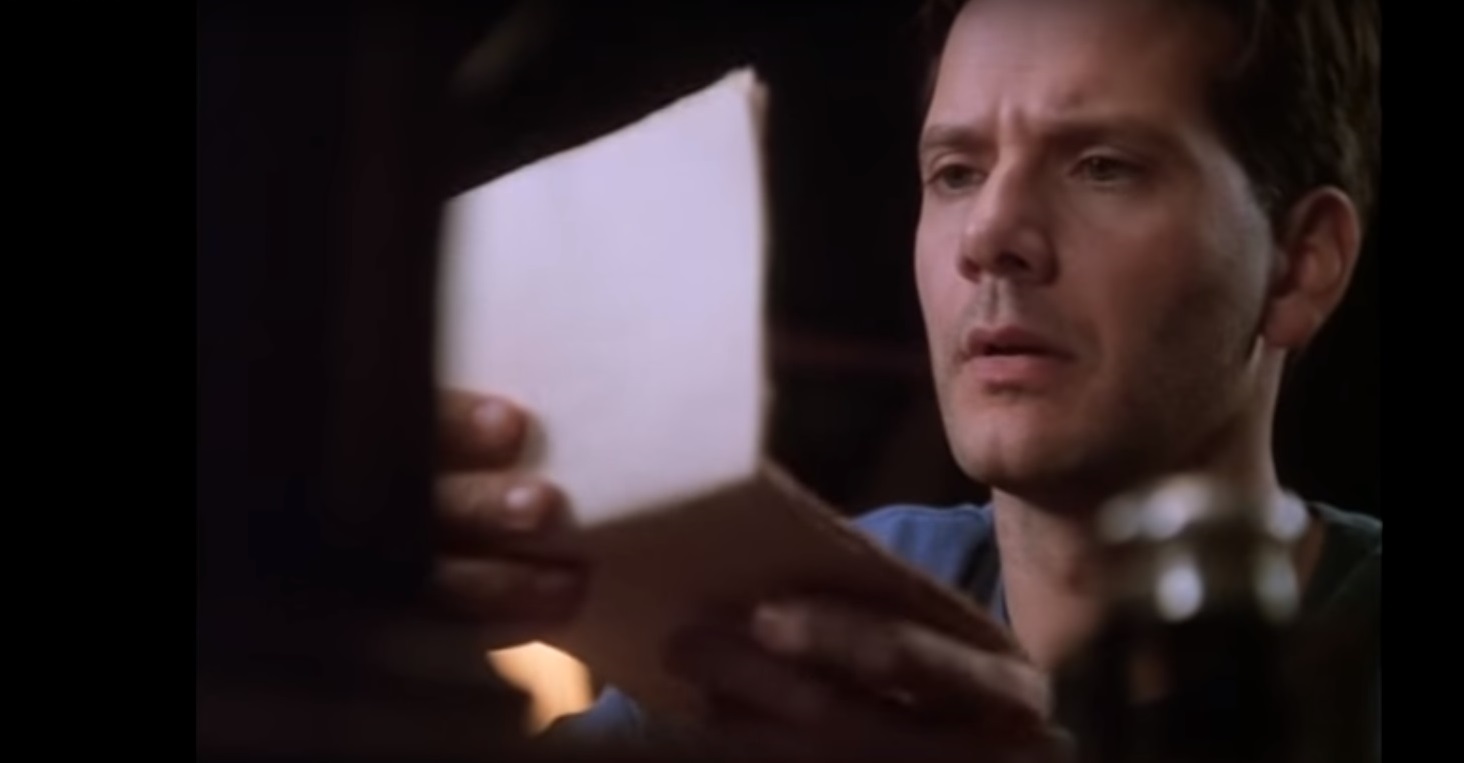
"THE LOVE LETTER" begins when a computer games designer named Scott Corrigan and his fiancée Debra Zabriskie stumble across an old desk at an antiques store in a suburb outside of Boston, Massachusetts. Being a Civil War history buff as well, Scott buys the desk and later, discovers a letter written in 1863, hidden inside a secret compartment. The letter's writer is a woman in her late 20s named Elizabeth Whitcomb, who conveys her secret feelings and desires to no one in particular. Scott shows the letter to his mother, who believes he may actually be able to communicate with Elizabeth across time. Mrs. Corrigan encourages him to reply with his own letter. She also gives Scott a postage stamp from the mid 19th century, and suggests he mail it from a local post office that had been constructed back in 1857. After Scott follows his mother's suggestions, Elizabeth receives his letter from the local postman, setting in motion a line of communication and developing emotions between them that crosses the boundaries of time.

I might as well put my cards on the table. I am not into television movies from the "HALLMARK HALL OF FAME" series. In fact, I can only think of two or three productions that I found interesting. By the time I had come around to watching "THE LOVE LETTER", I did it for only two reasons - I love time travel stories and I am a Civil War buff. Despite having Cameron Scott and Jennifer Jason Leigh in the leads, I did not have any high hopes for this production. I also discovered that "THE LOVE LETTER" was not a faithful adaptation of Finney's short story. Instead of being set in and around both 1998 and 1863 Boston, Finney's story was set in and around 1959 and 1880s Brooklyn, New York. Whereas the Scott Corrigan character was engaged in the 1998 movie, the lead in Finney's story was a single man. Finney's tale also lacked a mother character for his leading man . . . whereas the 1998 television featured a mother character. The Elizabeth Whitcomb character was plagued by headaches and Finney's leading lady was not. In the 1998 movie, Elizabeth was an aspiring character. But the Elizabeth Worley character in the short story was not.

However, I never found it important for a movie or television series to be completely loyal to its source material, especially if the production in question managed to capture its true essence. Being just as good or even better also helps. I have never read Finney's short story, but I have read the synopsis. Personally, I believe the 1998 movie proved to be just as good as the former. Dare I say . . . perhaps slightly better? I believe the additions created by James S. Henderson's screenplay had added more oomph to Finney's tale. Changing the 19th century from 1880s Brooklyn to 1863 New England and making the leading man a Civil War buff really appealed to my sense of history. But what made this movie even more poignant for me was the addition of lookalikes for the two leads in the story. Scott eventually met Elizabeth's lookalike, a dog owner with whom he becomes acquainted in the movie's end; and Elizabeth met Scott's doppelgänger, Union Army officer Colonel Caleb Denby during the movie's second half. Is it any wonder that I was not surprised to learn Henderson had won the Writers Guild of America Award for Television: Long Form – Adapted.

But what made "THE LOVE LETTER" really worked for me was the developing romance between the two character via the exchange of letters. I also enjoyed how their letters affected their lives. Elizabeth's correspondence with Scott had encouraged her reconsider a marriage proposal from one of her father's neighbors - a man she did not love. Their correspondence also led Scott to reconsider his feelings for his fiancée, a very nice woman with whom he seemed to be going through the motions. After Scott's mother had pointed out that his correspondence with Elizabeth seemed equal to emotional cheating, the movie featured one well-done but painful scene in which Scott revealed the true nature of his obsession with the desk to his fiancée. "THE LOVE LETTER" featured other memorable scenes - Scott and Elizabeth sensing each other's presence on the staircase, inside the Whitcombs' house; Scott's biking accident; Elizabeth's romance with Caleb Denby; the old post office fire in 1998, Elizabeth's journey to Gettysburg, and the battle's aftermath; and Scott's first meeting with Elizabeth's doppelgänger. But the after effects of the protagonists' correspondence is what I remembered most about this television movie.

I certainly did not have a problem with the movie's production values, much to my surprise. Although the 1990s did feature some period television movies with decent production values, I never really considered them top notch. One had to turn to television miniseries for that. And although I found the production values for "THE LOVE LETTER" pretty decent, they did not exactly blow me away. I must admit that I found Dorothy Adams' costume designs very impressive. I was also impressed by Bill Blunden's editing, as he alternated the scene shifts between 1998 and 1863 with such ease. I was especially impressed by Blunden's handling of the sequence, which alternated between Scott's biking accident and Elizabeth's first meeting with Colonel Denby.

As much as I had enjoyed "THE LOVE LETTER", I did have a few issues with it. I had a minor issue with the hairstyle worn by actress Jennifer Jason Leigh. I had no problems with her costumes. But why on earth was her hair worn in such a loose and vague fashion . . . as if the movie's hairstylist tried to create some hybrid fusion between 1860s and 1990s hair styles? I really hate it when a production crew tries to infuse modern fashion, dialogue, music and yes, even hair styles in a period setting. But my main issue with the film focused on Scott's communication with Elizabeth. All the latter had to do was write a letter and shove it inside the desk's special compartment in 1863. As the desk's current owner, Scott was bound to discover it. But Scott's method of communicating with Elizabeth struck me as . . . well, contrived. Thanks to his mother's instructions, he had to use a 19th century U.S. stamp on his letters' envelopes and mail them through an old post office constructed in the mid-19th century. This method enabled his letters to magically transport back to Elizabeth in 1863. I realize that the movie's screenwriters had adapted this method of time traveling from the original short story. But why utilize such a contrived method in the first place? Scott was not a wealthy man. The movie made this clear when he found himself bargaining with an antiques store owner in order to purchase the desk. Nor was he a business owner. Scott was an employee at a video game design company. An unused 19th century stamp would have probably be worth a good deal of money, even in 1998. Considering the number of letters that Scott had sent to Elizabeth, I can only wonder how much money he had spent to purchase more 19th century stamps. Would it have been easier for the screenwriters (or even Jack Finney, who wrote the original short story) to allow the desk or its secret compartment to be some kind of magical entity that allowed objects - including letters - transport through time?

But there is one thing I had no complaints about was the movie's cast. "THE LOVE LETTER" featured some solid performances from the likes of David Dukes, Kali Rocha, Myra Carter, Laurie Kennedy and Richard Woods. But I must admit that I found myself especially impressed by supporting performances from Daphne Ashbrook, Estelle Parsons, Irma P. Hall and Gerrit Graham. But why beat around the bush here. The pair who really carried the film . . . who really made this story worked were the movie's leads, Campbell Scott and Jennifer Jason Leigh. I thought Scott (the actor) did an excellent job in conveying his character's penchant for hiding or suppressing his passion for history, along with his growing obsession toward and love for Elizabeth with subtle reactions and a dry wit. Scott also had the additional task of portraying Colonel Caleb Denby, the Union officer who managed to woo Elizabeth with a charismatic charm. Leigh had never received the opportunity to delve into the personality of Elizabeth's 1998 doppelgänger. But I thought she gave a superb performance as the more openly emotional Elizabeth, who reacted with surprise and joy at the idea of corresponding with a mystery man who understood her, and who found herself struggling with a loving family determined to keep her constrained within a social straight jacket.

Over the past two-and-half decades, "THE LOVE LETTER" has become something of a cult favorite among fans of science-fiction/fantasy and period drama. After my recent rewatch of this television drama, I can see why it has remained very popular. I thought director Dan Curtis and screenwriter James S. Henderson did an excellent job in adapting Jack Finney's short story. And their efforts were enhanced by the excellent performances from the cast led by Campbell Scott and Jennifer Jason-Leigh.


Thursday, April 10, 2025

"THE LOVE LETTER" (1998) Photo Gallery


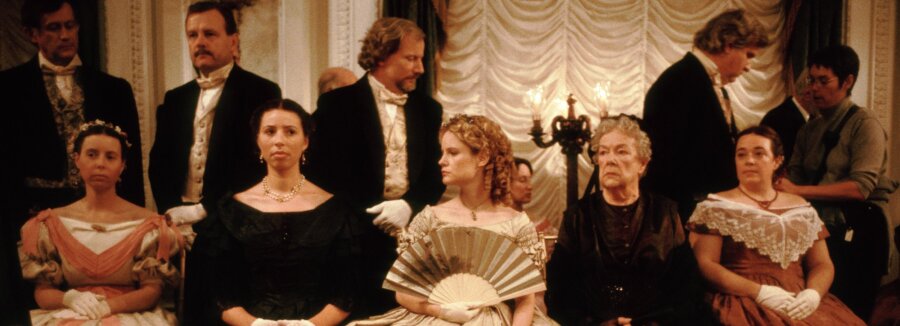
Below are images from "THE LOVE LETTER", the 1998 television adaptation of Jack Finney's 1959 short story. Directed by Dan Curtis, the television movie starred Campbell Scott and Jennifer Jason Leigh:


"THE LOVE LETTER" (1998) Photo Gallery


Sunday, March 30, 2025

"LITTLE WOMEN" (1978) Review


"LITTLE WOMEN" (1978) Review

There have been many adaptations of "Little Women", Louisa May Alcott's 1868 novel. And I have seen most, if not all of the live-action versions. But the first adaptation I have ever seen was NBC's adaptation that first aired back in 1978. If I might be honest, I ended up developing a rather high opinion of it.

Since my first viewing of 1978's "LITTLE WOMEN", I have seen other adaptations. And over the years, I had developed this belief that this television production from 1978 had not been good as I had originally believed. It took many years for me to give this two-part miniseries a second chance. "LITTLE WOMEN" told the story of Josephine (Jo) March and her three sisters during the 1860s - Meg, Beth and Amy. The two-part miniseries opened during the Christmas holidays in December 1861 and follow the sisters, their other family members and friends throughout the Civil War and the early post-war years. Because Jo is the main character, despite being the second sister, this adaptation of "Little Women" has the distinction of being the only version that allows her to serve as narrator.

After my recent re-watch, I could see why my opinion of "LITTLE WOMEN" had diminished over the years . . . at least from a superficial point-of-view. To be blunt, I was not that impressed by the miniseries' production values. The entire production was shot on the Universal Studios backlot and one could sometimes see the California hills in the background. Granted, I still believe set decorator Richard G. Goddard, art director Howard E. Johnson and cinematographer Joseph F. Biroc did the best they could to recreate 1860s Concord, Massachusetts, New York City and Italy. But I did have a problem with the miniseries' costume designs. On the surface, they seemed . . . serviceable for a television production set during the 1860s. But if I must be frank, the costumes also looked as if they had been taken from a costume warehouse for second-rate stage productions. Even worse, all or most of the actresses seemed to be wearing mid-to-late 1970s shoes underneath their mid-19th century dresses and gowns. I was shocked to discover that one of Hollywood's most iconic costume designer, Edith Head, had created the miniseries' costumes. So . . . what on earth happened? Head had created the costumes? "LITTLE WOMEN" was not even Head's first or last period drama. So, what happened?

Did I have any other problems with "LITTLE WOMEN"? Well . . . I did not care for leading actress Susan Dey's hairstyle in the second part of the miniseries. I realize her character, Jo March, had cut her hair to raise funds for her mother's journey to Washington D.C. But her hair never grew back. Never. Instead, it remained shorter than it originally was and styled into a bob. Why? And I had a problem with two particular performances. I will discuss one of them later. The other involved leading lady Susan Dey serving as the miniseries' narrator. Do not get me wrong. Dey is a fine actress and did the best she could. But I found her narration a bit clunky and unnecessary, thanks to the words provided to her by screenwriter Suzanne Clauser's teleplay.

Despite my quibbles, I found a lot to admire about "LITTLE WOMEN". I believe its status as a two-part miniseries, instead of a movie, screenwriter Suzanne Clauser had plenty of opportunities to fully adapt Alcott's novel with less shortcuts and more depth. I have always believed that Alcott's novel was basically a coming-of-age story for Jo March and her three sisters. To me, this made any adaptation of "LITTLE WOMEN" a major character study. And if there is one thing that the two-part miniseries did well was explore its characters and their situations with great depth.

This especially seemed to be the case of Jo's relationship with her neighbor and friend, Theodore "Laurie" Laurence, his personal relationship with his grandfather James Laurence, Amy's European trip and her romantic travails, and Meg's relationship with Laurie's tutor John Brooke. I was especially impressed by the production's handling of Jo's relationship with Professor Friedrich Bhaer. I found it very dynamic, thanks to Suzanne Clauser's screenplay, along with the performances involved. Some, but not all of the adaptations of Alcott's novel tend to forget - at times - that part of it spanned most of the U.S. Civil War. Fortunately, this adaptation never forgot. And as much as I seemed critical of the miniseries' narration, it also reminded television audiences that . . . yes, part of "LITTLE WOMEN" was partially set during the Civil War.

Speaking of performances, "LITTLE WOMEN" had the blessed luck to feature a first-rate cast. I may not have been impressed by the narration provided by Susan Dey (for which I blame another), I was more than impressed by her portrayal of the story's leading character, Josephine "Jo" March. I though she did a superb job in capturing Jo's mercurial personality and obsession with her developing profession as a writer. Meredith Baxter gave an excellent performance as the oldest March sister, Margaret "Meg" March. She conveyed Meg's vanity and obsession with the family's social status and stubborn refusal to give up her love for John Brooke. My only issue is that I believe the actress may have been a bit too old portraying a character that aged from 16 to her early 20s. Eve Plumb portrayed the shy, yet musical Elizabeth "Beth" March. I thought she did an excellent job of combining Beth's emotional, yet retiring nature and in the end, gave a very poignant performance. Ann Dusenberry was roughly 24 to 25 years old when she portrayed the youngest March sibling, Amy. Before my recent re-watch of "LITTLE WOMEN", I had assumed she was too old to portray a younger Amy. But upon my viewing, I realized that she actually managed to give a rather convincing and skillful performance of Amy during the war years (between ages 12 and 16) without to resorting to exaggerated histrionics. And I also admired her portrayal of the older Amy who found herself drawn between two men during her European trip.

I cannot deny that most of the actors who have portrayed Theodore "Laurie"/"Teddy" Laurence over the years gave some pretty damn good performances. But I believe that Richard Gilliland's portrayal of the emotional and moody "Laurie" has to be one of the two best I have ever seen, hands down. His only equal - at least in my eyes - is Jonah Hauer King's performance in the 2017 BBC miniseries. But if I had to choose my favorite portrayal of Laurie's stern, yet warm grandfather, James Laurence, it would be the one given by Hollywood icon Robert Young in this miniseries. May I be frank? I believe both actors provided some of the production's best dramatic moments in their depiction of the developing relationship between grandson and grandfather.

Dorothy McGuire gave a fine performance as Mrs. March aka "Marmie", the four sisters' mother. Thanks to the actress' performance, her Mrs. March seemed more like a well-rounded human being, instead of an archetype. Greer Garson was in fine form as the March family's tart-tongued, yet wealthy matriarch, Aunt Josephine March. William Shatner was excellent as the German-born professor who befriended Jo in New York City, Professor Friedrich Bhaer. Although I found his German accent a bit questionable, I cannot deny that he managed to provide a great deal of energy and complexity to Friedrich's relationship with Jo. Cliff Potts gave a solid performance as Meg's love interest and Laurie's tutor, John Brooke. I can say the same about Virginia Gregg, who portrayed the family's housekeeper, Hannah Mullet. I wish I could provide a better opinion of William Schallert's portrayal of the sisters' father, John March, but his presence in the miniseries seemed very limited, aside from one scene that featured the birth of Meg's children. One performance really failed to impress me and it came from John de Lancie, who portrayed Laurie's English-born classmate from Harvard and Amy's suitor, Frank Vaughan (Fred in the novel). Quite frankly, I found his performance a bit off. Knowing de Lancie for the first-rate actor he truly is, I suspect that between Alcott and screenwriter Suzanne Clauser's writing, the character ended up as a flat, one-note plot device - a situation that not even de Lancie could rise above.

Yes, I had some issues with "LITTLE WOMEN". I found some of the production values questionable, especially some of Edith Head's costumes, the hairstyles and one particular character. But overall, I believe it proved to be a first-rate adaptation of Louisa May Alcott's novel. If I must be frank, thanks to David Lowell Rich's direction, Suzanne Clauser's screenplay and a superb cast led by Susan Dey, I consider the 1978 adaptation of Alcott's novel to be among the three best I have ever seen.

Sunday, January 19, 2025

"Hoppin' John"


"HOPPIN' JOHN"

Popular in the Southeastern region of the United States, Hoppin' John is a peas and rice dish that has been popular holiday dish for generations. In fact, this dish has traditionally been served in the U.S. South on New Year's Day. Many believe serving Hoppin' John on this particular holiday will bring prosperity and luck for the year.

The peas - whether they are cowpeas, black-eyed peas, Sea Island red peas, and iron and clay peas - are symbolizes pennies or coins. Diners will sometimes add an actual coin to the pot or leave under the dinner plates. Ingredients such as chopped onion, and sliced bacon seasoned with salt are usually cooked with the dish. Some recipes use ham hock, fatback, country sausage, or smoked turkey parts instead of bacon. A few recipes also include green peppers or vinegar and spices.
Cooks usually serve Collard greens, Mustard greens, Turnip greens, chard, kale, cabbage or similar leafy green vegetables with Hoppin' John to further add to the wealth, since they are the color of American currency. Cornbread is usually served with Hoppin' John to also symbolize wealth, since it possesses the color of gold.

Hoppin' John was first mentioned in Caroline Howard Gilman's 1837 book titled "Recollections of a Southern Matron". The author referred to the dish as "bacon and rice". Sarah Rutledge's 1847 cookbook, "The Carolina Housewife" included a recipe for Hoppin' John. And "The Oxford English Dictionary"'s first reference to the dish came from Frederick Law Olmsted's 19th century travelogue, "A Journey in the Seaboard Slave States", first published in 1861.

However, it is believed the Gullah people first created Hoppin' John in the low county areas of North Carolina, South Carolina and Georgia; as a one-pot dish during the Colonial era. On Sapelo Island, Georgia; Geechee red peas are used instead of black-eyed peas in the community of Hog Hammock. Residents of the Sea Islands off of coastal South Carolina, use something similar - Sea Island red peas. The Gullah's West African ancestors brought rice and bean dishes to the New World, as enslaved people. Among the West African dishes that Hoppin' John may have evolved from was the the Senegalese dish, Thiebou Niebe.

Below is a recipe for Hoppin' John from the Soul Food Pot website:


"Hoppin' John"

Ingredients (Hoppin' John):
*1 pound of dried black-eyed peas
*6 cups of chicken stock (use vegetable stock for vegans & vegetarians)
*1 cup of diced red onion
*2 cloves of minced garlic
*1 bay leaf
*1 teaspoon of smoked paprika
*¼ teaspoon of red pepper flakes
*½ a teaspoon of dried thyme
*2 teaspoons of chicken bouillon (vegans & vegetarians use a Creole seasoning)
*1 ½ teaspoon of salt
*1 teaspoon of black pepper
*1 cup of collard greens, finely chopped, fresh, or pre-cooked
*¼ cup of green onion, chopped to garnish (optional)

Ingredients (Rice):
*2 cups of white rice
*2 cups of chicken broth
*1 teaspoon of salt
*¼ teaspoon of black pepper


Preparations (Hoppin' John):

1. Open the Instant Pot lid and pour the chicken stock into the stainless-steel inner pot.
2. Add the black-eyed peas, onion, garlic, bay leaf, paprika, red pepper flakes, thyme, chicken bouillon, salt, pepper, and collards.
3. Stir the ingredients to combine.
4. Make sure the beans are soaking and covered in the liquid broth.
5. Close the Instant Pot lid (make sure the valve is up – in the position for sealing) and pressure cook on high for 15 minutes.
6. When the cooking time is finished, allow a natural pressure release for at least 10 minutes.
7. To open the Instant Pot lid, move the valve to ‘venting’ and manually release any remaining pressure, if applicable.
8. Remove the bay leaf, transfer the black-eyed peas to an air-tight container, and set them aside. Or if you’re extra (like me!) and have more than one Instant Pot, keep the black-eyed peas in the Instant Pot on the 'keep warm' setting.
9. The next step is to wash out the inner pot or use a second Instant Pot to make the rice.

Preparations (Rice):
1. Add the rice, chicken broth, salt, and pepper to the Instant Pot stainless steel inner pot.
2. Stir to mix the ingredients and make sure the rice is covered in the liquid.
3. Close the Instant Pot lid (make sure the valve is in the sealing position – up) and pressure cook on high for 4 minutes.
4. When the cooking time is finished, allow a natural pressure release for at least 2 minutes.
5. To open the Instant Pot lid, move the valve to ‘venting’ and manually release any remaining pressure, if applicable.
6. Fluff the rice with a fork.


Preparations (Finish):
1. Use a large serving spoon to combine the set aside black-eyed peas with the cooked rice.
2. Mix well and then serve Black folks soul food Hoppin John right away.
3. Optionally, garnish with chopped green onion, serve, and enjoy!


Saturday, January 4, 2025

"LINCOLN" (1988) Review

 11626c3a7ea35107bd0f6dd51b38f4d1bdf8e9cf4aed9be3af475188ad80abcc._SX1080_FMjpg_.jpg


"LINCOLN" (1988) Review

Can anyone recall the number of Abraham Lincoln biopics seen in movie theaters or on television? I certainly cannot. In fact, I do not know how many Lincoln biopics I have seen. Perhaps this is not surprising. Hollywood has created more productions (both movie and television) about the 16th President of the United States than any other who has occupied the White House. One of those productions was the 1988 two-part miniseries, "LINCOLN".

Based on Gore Vidal's 1984 novel, "Lincoln: A Novel", "LINCOLN" followed Abraham Lincoln's years in the White House, during the U.S. Civil War. Actually, both the novel and the miniseries began with President-elect Lincoln arrival in Washington D.C. in late February 1861, at least a week before his inauguration. Although the limited series covered his complete four years in office, the majority of the production only covered his first years in the nation's capital. During those years, Lincoln not only faced his struggles in conducting a civil war against those Southern states that had succeeded, but also his political enemies (from both parties) and the mental condition of his wife, First Lady Mary Todd Lincoln.

Without a doubt, I believe "LINCOLN" is one of the better Hollywood productions made about the 16th president. I would place it up there with Steven Spielberg's 2012 movie of the same title and the 1974-1976 limited series, which starred Hal Holbrook. In regard to the 1988 miniseries, director One aspect of this series that struck me as innovative was the cynical tone that seemed to surround Lincoln's portrayal and the miniseries' narrative. Past productions have touched on Lincoln's political oratory skills, sense of humor and ability to maintain a balanced control of the men who served on his cabinet, the country's military leadership and Congress. Yet, these productions also tried to portray the 16th president as some ideal statesman, in which compassion, wisdom and an alleged "lack of ambition" dominated his personality. Which explained why I always had trouble regarding Lincoln as an interesting character in these productions.

This did not seemed to be the case in both Gore Vidal's novel and the 1988 miniseries. I tried to recall any moment in which Ernest Kinoy's screenplay and Gore Vidal's novel had dipped into some kind of sentimental idealism toward Lincoln, his Administration and even his family. The closest to any kind of idealism I could find proved to be two scenes. One included a conversation in which the First Lady revealed her abolitionist views to the biracial modiste, Elizabeth Keckley. Another also featured Mrs. Lincoln's militant response to Confederate troops attacking Union installations on the outskirts of Washington D.C. Instead of the noble and ideal statesman forced to guide the country through a civil war and a social revolution, Vidal's Lincoln seemed to be an astute and at times, cynical man who seemed to be a bit possessive about his presidential power. Part One featured one marvelous scene in which Lincoln smartly nipped in the bud, his Secretary of State William Seward's attempt to transform him into a powerless head of state. And there were those moments in Part Two that featured Lincoln's clashes with the Army of the Potomac's commander, George McClellan.

Lincoln's pragmatic nature seemed to permeate his dealings regarding emancipation and with his family. Many are now aware of the president's initial support of the American Colonization Society, an organization formed to encourage free African-Americans to immigrate to and form colonies in West Africa. His support had continued during the early years of the Civil War and the miniseries featured this issue in an interesting and emotionally complex scene that involved Lincoln's White House meeting with a delegation of African-American leaders during the summer of 1862. What made this scene even more fascinating was Lincoln's disappointed response to the delegates' refusal to convince many Blacks as possible to resettle in Chiriquí province of Panama. Lincoln's interactions with his immediate family proved to be more emotional, especially with his wife and younger sons. Yet, even in some scenes with the First Lady, the President could be cool, sardonic and sometimes dismissive. I find it even more interesting that the next major production about the President - namely the 2012 Spielberg movie - seemed to have adopted some of the miniseries' ambiguous portrayal of him.

One of the major issues I have with "LINCOLN" is its production values. I found them to be a mixed affair. I certainly had no problems with R. Lynn Smartt's Emmy nominated set decorations. They struck me as a strong recreation of mid-19th century interior decor. However, William Wages had received an Emmy nomination for his cinematography. I must admit that I am at a bit of a loss at this nomination. I never found his photography particularly mind-blowing. Not even the photography featured in various montages featuring well-known Civil War battles. And I disliked his use of natural lighting in many night time shots - both interior and exterior. Both Joseph G. Aulisi and George L. Little had received Emmy nominations for the miniseries' costume designs. I believe both had deserved the nominations, namely for those beautiful costumes worn by the female characters. Aulisi and Little did excellent jobs in re-creating the fashions worn by high-ranking women during the early and mid-1860s. As for those costumes worn by male characters . . . I was not that impressed. The men's costumes looked as if they had arrived directly from a costume warehouse for second-rate stage productions.

I thought the casting director did a pretty decent job in finding the right actors and actresses for the roles. Mind you, I noticed that a good number of the cast bore little or no similarity to the historical characters they had portrayed. This seemed to be the case for the likes of Deborah Adair (Kate Chase), John McMartin (Salmon P. Chase), Richard Mulligan (William H. Seward), Ruby Dee (Elizabeth Keckley), James Gammon (Ulysses S. Grant), and especially Mary Tyler Moore (Mary Todd Lincoln). But . . . I cannot deny that all of them either gave solid or excellent performances. I was especially impressed by Adair, Mulligan and Moore. The miniseries also featured first-rate performances from the likes of Stephen Culp as one of Lincoln's secretaries, John Hay; Gregory Cooke as the Lincolns' oldest son Robert; Jeffrey DeMunn as William Herdon, Lincoln's former law partner; Robin Gammell as Stephen Douglas; Cleavon Little as Frederick Douglass; and John Houseman as Winfield Scott.

I had a problem with two particular performance. I had a problem with Thomas Gibson's portrayal of Kate Chase's future husband, William Sprague IV during Part One. I thought Gibson gave an exaggerated performance that was further marred by a questionable New England accent. And although Ruby Dee had received an Emmy nomination for her portrayal of Elizabeth Keckley, I could not find anything particularly outstanding about her performance. Do not get me wrong. I believe the actress gave a very solid performance as Keckley. But the miniseries gave Dee little opportunity to truly display her skills as an actress. Because of this, I found myself more impressed by Gloria Reuben's portrayal of the modiste in 2012's "LINCOLN".

Mary Tyler Moore had also received an Emmy nomination for her portrayal of First Lady Mary Todd Lincoln. And I can honestly say that she had more than deserved it. Moore did an excellent job of conveying the First Lady's volatile personality, sharp wit and political astuteness. And while I had a small issue with the transcript's portrayal of Mrs. Lincoln, a part of me wishes that Moore had won that Emmy. I was astounded that Sam Waterston did not receive an Emmy nomination for his portrayal of Abraham Lincoln. Astounded and disappointed. Perhaps the competition for the Emmy's Outstanding Lead Actor in a Limited Series category had been too heavy for Waterston to garner a nomination. You know what? I still believe the actor had deserved that nomination. I believe Waterston gave one of the best on-screen interpretations of the 16th president I have ever seen on film. And his portrayal of Lincoln had fortunately avoided the usual sentimental idealism that have dangerously come close to making Lincoln a one-note saint. Waterston's performance sharply reminded me of Lincoln's real skills as a politician.

Aside from two performances, I have few other issues with "LINCOLN". What film stock was this miniseries shot on? Because visually, it did not age very well. I already had a problem with Wages' use of natural lighting. But the miniseries looked as if it had aged a good deal over the past thirty-six years in compared to other television productions filmed during the same decade. Over the years I have learned to tolerate historical inaccuracies in dramas like "LINCOLN". But there were three inaccuracies that did not sit well with me. One of them featured black activist/abolitionist Frederick Douglass at the August 1862 White House meeting between Lincoln and five leading members of Washington's black community regarding colonization. One, Douglass did not live in Washington during the war years. And two, he was never at that meeting.

The other two inaccuracies involved former law clerk-turned-Union officer and close friend of the Lincolns, Elmer E. Ellsworth. Following his death at the hands of a Virginia tavern owner, the miniseries had the First Lady having an emotional fit during his funeral. I believe this scene was supposed to indicate Mrs. Lincoln's mental instability. The thing is . . . this never happened, especially since Ellsworth was closer to the President than the First Lady. And it was Lincoln who had emotional difficulty accepting the officer's death, not his wife. The miniseries also indicated that following Ellsworth funeral, Mrs. Lincoln had passed out and remained unconscious for three days, waking up during the outbreak of the First Battle of Bull Run. I have already pointed out that the First Lady had never been traumatized by Ellsworth's death. I would also like to point out that Ellsworth had been killed in May 1861. The First Battle of Bull Run had occurred on July 21, 1861. So, Mrs. Lincoln had remained unconscious . . . for two months? Seriously? One more thing, why did most of the miniseries' narrative occurred during the twelve months between February 1861 and February 1862? By the time the miniseries had moved beyond this time period, one-half of Part Two had played out. By the time the narrative had reached 1863, only 45 minutes had remained of the production. And the next two years were practically rushed. I believe this problem had stemmed from the 1984 novel, in which the majority of it had only covered those twelve months.

As I had just pointed out, "LINCOLN" was not a perfect production about the 16th president. The miniseries had its flaws. But I cannot deny that I believe it was one of the better ones ever produced by Hollywood. Based on Gore Vidal's novel, "LINCOLN" gave a deep and lively account of Abraham Lincoln's four years in the White House. And one can credit Ernest Kinoy's transcript, Lamont Johnson's Emmy winning direction and excellent performances from a cast led by Sam Waterston and Mary Tyler Moore.

Tuesday, December 24, 2024

"LITTLE WOMEN" (1978) Photo Gallery


Below are images from "LITTLE WOMEN", the 1978 adaptation of Louisa May Alcott's 1868-69 novel. Directed by David Lowell Rich, the two-part miniseries starred Susan Dey, Meredith Baxter, Eve Plumb, Ann Dusenberry and Richard Gilliland:


"LITTLE WOMEN" (1978) Photo Gallery