Showing posts with label greg wise. Show all posts

Tuesday, August 5, 2025

"THE MOONSTONE" (1996) Review


"THE MOONSTONE" (1996) Review

Following my viewing of the 1997 television movie, "THE WOMAN IN WHITE", I followed up with an adaptation of another Wilkie Collins' novel, "THE MOONSTONE". Like the other adaption, this adaptation had been produced back in the 1990s as a television movie.

Based on Collins' 1868 novel, "The Moonstone: A Romance", "THE MOONSTONE" was an early modern detective story that centered around the theft of a valuable gem. A young English socialite named Rachel Verinder inherits a large Indian diamond called "a moonstone" on her eighteenth birthday. The gem is a legacy from her uncle, a corrupt British army officer named Colonel Sir John Hardcastle, who had stolen it from a religious idol, while serving in India. The diamond is of great religious significance and extremely valuable, and three Hindu priests have dedicated their lives to recovering it. Although Sir John's theft of the Moonstone had involved murder, he was never punished for his crimes. But he ended up shunned by society and his sister, Lady Julia Verinder. In retaliation for the shunning, Sir John leaves it in his will as a birthday gift to his niece Rachel, exposing her to the attentions of the gem's legal guardians.

On the night of her birthday party, Rachel wears her new present. Lady Julia, Rachel's cousin Franklin Blake and the local Dr. Candy all seem very anxious over Rachel's possession of the Moonstone. Especially since a trio of Indian jugglers had appeared at the Verinder estate. Later that night, the gem disappears from Rachel's room. Stolen. Suspicion first falls upon the three Indian jugglers. But retired Scotland Yard investigator, Sergeant Cuff believes the theft was an inside job. His suspicions fall upon one of the Verinders' servants, Rosana Spearman; and Rachel, whom he believes harbored plans to use the diamond to pay off secret debts.

I really do not know how to start this review, if I must be honest. I believe a good deal of my feelings originated from how I feel about Collins' story. I have never read his novel. But I have seen at least three adaptations of it to get a pretty good grasp of it. I must admit that director Robert Bierman and screenwriter Kevin Elyot did a very good job in setting up Collins' tale in this adaptation. They did not rush through the narrative in order to arrive on the night of the theft. And Elyot's screenplay also did an excellent job in exploring the novel's main characters - especially Rachel Verinder, her mother Lady Julia, the Verinders' major domo Gabriel Betterege and Franklin Blake. The movie also did a first-rate job in conveying the details of Blake and Cuff's investigation of the theft, along with Rachel's strange behavior. But once their investigation hit a dead end and the story moved on to the third act . . . I started having problems with the movie.

I could blame Wilkie Collins and his novel. Or I could blame the movie's screenwriter for trying to adhere as closely to Collins' story as possible. But after Franklin resumed the investigation of the Moonstone's theft a year after the incident, "THE MOONSTONE" seemed to be piled with nothing but contrived writing. I can only assume that Collins had wanted to deliver a surprise twist to his readers when he revealed who had taken the gem. I was certainly surprised when I first saw this film. And after three or four years, I have remained . . . dissatisfied with the revelation. I mean . . . seriously? And the series of events that led to the theft also struck me as contrived. But that was nothing in compare to the events that led to the Moonstone's final fate. To this day, a part of me wishes that the filmmakers had changed some of Collins' narrative for this movie.

At least I had no problem with the film's production values. Sarah Greenwood's production designs struck me as first-rate in her re-creation of Great Britain during the late 1840s. I was especially impressed by her creation of London during that period. Philip Robinson's art direction, the film's Art Department and John Daly's cinematography ably contributed to her work. I especially enjoyed Daly's photography of the marshes in Norfolk that served as the setting for one very memorable scene. I also admired James Keast's costume designs. His costumes struck me as a near accurate reflection of the film's late 1840s setting. I must admit that I found those costumes for the upper-class female characters a bit on the dull side. Was this dullness a direct reflection of elite women's fashion of that period? Perhaps someone can answer that for me.

Both Greg Wise and Keeley Hawes gave solid performances as the movie's romantic leads - Franklin Blake and Rachel Verinder. I cannot deny that the pair possessed some semblance of screen chemistry, especially during the film's first half hour. But they never really had the opportunity to develop that chemistry, since their characters spent most of the film at odds with one another or apart. The movie also featured solid performances from the likes of Scott Handy, Patricia Hodge, Anton Lesser, Peter Jeffrey, Paul Brooke, a menacing performance from Terence Hardiman as the slightly sinister Col. Sir John Hardcastle, and a rather entertaining performance from Kacey Ainsworth as the Verinders' holy roller cousin Drusilla Clark. Which leads me to my favorite performances in the movie.

One of those performances came from Peter Vaughan, who portrayed the Verinder family's steadfast majordomo, Gabriel Betterege. Not only did Vaughan did an excellent job in conveying Betterege's intelligence, but also the character's sharp humor. I really enjoyed his performance. Another performance that impressed me was Antony Sher, who portrayed the botanical loving former Scotland Yard detective, Sergeant Richard Cuff. I believe real life Victorian police detective Jack Whicher had inspired Collins' creation of Cuff. But Sher injected a touch of humorous eccentricity to the character that made his performance so enjoyable to me. One last performance had impressed me and it came from Lesley Sharp, who portrayed one of the Verinders' maids, Rosanna SpearmanR. Sharp gave an etheral, yet intense performance as the lovesick Rosanna, which left a haunting cloud over the story before the last reel.

Would I regard this 1996 television movie as the best adaptation of Wilkie Collins' novel? Hmmm . . . perhaps not. I have seen other adaptations that had delved into the narrative with a bit more detail. And the ending of this film seemed to rush a bit toward the end. However, I did managed to enjoy "THE MOONSTONE" very much. And thanks to Robert Bierman's direction, Kevin Elyot's screenplay and excellent performances from a cast led by Greg Wise and Keeley Hawes, I would have no problems doing a rewatch of this film over and over again.


Saturday, May 24, 2025

"THE MOONSTONE" (1996) Photo Gallery


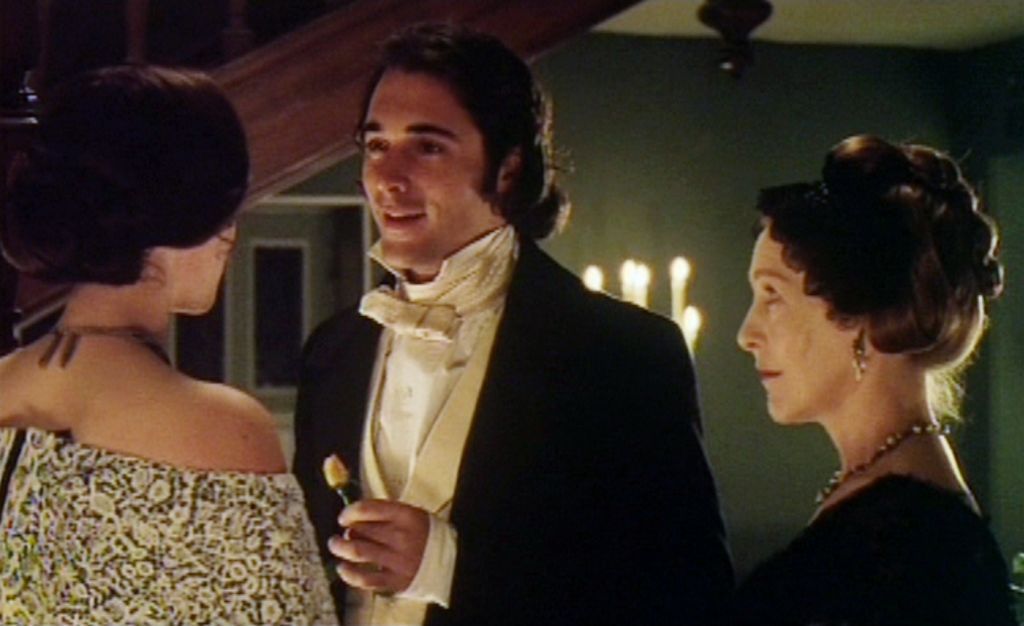
Below are images from "THE MOONSTONE", the 1996 adaptation of Wilkie Collins' 1868 mystery novel.  Directed by Robert Bierman, the television drama starred Greg Wise, Peter Vaughan, Antony Sher and Keely Hawes: 


"THE MOONSTONE" (1996) Photo Gallery


Monday, February 26, 2024

Top Five Favorite Episodes of "THE CROWN" Season Two (2017)


Below is a list of my favorite episodes from Season Two of the Netflix series, "THE CROWN". Created by Peter Morgan, the series starred Claire Foy and Matt Smith as Queen Elizabeth II and Prince Philip, Duke of Edinburgh:


TOP FIVE FAVORITE EPISODES OF "THE CROWN" SEASON TWO (2017)


1. (2.05) "Marionettes" - After Queen Elizabeth II makes a tone-deaf speech at a Jaguar factory, she and the British monarchy come under public attack by an outspoken liberal peer named Lord Altrincham.


2. (2.03) "Lisbon" - Palace insiders try to prevent the scandalous divorce of the Duke of Edinburgh's aide, Lieutenant-Commander Mike Parker, that could reflect poorly on the former and the monarchy. Prime Minister Anthony Eden faces censure from his cabinet and the press over the Suez Crisis.


3. (2.09) "Paterfamilias" - Prince Philip insists that Prince Charles attend Gordonstoun, his alma mater in Scotland. Also, he reminisces about the life-changing difficulties he experienced there as a student.


4. (2.07) "Matrimonium" - A heartbreaking letter from former lover Peter Townsend spurs Princess Margaret to make a bold proposal to her current lover, photographer Antony Armstrong-Jones. The Queen has good news that causes complications for Margaret.


5. (2.02) "A Company of Men" - Elizabeth feels disconnected from Philip during his five-month royal tour in the South Pacific. Meanwhile, Eden copes with ill health and international pressure to withdraw British troops from Egypt during the Suez Crisis.


Thursday, August 3, 2023

"TOWARDS ZERO" (2007) Review


"TOWARDS ZERO" (2007) Review

When it comes to the television adaptations of Agatha Christie’s Jane Marple novels, I tend to stick with those that featured the late Joan Hickson as the elderly sleuth. However, my curiosity got the best of me and I decided to watch a movie that starred Geraldine McEwan as Miss Jane Marple. And this movie is the 2007 adaptation of Christie’s 1944 novel called "Towards Zero".

The adaptation of Christie’s novel has drawn a good deal of criticism from purists. First of all, the novel is not a Jane Marple mystery. Instead, the main investigator in "Towards Zero" turned out to be Superintendant Battle, who had been featured in a few other Christie novels, including one Hercule Poirot tale - "Cards on the Table". However, Battle did not appear in the 2007 adaptation. Jane Marple replaced him as the story’s main detective, with the police represented by Alan Davies as one Superintendant Mallard. Since "Towards Zero" has always been one of my favorite Christie novels, I decided to give the movie a chance.

In "TOWARDS ZERO", Jane Marple is invited to a house party hosted by an old school friend named Lady Camilla Tressilian. Also included in the party are the following:

*Neville Strange – Professional tennis star and Lady Tressilian’s ward

*Kay Strange – Neville’s younger second wife

*Audrey Strange - Neville’s reserved ex-wife

*Thomas Royce – Owner of a Malaysian plantation and Audrey’s distant cousin

*Mary Aldin – Lady Tressilian’s companion

*Ted Latimer – Kay’s childhood friend

*Mr. Treves- Lady Tressilian’s friend and solicitor

The house party turned out to be a tense affair, due to emotions running rampant between the characters. Neville discovered that he was still in love with his first wife, Audrey. She seemed to harbor emotions for him, despite her reserved behavior. Thomas seemed jealous of Neville, due to his love for Audrey. Mary seemed attracted to Thomas and a little envious of Audrey. Kay was obviously jealous of Audrey. And Ted was also jealous of Neville, due to his love for Kay.

During a supper party, Mr. Treves recalled an old murder case in which a child had made deliberate preparations to kill another and make it look like an accident. That child, according to Mr. Treves, had a peculiar physical trait. All of the suspects possessed a peculiar physical trait. And following the supper party, Mr. Treves died from a heart attack after climbing some stairs that lead to his hotel room. Someone had placed a NOT IN SERVICE sign in front of his hotel’s elevator. Another day or two later, this same person brutally murdered old Lady Tressilian with a blow to the head.

As I had earlier stated, the 1944 novel has always been a favorite of mine. Christie had crafted a complex and original mystery filled with characters of great psychological depth. By inserting another Christie creation – Jane Marple – as the story’s main investigator, I feared that this 2007 adaptation would prove to be a bust. Imagine my surprise when my fears proved to be groundless. Thanks to director David Grindley and screenwriter Kevin Elyot, I found myself surprisingly satisfied with this movie. Despite a few changes – namely the post-World War II setting, Jane Marple as the story’s main detective, the deletion of a character named Andrew MacWhirter, the addition of another character named Diana, the new police officer in charge of the case – Superintendant Mallard, and the budding romance in the story’s conclusion that did not happen in the novel. Perhaps that is why I had enjoyed it so much. Both Grindley and Elyot recognized the novel’s first-rate plot and tried to follow it as closely as possible.

The production values for "TOWARDS ZERO" impressed me as well. Production designer Michael Pickwoad did an excellent job in re-creating Britain of the early-to-mid 1950s. And he was ably supported by Sue Gibson’s beautiful photography, which struck me as rich in color and sharp. Sheena Napier’s costumes not only captured the era perfectly, but also the personality of each character. I do have one quibble – namely Saffron Burrows’ hairstyle. I am aware that some women wore their hair slightly long past the shoulders. But I got the impression that the hairdresser could not decide whether to give Burrows a 1950s hairstyle or a modern one. Her hair struck me as a confusing mixture of the mid 20th century and the early 21st century.

The cast turned out better than I had expected. If I must be honest, I could not spot a bad performance amongst the entire cast.  The whole lot of them - Julian Sands, Paul Nicholls, Julie Graham, Greg Rusedski, Guy Williams, Amelda Brown, Jo Woodcock and especially Tom Baker - gave first-rate performances.  But there were a handful that really impressed me. One came from Saffron Burrows, who gave one of the most enigmatic and intense performances I have ever encountered in a Christie film. I could never tell whether her character was guilty of the two murders or not. And Burrows did a superb job in conveying this ambiguity of the Audrey Strange character with very little dialogue. I was also impressed by Zoe Tapper’s portrayal of the more extroverted Kay Strange. Tapper could have easily given an over-the-top performance, considering the type of character she had portrayed. But the actress conveyed Kay’s passionate nature without turning the character into a one-note scream fest. I also enjoyed Alan Davies as Superintendent Mallard, the new police investigator in this mystery. I not only enjoyed his wit, but also his transformation from his contempt toward Jane Marple’s investigative skills to a full partnership with the elderly amateur sleuth. And Eileen Atkins provided a great deal of comic relief as the second victim, Lady Camilla Tressilian. Not only did she provide much of the story’s sharp humor, Atkins also captured the character’s bombastic and arrogant nature. Her Lady Tressilian struck me as a modern-day Lady Catherine de Bourgh, but with a stronger moral center.

But I believe the two best performances came from Greg Wise and Geraldine McEwan as Jane Marple. I found myself completely surprised by Wise’s impressive portrayal of the tennis pro with the two wives, Neville Strange. His performance perfectly portrayed Neville as the complex force of nature that had a major impact upon the other characters in "TOWARDS ZERO", without indulging in any hammy acting. But I was more than impressed by Geraldine McEwan’s portrayal of Jane Marple. I had seen McEwan’s portrayal of Miss Marple in "THE SITFORD MYSTERY" and found her performance ridiculously mannered and annoying. No such exaggerated mannerisms marred McEwan’s performance in "TOWARDS ZERO". The actress gave a subtle performance laced with subtle humor and her character’s intelligence. One of McEwan’s best moments featured very little dialogue on her part in a scene between Miss Marple and the verbose Lady Tressilian, inside the latter’s bedroom.

Most Agatha Christie purists might automatically dismiss this adaptation of "TOWARDS ZERO". Especially since the script changed the main investigator from the literary Superintendent Battle to a cinematic Jane Marple. But despite this major change, along with another that included a romance that emerged in the film’s final scene; David Grindley’s direction and Kevin Elyot’s script remained surprisingly faithful to Agatha Christie’s novel. Normally, I would care less about changes in an adaptation of a novel. But in the case of "TOWARDS ZERO", the choices made by Elyot worked in the movie's favor.


R.I.P.  Julian Sands (1958-2023)

Sunday, May 7, 2023

"TOWARDS ZERO" (2007) Photo Gallery


Below are images from "TOWARDS ZERO", the 2007 adaptation of Agatha Christie's 1944 novel. The movie starred Geraldine McEwan as Miss Jane Marple:


"TOWARDS ZERO" (2007) Photo Gallery