Showing posts with label jeremy kemp. Show all posts

Monday, August 10, 2020

"THE WINDS OF WAR" (1983) Review


"THE WINDS OF WAR" (1983) Review

Nearly forty years ago, author Herman Wouk wrote "The Winds of War", a bestselling novel about the experiences of a middle-aged U.S. Navy officer and his family during the early years of World War II. A decade later, ABC Television and producer David Wolper brought his story to the television screen with a seven-part, fourteen-and-a-half hour miniseries that became a ratings hit and a major Emmy and Golden Globe nominee.

Produced by Dan Curtis and Barbara Steele, and directed by Curtis; "THE WINDS OF WAR" was a sprawling saga that told the story of Naval officer, Victor "Pug" Henry (Robert Mitchum), his wife Rhoda (Polly Bergen), and their three children – Naval aviator Warren (Ben Murphy), Byron (Jan-Michael Vincent) and Madeline (Lisa Eilbacher), who ended up as an assistant to a radio personality – and their experiences during the five months before Germany’s invasion of Poland in September 1939 and the first two years of the war, right up to the attack upon Pearl Harbor in December 1941. Most of the miniseries focused upon Henry’s experiences as a Naval attaché at the U.S. Embassy in Berlin, his role as a confidant to President Franklin D. Roosevelt and his position at the War Department in Washington D.C. During this time, he experiences Germany’s reaction to the Poland invasion, the Battle of Britain and the early months of the Blitz, the Lend-Lease Program, and the Soviet defense against the German invasion of their country.

However, a good deal of the miniseries also focused upon Byron’s romance with one Natalie Jastrow (Ali McGraw), the niece of a Jewish author and scholar named Dr. Aaron Jastrow (John Houseman) in Italy. Byron and Natalie also experience the German invasion of Poland, after attending a wedding held by her Jastrow cousins in Medzice. Their romance is later hampered by Natalie’s relationship with her former fiancé, a State Department diplomat named Leslie Slote (David Dukes) and her decision to remain in Europe in order to ensure that a very reluctant Aaron will get safely out of Europe.

Two other plotlines featured forbidden romances for both Pug and Rhoda. Pug becomes romantically involved with Pamela Tudsbury (Victoria Tennant), the daughter of a British journalist and radio personality. However, their romance remains platonic. That did not seemed to be the case for Rhoda’s affair with a widowed government engineer named Palmer Kirby (Peter Graves), who will become involved in the first phase of the Manhattan project. By the end of the miniseries, Rhoda will ask Pug for a divorce.

One has to possess a great deal of patience and love of early-to-mid 20th century history to really enjoy "THE WINDS OF WAR". This is not my way of saying that it is a terrible production. But it is rather long at fourteen-and-a-half hours. At least four of the episodes are two-and-a-half hours long. And if I must be frank, there are sequences in the miniseries that I found rather ponderous. Sequences that usually featured Pug Henry’s meetings with famous world leaders such as Franklin Roosevelt, Adolph Hitler, Winston Churchill and Joseph Stalin turned out to be exercises in sheer patience for me. And the sequences featuring the Lend-Lease Program, in which the U.S. government lent warships and planes to Great Britain also struck me as ponderous, although interesting. I found some of the dialogue wince-inducing, silly, pretentious and long winded, thanks to Herman Wouk’s screenplay. Lesson - never allow an author to write the screen adaptation of his own work.

Many of the characters featured in the miniseries are portrayed by actors that struck me as too old for their roles. I can even say the same about the three leads – Mitchum, McGraw and Vincent. Well . . . almost. Somehow, these three managed to get away with it. The scenes that I found most unbearable featured Hitler’s conferences with his generals. Many of these scenes featured actor Günter Meisner as Hitler, engaging in a good deal of histrionic acting – at least in the miniseries’ first three episodes. Fortunately, he seemed to have found his stride by the fourth episode and portrayed the German chancellor without the usual clichés. Like I said, one needs a great deal of patience to face something like "WINDS OF WAR".

But in the end, the miniseries proved to be worth viewing. Despite its flaws, I believe it is one of the better miniseries that have appeared on television during the past forty odd years. The historic scope of the production is wide and magnificent. Director/producer Dan Curtis did a superb job in transporting viewers back to those early years of World War II – between 1939 and 1941, especially with a crew that included cinematographers Charles Correll and Stevan Larner, costume designer Heidi Wujek, matte cameraman Bruce A. Block, and production designer Jackson De Govia. I do have a quibble about Ali McGraw’s wardrobe and hairstyle. It almost seemed as if the actress seemed reluctant to utilize late 30s/early 40s costumes and hairstyles. And this made her look a little too modern for a series set during the early years of World War II.

Curtis and his crew did an excellent job in scouting locations for the miniseries. Being an epic set in the United States and Europe, he had to find locations that stood in for Berlin, Washington D.C., London, Siena and Rome, Moscow, Honolulu, Manila, along with Warsaw and Medzice. I also have to commend Marijan Karoglan for his supervision of the special effects featured in the miniseries – especially in battle sequences that focused upon the invasion of Poland, Pug’s ride aboard a British bomber over Germany, the battle outside Stalingrad, and the attacks upon Pearl Harbor and the Cavite Naval Yard in the Philippines.

One of the best things about "THE WINDS OF WAR" is that despite being somewhat ponderous and long, it did feature some well written and interesting sequences. The best – as far as I am concerned – centered on Byron Henry and Natalie Jastrow getting caught up in the Nazi invasion of Poland near the end of "Episode 1 – The Winds Rise" and the first half of "Episode 2 – The Storm Breaks". What started out as a charming visit to Poland for a family wedding, ended up as a harrowing series of events in which the pair encountered hostile Polish soldiers, aerial bombings in Warsaw, a harrowing journey across the Polish-German battle line, and a tense encounter with a Gestapo officer demanding the names of all Jews in the American party. Another favorite sequence of mine featured Pug’s experiences in Britain, during the Battle of Britain and around the beginning of the Blitz. This segment featured the beginning of his platonic romance with Pamela Tudsbury and a scary ride aboard a British bomber on a mission over Germany. I also enjoyed the segment at the end of "Episode 3 – Cataclysm" that featured the Henry family and Natalie Jastrow’s reunion for Warren Henry’s wedding to Janice Lacouture (Deborah Winters), the daughter of an isolationist senator in Pensacola. The sequences featuring Byron and Natalie’s wedding in Lisbon, near the end of "Episode 5 – Of Love and War" and Pug’s reunion with Pamela in the Soviet Union in the last two episodes are also favorites.

Earlier I had commented that the miniseries’ three leads – Robert Mitchum, Ali McGraw and Jan-Michael Vincent – seemed rather old for their roles. Mitchum, who was 65 years old at the time, portrayed a Pug Henry in his late 40s. McGraw was 44 years old, when she portrayed the 27-29 years old Natalie Jastrow. And Vincent was a 38 year-old actor portraying the 24-26 years old Byron Henry. But they were not the only ones. Ben Murphy, who portrayed the 27-29 years old Warren Henry, was at least 40 at the time of the miniseries’ production. Ralph Bellamy was at least 78 years old when he portrayed President Roosevelt, who had aged from 57 to 59 years during the story’s setting. There seemed to be a score of many old Hollywood character actors who struck me as too old for their roles. Many of them did not get away with portraying characters a lot younger than themselves. But Mitchum, McGraw, Vincent, Murphy and Bellamy did get away with it; due to their strong screen presence, good solid acting and looks.

Being the experienced Hollywood veteran, Mitchum did an excellent job of holding the series together in the lead role. He also did a first rate job in portraying a very reserved man who usually kept his emotions to himself, without turning the role into an automaton. McGraw seemed to have some difficulty in dealing with an exaggerated and at times, irritating character like Natalie Jastrow. I suspect that most of the blame should go to Wouk for creating such an overblown character and the bad dialogue that McGraw was forced to speak. However, I have to commend the actress for ably capturing Natalie’s extroverted personality and conveying the character's moments of being intimidated in the presence of Nazis or in situations in which she felt like a fish out of water (think of Warren and Janice’s wedding). Both Ben Murphy and Lisa Eilbacher gave solid performances at the charismatic, yet likeable Warren Henry and the All-American Madeline Henry, who seemed to have a slight undercurrent of darkness in her personality. Jeremy Kemp gave a memorable performance as Brigadier General Armin von Roon, the stoic and very professional German Army staff officer that Pug had befriended. Ralph Bellamy, who had originally portrayed Franklin D. Roosevelt in both the stage and film versions of "SUNRISE AT CAMPBOBELLO" was in his element as the four-term president. I also enjoyed Topol’s warm portrayal of the Jastrow cousin from the Polish branch of the family, Berel Jastrow. John Houseman did a solid job in portraying Natalie’s scholarly uncle, Dr. Aaron Jastrow. However, there were times when his dialogue delivery seemed slow and slightly long-winded. As for Peter Graves, he must have been the only actor I can recall who can make an extramarital affair seem almost dignified.

But there were performances that stood out for me. One of them came from Jan-Michael Vincent, who portrayed the Henry family’s dark horse, Byron. Vincent did an excellent job in portraying Byron’s complex and sometimes difficult nature. He proved that Pug’s middle child could be just as reserved and intimidating as his father, and also very intense. Yet, at the same time, Vincent’s Byron seemed very relaxed and almost lackadaisical. Another first-rate performance came from Polly Bergen, who portrayed Pug’s flamboyant wife, Rhoda. In many ways, Bergen’s Rhoda could be just as complex as Byron. At times, she seemed like a cheerful and extroverted personality. At other times, she came off as flaky and somewhat rather unpleasant. And Bergen managed to convey Rhoda’s contradicting traits seamlessly. I am not surprised that she ended up earning an Emmy nomination for her performance. I was also impressed by Victoria Tennant’s performance as the young Englishwoman that ended up falling in love with Pug, Pamela Tudsbury. Tennant skillfully conveyed Pamela’s passionate nature and sardonic sense of humor beneath an exterior of English reserve. I have always been a fan of the late actor David Dukes, ever since I saw him in a miniseries called "79 PARK AVENUE". But I do believe that the role of Leslie Slote, Natalie’s former fiancé was probably one of his best. Dukes had the difficult job of developing his character from a sarcastic and slightly pompous man, reluctant to marry a Jewish woman to a loyal friend that ended up regretting that his fiancée had fallen in love with another man before he could marry her.

"THE WINDS OF WAR" has its shares of flaws – a ponderous dramatic style, too many scenes featuring the top statesmen of World War II, stilted dialogue and a questionable wardrobe for actress Ali McGraw. But its virtues – its in-depth look into the early years of World War II, its epic scope, interesting subplots and characters – make it all worth while. More importantly, I still believe it is one of the better miniseries from the last 40 years. In the end, I believe that newcomers to the saga will not regret it.

Sunday, June 14, 2020

"THE WINDS OF WAR" (1983) Photo Gallery

windsofwarminiseries

Below are images from "THE WINDS OF WAR", the 1983 television adaptation of Herman Wouk's 1971 novel. Directed by Dan Curtis, the seven-part miniseries starred Robert Mitchum, Ali McGraw and Jan-Michael Vincent:


"THE WINDS OF WAR" (1983) Photo Gallery

000x5yxt


000x772p


0006pk1s


104


natalieberel


402956


646663


646664


646665


646668


4511747_l3


byronberelnatalie


hqdefault


the-winds-of-war


tumblr_mkayfsMdPb1s2a00zo1_250


windsmitchum

Friday, June 15, 2018

"GEORGE WASHINGTON" (1984) Review


"GEORGE WASHINGTON" (1984) Review

Twenty-four years before the award-winning HBO miniseries "JOHN ADAMS" aired, the CBS network aired a miniseries about the first U.S. President, George Washington. Simply titled "GEORGE WASHINGTON", this three-part miniseries was based upon two biographies written by James Thomas Flexner - 1965's "George Washington, the Forge of Experience, 1732–1775" and 1968's "George Washington in the American Revolution, 1775–1783". 

"GEORGE WASHINGTON" spanned at least forty years in the life of the first president - from 1743, when his father Augustine Washington died from a sudden illness; to 1783, when Washington bid good-bye to the officers who had served under him during the American Revolutionary War. The miniseries covered some of the major events of Washington's life:

*His training and profession as a surveyor of Western lands
*His experiences as an officer of the Virginia militia during the Seven Years War
*His friendship with neighbors George William and Sally Cary Fairfax between the 1750s and the 1770s
*The romantic feelings between him and Sally Fairfax
*His marriage to widow Martha Dandridge Custis and his role as stepfather to her two children
*His life as a Virginia planter
*His role as a member of Virginia's House of Burgesses
*His growing disenchantment with the British Parliament
*His brief experiences as a representative of the Second Continental Congress
*And his experiences as Commander-in-Chief of the Continental Army


Actually, one half of the miniseries covered Washington's life from his childhood to his years as a Virginia planter. The other half covered his experiences during the American Revolution. Glancing at the list above, I realized that "GEORGE WASHINGTON"covered a great deal in Washington's life. More importantly, Jon Boothe and Richard Fielder did a first-rate job by delving into the many aspects of the man's life and his relationships with great details and depth. This was especially apparent in Washington's relationships with his controlling mother, Mary Ball Washington; his friendship with George William Fairfax; his light romance with Sally Fairfax; his relationships with his military aides during the American Revolution and especially his marriage to Martha Custis.

I found it interesting that the miniseries managed to convey how difficult and controlling Mary Washington was as a parent. However, I found it slightly disappointing that the miniseries did not further explore Washington's relationship with his mother, once he became swept up into the Seven Year's War - especially since she had survived long enough to witness him become the first U.S. president. 

Washington's relationship with George William "Will" Fairfax proved to be a complex matter for two reasons. One, Will Fairfax had remained loyal to the British Crown throughout his life. During the decade leading to the outbreak of the American Revolution, that relationship threatened to fall apart due to the two friends' different political belief - something I was happy to see that the miniseries had conveyed. Another aspect that posed a threat to Washington's friendship with Fairfax was his romantic feelings for the man's wife, Sally Fairfax . . . and her feelings for him. There have been rumors that Washington's relationship with Sally had led to physical adultery, but no proof. But there is proof that they had strong feelings for one another and the miniseries; due to Fiedler and Boothe's screenplay, along with the performances of Barry Bostwick and Jaclyn Smith; did an excellent job of conveying the pair's emotional regard for each other in a subtle and elegant manner. What I found even more amazing was the miniseries' portrayal of Washington's courtship of and his marriage to Martha Custis. I was surprised that Boothe and Fiedler had portrayed Washington's feelings toward her with such ambiguity. This left me wondering if he had married her for love . . . or for her fortune. By the last half hour or so of the miniseries, Washington finally admitted to Martha that he did love her. However, the manner in which Bostwick portrayed that scene, I found myself wondering if Washington was himself amazed by how much his feelings for Martha had grown. 

I do not know what to say about the miniseries' portrayal of Washington's relationships with his military aides during the American Revolution. I do not doubt that his aides were loyal to him or probably even worship him. But I must admit that it seemed the miniseries' portrayal of this relationship seemed to make Washington's character just a touch too ideal for my tastes. In fact, one of the miniseries' main problems seemed to be its idealistic portrayal of the main character. Aside from Washington's bouts of quick temper, his ambiguous affections for his wife Martha, and his cold relationship with his less than ideal stepson, John "Jacky" Parke Custis; the miniseries made very little effort to portray Washington in any negative light. In fact, Washington's demand for higher rank within the Virginia militia and British Army during the Seven Years War is portrayed as justified, thanks to Fiedler and Boothe's screenplay. Personally, I found his demand rather arrogant, considering his young age (early to mid-20s) and limited training and experience as a military officer at the time. Not only did I found his demand arrogant, but also rather astounding. What I found even more astounding was the miniseries' attitude that television viewers were supposed to automatically sympathize with Washington's demands.

The miniseries' portrayal of Washington in the second half - the period that covered the American Revolution - nearly portrayed the planter-turned-commander as a demigod. Honestly. Aside from his occasional bursts of temper, General George Washington of the Continental Army - at least in this miniseries - was a man who could do no wrong. And at times, I found this rather boring. I cannot recall any moment during the miniseries' second half that questioned Washington's decisions or behavior. Most of his military failures were blamed on either military rivals or limited support from the Continental Congress. 

And then . . . there was the matter of black soldiers serving in the Continental Army. According to "GEORGE WASHINGTON", Southern representative in Congress wanted blacks - whether they were former slaves or freemen - banned from serving in the army. It was Washington who demanded that Congress allow black men to fight alongside white men in the country's rebellion against the British Empire. By the way . . . this was a complete lie. Despite black men fighting in the Massachusetts militias during the Battles at Lexington and Concord and the Battle of Bunker Hill, Washington signed an order forbidding them to become part of the Continental Army when the white New England militiamen did. Come to think of it, when it came to racism and slavery, "GEORGE WASHINGTON" presented a completely whitewashed portrait of the future president. The miniseries even featured a pre-war scene in which Washington prevented his overseer from breaking apart slave families at Mount Vernon by selling some of the slaves for needed funds for the plantation. In reality, Washington was not above selling off slaves or breaking up families for the sake of profit or punishing a slave. At a time when historians and many factions of the American public were willing to view the Founding Fathers in a more ambiguous light; Fiedler and co-producers Buzz Kulik and David Gerber lacked the guts to portray Washington with a bit more honestly . . . especially in regard to race and slavery. If they had been more honest, they could have portrayed Washington's growing unease over slavery and race, following Congress' decision to allow them within the ranks of the Continental Army in 1777. Unfortunately, putting Washington on a pedestal seemed more important than allowing him some semblance of character development.

Production wise, "GEORGE WASHINGTON" struck me as first-rate. The miniseries had been shot in locales in Virginia and Southern Pennsylvania, adding to the production's 18th century Colonial America atmosphere. I cannot say whether Harry Stradling Jr.'s cinematography also contributed to the miniseries' setting. If I must be honest, I did not find his photography that memorable. But I was impressed by Alfred Sweeney's production designs, along with Sig Tingloff's art direction and Arthur Jeph Parker's set decorations. However, I had a problem with the costume choices selected by a costume team supervised by Michael W. Hoffman. To be honest, I did not have much trouble with the costumes for the men. The women's costumes proved to be another man. A good deal of the story is set among the colonial Virginia gentry. I hate to say this, but I found a good deal of the women's costumes less than impressive. They looked as if they came straight from a costume warehouse in the middle of Hollywood. I especially had a problem with Jaclyn Smith's wardrobe as Sally Fairfax. I realize that she is supposed to be an 18th century version of a Southern belle. But there were one or two costumes that seemed to be some confusing mixture of mid 18th and mid 19th centuries. Yikes.

I certainly had no problem with the performances featured in the 1984 miniseries. The latter featured solid performances from legendary actors like Lloyd Bridges, Jose Ferrer, Trevor Howard, Jeremy Kemp, Clive Revill, Anthony Zerbe, Robert Stack and Hal Holbrook. However, I really enjoyed James Mason's energetic portrayal of the doomed General Edward Braddock; Rosemary Murphy's skillful performance as the future president's demanding mother, Mary Ball Washington; Richard Kiley's emotional portrayal of Washington's neighbor, planter George Mason; and John Glover's ambiguous performance as the ambitious Revolutionary officer, Charles Lee. I was also impressed by Stephen Macht's performance as the ambitious and volatile Benedict Arnold. I could also say the same about Megan Gallagher's portrayal of Arnold's wife, Peggy Shippen. Ron Canada provided a good deal of depth in his limited appearances as Washington's slave valet, Billy Lee. Philip Casnoff, who was a year away from his stint in the "NORTH AND SOUTH" miniseries, gave a very charming and humorous performance as Washington's French-born aide and close friend, the Marquis de Lafayette. And Leo Burmester gave an excellent performance as Eban Krutch, the New England born Continental soldier, who served as the viewers' eyes of both Washington and the war throughout the miniseries' second half.

I really enjoyed David Dukes' performance as Washington's neighbor, mentor and close friend, Will Fairfax. I found it quite energetic and charming. And he managed to develop a first-rate chemistry with Barry Bostwick. Come to think of it, so did Jaclyn Smith, who portrayed Fairfax's wife and the object of Washington's desire, Sally Fairfax. I also found Smith's performance rather complex as she had to convey her character's feelings for Washington in a subtle manner. At first, I found Patty Duke's portrayal of the future First Lady, Martha Washington, solid but not particularly interesting. Thankfully, the last quarter of the miniseries allowed Duke to prove what a first-rate actress she could be, as it explored Mrs. Washington's reaction to the privations suffered by the Continental Army's rank-and-file. Her performance led to an Emmy nomination. And finally, I come to the man of the hour himself, Barry Bostwick. Despite the miniseries being guilty of whitewashing some of Washington's character, I cannot deny that Bostwick gave a superb performance. The actor skillfully conveyed Washington's character from the callow youth who was dominated by his mother and his ambition to the weary, yet iconic military general who carried the rebellion and the birth of a country on his shoulders. It is a pity that he did not receive any award nominations for his performance.

I may have my complaints about "GEORGE WASHINGTON". Despite its detailed account of the first president's life, I believe it went out of its way to protect his reputation with occasional whitewashing. And some of the miniseries' production values - namely the women's costumes - struck me as a bit underwhelming. But despite its flaws, "GEORGE WASHINGTON" proved to be a first-rate miniseries that delved into the history of the United States during the mid-and-late 18th century, via the life of one man. It also benefited from excellent direction from Buzz Kulik and superb performances led by the talented Barry Bostwick. Not surprisingly, the miniseries managed to earn at least six Emmy nominations.

Wednesday, May 2, 2018

"GEORGE WASHINGTON" (1984) Photo Gallery


Below are images from "GEORGE WASHINGTON", the 1984 adapation of 1965's "George Washington, the Forge of Experience, 1732–1775" and 1968's "George Washington in the American Revolution, 1775–1783", two of James Thomas Flexner's biographies on the first U.S. President. Directed by Buzz Kulik, the three-part miniseries starred Barry Bostwick as George Washington: 


"GEORGE WASHINGTON" (1984) Photo Gallery


Saturday, December 5, 2015

"ANGELS & INSECTS" (1995) Review

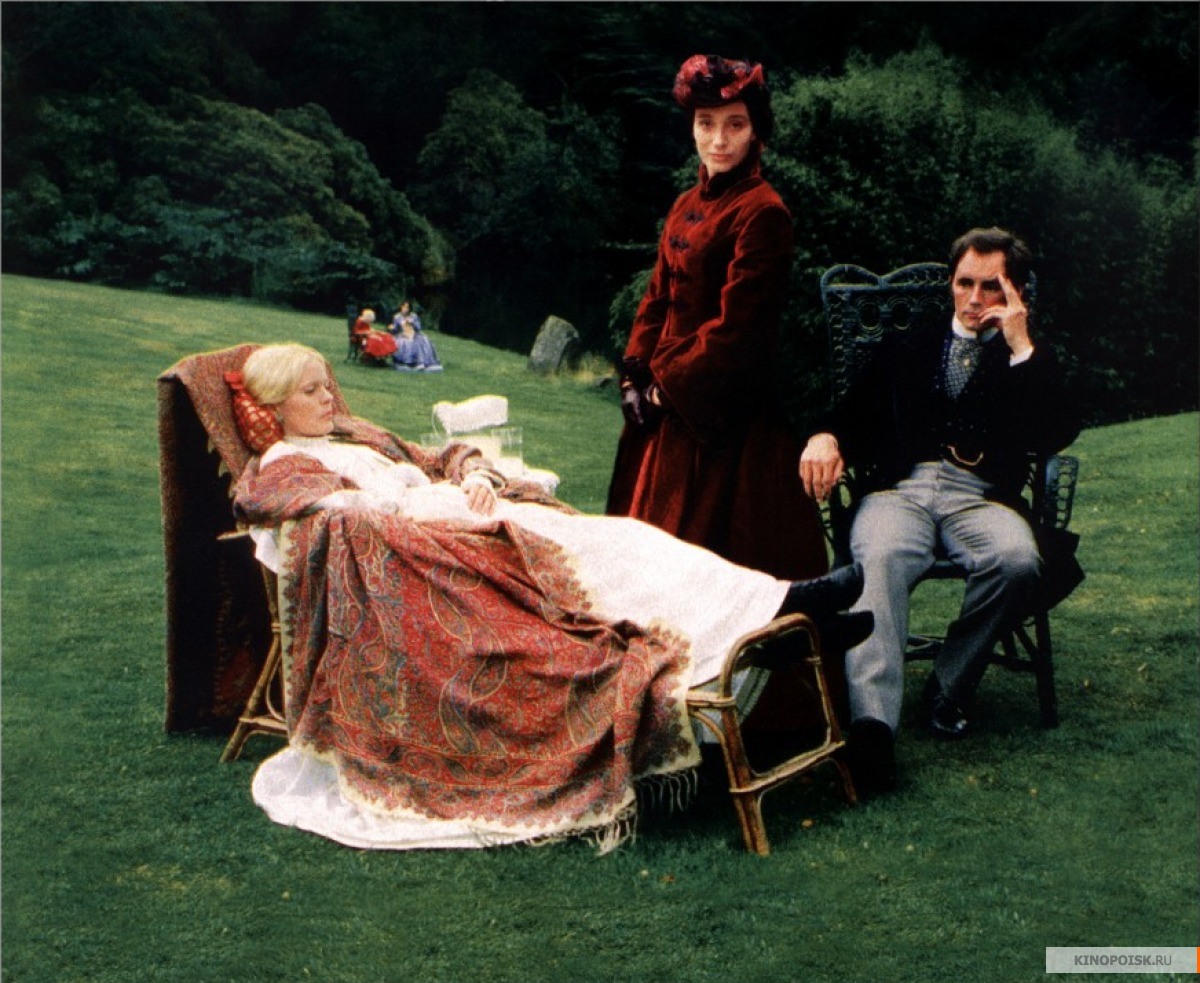
kinopoisk_ru-Angels-and-Insects-1736930


"ANGELS & INSECTS" (1995) Review

I never thought I would come around to writing this review. I have seen the 1995 movie, "ANGELS & INSECTS" a good number of times during the past five years. Yet, I never got around to posting a review of this movie, until recently. Why? I have not the foggiest idea. Nor do I have any idea why I had finally decided to write that review. 

Based upon A.S. Byatt's 1992 novella called "Morpho Eugenia", "ANGELS & INSECTS" tells the story of a poor naturalist named William Adamson, who returns home to Victorian England after having spent years studying the natural wildlife - especially insects - in the Amazon Basin. Despite losing all of his possession during a shipwreck, he manages to befriend a baronet named Sir Harald Alabaster, who is also an amateur insect collector and botanist. The latter hires William to catalog his specimen collection and assist his younger children's governess the natural sciences.

William eventually falls for Sir Harald's oldest daughter, Eugenia, who is mourning the suicide of her fiance. Both of them eventually become emotionally involved and decide to marry. Much to William's surprise, both Sir Harald and Lady Alabaster seem supportive of the match. The only member of the Alabaster family who is against their upcoming wedding is Sir Harald's eldest child, the arrogant Edgar. Not only is the latter close to Eugenia, he believes that William is unworthy of his sister's hand, due to having a working-class background. The marriage between William and Eugenia seemed to be a happily lustful one that produces five children (among them two sets of twins). But Eugenia's hot and cold control over their sex life, a constantly hostile Edgar, William's growing friendship to Lady Alabaster's companion Matilda "Matty" Crompton, and William's own disenchantment over his role as Sir Harald's official assistant brings their marriage to a head after several years.

The film adaptation of Byatt's novella seemed to be the brainchild of Philip and Belinda Haas. Both worked on the film's screenplay, while Philip also served as the film's director and Belinda served as both co-producer (there are three others) and film editor. From my perusal of many period drama blogs, I get the feeling that "ANGELS & INSECTS" is not very popular with many of the genre's fans. On the other hand, many literary and film critics seemed to have a very high regard for it. Despite my love for the usual romantic costume drama, I must admit that my opinions of the 1995 film falls with the latter group. It is simply too well made and too fascinating for me to overlook. 

There were times I could not tell whether "ANGELS AND INSECTS" is some look at the age of Victorian science exploration, the close study of an upper-class 19th century family, or a lurid tale morality. Now that I realize it, the movie is probably an amalgamation of them all, wrapped around this view on Darwinism and breeding - in regard to both the insect world and humans. The topic of breeding seemed to seep into the screenplay in many scenes. Some of them come to mind - like Sir Harald and Edgar's debate on the breeding of horses and other animals; William and Eugenia's second encounter with moths in the manor's conservatory; Sir Harald's despairing rant on his declining usefulness within his own household; the reason behind Edgar's hostility toward William; and the visual comparisons between the bees and the inhabitants of the Alabaster estate, with Lady Alabaster serving as some metaphor for an aging Queen bee on her last legs. The metaphor of the Queen bee is extended further into Eugenia. Not only does she assume her mother's role as mistress of the house following the latter's death; but like Lady Alabaster before her, gives birth to a growing number of blond-haired children. If a person has never seen "ANGELS & INSECTS" before, he or she could follow both the script and cinematographer Bernard Zitzerman's shots carefully to detect the clues that hint the cloistered degeneracy that seemed to unconsciously permeate the Alabaster household.

I cannot deny that "ANGELS AND INSECTS" is a gorgeous film to behold. Philip and Belinda Haas, along with the film's other producers did an excellent job in creating a visually stunning film with a bold and colorful look. Cinematographer Bernard Zitzermann, along with production designer Jennifer Kernke and Alison Riva's art direction provided great contributions to the film's visual style. But in my opinion, Paul Brown's Academy Award nominated costume designs not only conveyed the film's theme and colorful visual style more than anything else, but also properly reflected the fashion styles of the early 1860s for women - including the growing penchant for deep, solid colors - as shown below:

29a99a1533aa1f8a8aaf44c2f8eb459e 769078_original

Adding to the movie's rich atmosphere was Alexander Balanescu's memorable score. I thought the composer did an excellent job of reflecting both the movie's elegant setting and its passionate, yet lurid story.

As much as I enjoyed and admired "ANGELS & INSECTS", I believe it had its flaws. I understand why Philip Haas had opened the movie with shots of William Adamson socializing with inhabitants of the Amazonian jungle, juxtaposing with the Alabaster ball given in his honor. Is it just me or did Haas use white - probably British - actors to portray Amazonian natives? I hope I am wrong, but I fear otherwise. I also feel that the movie was marred by a slow pacing that nearly crawled to a halt. I cannot help but wonder if Haas felt insecure by the project he and his wife had embarked upon, considering that "ANGELS & INSECTS" was his second motion picture after many years as a documentarian. Or perhaps he got caught up in his own roots as a documentarian, due to his heavy emphasis on the natural world being studied by William, Matty and the younger Alabaster children. In a way, I have to thank Balanescu's score for keeping me awake during those scenes that seemed to drag.

I cannot deny that the movie featured some top-notch and subtle performances. Mark Rylance, who has a sterling reputation as a stage actor, gave such a quiet and superb performance that I hope his reputation has extended to film. Kristin Scott-Thomas was equally superb as the Matty Crompton, Lady Alabaster's very observant companion, who shared William's interests in natural sciences. I have no idea what reputation Patsy Kensit has as an actress, but I certainly believe she gave an excellent performance as William's beautiful and upper-class wife, Eugenia Alabaster, whose hot and cold attitude toward her husband kept him puzzled. Jeremy Kemp gave one of his more complex and entertaining performances as William's father-in-law, the amateur scientist Sir Harald Alabaster. Douglas Henshall had a difficult job in portraying the bullying Edgar Alabaster, who seemed to view William as both beneath contempt and something of a threat to his views of the world. And he gave a very good performance in the end. The movie also featured solid performances from the likes of Anna Massey, Saskia Wickham, Chris Larkin, Clare Redman and Annette Badlands.

Some fans of period drama might be taken aback by the graphic sexuality featured in the film, along with the story's lurid topic. And director Philip Haas' pacing might be a bit hard to accept. But I feel that enduring all of this might be worth the trouble. Philip and Belinda Haas, along with the crew and a cast led by Mark Rylance, Kristin Scott-Thomas and Patsy Kensit did an excellent in re-creating A.S. Byatt's tale on the screen, and creating a first-rate movie in the end.

Wednesday, June 20, 2012

"ANGELS & INSECTS" (1995) Photo Gallery


Below are images from "ANGELS & INSECTS", the 1995 adaptation of A.S. Byatt's 1992 novella, "Morphia Eugenia".  Directed by Philip Haas, the movie starred Mark Rylance, Kristin Scott-Thomas and Patsy Kensit.


"ANGELS & INSECTS" (1995) Photo Gallery