Showing posts with label jimmy smits. Show all posts

Tuesday, September 7, 2021

"STAR WARS: EPISODE III - REVENGE OF THE SITH" (2005) Review

 thekiss


"STAR WARS: EPISODE III - REVENGE OF THE SITH" (2005) Review

Released during the summer of 2005, "STAR WARS: EPISODE III - REVENGE OF THE SITH" marked the sixth and final time producer-director-writer George Lucas served as creator of a "STAR WARS" movie. By an ironic twist, the movie served as the third film in terms of the series timeline. 

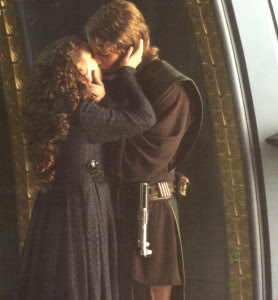
Set three years after "STAR WARS: EPISODE II - ATTACK OF THE CLONES" and the beginning of the Clone Wars,"REVENGE OF THE SITH" begin with Jedi Master Obi-Wan Kenobi and Jedi Knight Anakin Skywalker leading a mission to rescue Chancellor Palpatine from the clutches of Separatist leader and former Jedi Master Count Dooku aka Darth Tyrannus and his leading military commander, General Grievous. The rescue mission is besieged with difficulties. First, the two Jedi are forced to fight a difficult duel against Dooku and later, are briefly captured by General Grievous. But the pair prevail and return the kidnapped Palpatine to Coruscant via a crash landing skillfully executed by Anakin. The latter is reunited with his secret wife, Senator Padmé Amidala, who reveals she is pregnant. At first excited, Anakin begins to have premonitions of Padmé dying in childbirth.

Fearful of Padmé dying, Anakin seek advice from Jedi Master Yoda on how do deal with his anxieties. But Yoda's advice leaves him unsatisfied. Even worse, Obi-Wan reveals that the Jedi Council are suspicious of Palpatine maintaining power of the Senate and asks Anakin to spy on the politician. Anakin is against the idea, due to his friendship with Palpatine and because he finds the mission dishonorable. His opinion of the Jedi Council sinks even further when Palpatine appoints Anakin as his representative on the Jedi Council . . . and the latter is denied the rank of Master. Between his anxieties over Padmé's pregnancy and fate and loss of faith toward the Jedi Order, Anakin finds himself listening more and more to the insidious advice of Chancellor Palpatine.

Most fans of the "STAR WARS" view "REVENGE OF THE SITH" as the best film in the Prequel Trilogy. I could make assumptions on why the 2005 film is considered the best of the second trilogy, but it would be arrogant of me to do so. Unlike the Original Trilogy, it is the third and last film of this trilogy that proved to be the darkest. In fact, "REVENGE OF THE SITH" is probably the darkest film in the entire franchise . . . so far. And that is not surprising, considering that it marked the downfalls of Anakin Skywalker, the Jedi Order and the Galactic Republic. Many fans have dumped the blame on Chancellor-turned-Emperor Palpatine for being responsible for the downfall of a Jedi Knight, a religious order and a political body. I wish I could agree with them . . . but I cannot. I would say that Palpatine exploited their weaknesses, fears and bad choices in his bid for supreme power. But he would have never had the opportunity for that grasp for power without the mistakes of the Galactic Senate, the Republic and the Jedi Order. There are some who believed that he "used the Force" to cloud his real identity and actions from the Jedi Council. I find that ridiculous . . . even for a science-fiction/fantasy tale like "STAR WARS"

Sometimes, I get the feeling that certain fans simply cannot accept the idea that the so-called "good guys" would make such erroneous mistakes that would help lead to their downfalls. Unless said "good guys" were Anakin Skywalker and Jedi Master Mace Windu. Due to the foreknowledge of Anakin's fate as Sith apprentice Darth Vader, many were willing to accept him capable of making serious mistakes. And due to Mace Windu's unpopularity with many fans - especially those who are incapable of accepting Samuel L. Jackson in the role of a major member of the Jedi Order - they were willing to accept him as flawed. Yet, many of these same fans seemed unwilling to accept the flawed nature of characters like Senator Padmé Amidala and especially Jedi Masters Obi-Wan Kenobi and Yoda. Padmé is regarded - to her great detriment - as some idealized female character. And both Obi-Wan and Yoda are highly regarded by the fans, due to their major roles in the older trilogy. In fact, I find this attitude so annoying that I am almost willing to break my earlier edit about making assumptions regarding the fans' opinion of "REVENGE OF THE SITH". Okay . . . I am willing to do so. I am willing to make an arrogant assumption. And here it is. I suspect that many STAR WARS fans are more acceptable of this third film, due to Anakin Skywalker becoming Darth Vader. It is the event that many had been looking forward to since the Prequel Trilogy movies first hit the movie screens back in 1999.

For me, "REVENGE OF THE SITH" was not merely about Anakin's love of Padmé and his fear of losing her finally led to his transformation into Sith Lord Darth Vader. For me, it was also watching the last chapter in which the major characters made their final decisions that helped Chancellor Palpatine aka Darth Sidious become leader of the Galactic Empire. Watching these major characters make mistake after mistake, along with crime and crime was fascinating to watch. Even some of the most minor decisions - like Padmé Amidala's insistence that her marriage to Anakin remain a secret - struck me as a prime example of the mistakes the characters made, due to their attachments. Most fans tend to claim that the Jedi - especially Yoda and Obi-Wan Kenobi - harbored no attachments to anyone or anything. But I feel differently. I believe the movie made it clear that the Jedi - and all of them - were attached to the Order and were willing to do anything to maintain it, the Republic and the Order's position within the Republic.

"REVENGE OF THE SITH" featured some very memorable scenes. I was especially impressed by the entire sequence featuring Obi-Wan and Anakin's rescue of Palpatine from Count Dooku and General Grievous; which featured a hilarious moment with R2-D2 and was capped by a fantastic crash landing on Coruscant. Obi-Wan's experiences on Utapau struck me as interesting . . . especially his duel with Grievous. Anakin and the clonetroopers' attack on the Jedi Temple sent chills down my spine. So did that final confrontation between Palpatine, Mace Windu and Anakin inside the chancellor's office. The twin duels of Anakin vs. Obi-Wan, and Yoda vs. Palpatine practically took my breath away. I was really impressed by Ewan McGregor and Hayden Christensen's work in their fight scene. I have seen clips of the two actors practicing their duel . . . and yes, they are that good. However, I cannot help but wonder which scenes that the majority of the fans prefer - the two lightsaber duels or the bone-chilling Order 66 sequence that featured the destruction of many Jedi padawans, Knights and Masters. By the way, Lucas shot that sequence as a montage and I must say that his direction, along with Ben Burtt and Roger Barton's editing, and John Williams' score made this the most haunting sequence in the entire Saga.

The movie also featured some intimate scenes - both dramatic and comedic - that struck me as a positive addition to its story. Both Ian McDiarmid and Hayden Christensen gave outstanding performances in many of the scenes between Palpatine and Anakin . . . especially the opera scene in which the former revealed the circumstances behind the death of the former's master, Darth Plagueis. Both Christensen and Natalie Portman did excellent jobs in conveying the love between their characters and the lack of communication that seemed to plague the Skywalker/Amidala marriage - including one scene in which Padmé expressed her sympathy toward the Separatists. Both McDiarmid and Samuel L. Jackson were excellent in the final confrontation scene between Palpatine and Master Windu. Christensen and McGregor were outstanding in two particular scenes between Anakin and Obi-Wan. I not only enjoyed their performances in one scene in which the pair argued over Obi-Wan's request that Anakin spy on Palpatine, but also when the Jedi Master and his former padawan exchanged their last friendly conversation before Obi-Wan's departure for Utapau. And I must admit that I found it nice to see not only the Wookie homeworld Kashyyyk, but also Peter Mayhew as Chewbacca.

As usual for any STAR WARS movie, "REVENGE OF THE SITH" featured some outstanding visual effects. If I could pinpoint the main person responsible for the movie's visual and special effects, I would kowtow at that person's feet. First of all, I was impressed not only by the effects used in the Battle of Coruscant opening and the crash landing that marked the sequence's ending; but also the two duels that dominated the movie's last half hour. The art direction team led by Peter Russell, along with cinematographer David Tattersall and the special effects team provided eye-catching scenes like those featured below that literally made me drool:
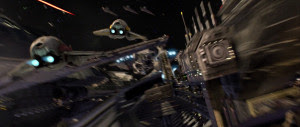
starwars3-movie-screencaps.com-107 starwars3-movie-screencaps.com-9618

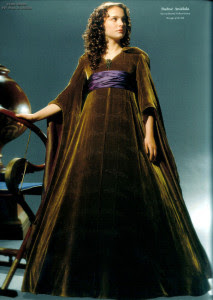
Speaking of art that made me drool, I have to bring up Trisha Biggar's costume designs. Naturally, I will not repeat myself about how much I admire her work. And I will not bring up the fact that I consider it a crime that she never received any Oscar nominations for her work. However, below are two examples of her work featured in "REVENGE OF THE SITH":

padme-amidala-aqua-georgette-costume-gallery 

senator-amidala-green-cut-velvet-costume-gallery

Was there anything about "REVENGE OF THE SITH" that I found troubling or questionable? Well . . . yes. As much as I admired the performances in the movie, there were the usual cheesy dialogue found in a STAR WARS movie. This was especially apparent in a few performances that struck me as particularly hammy. Christensen got pretty hammy in one scene in which Anakin angrily confronted Obi-Wan before their duel on Mustafar. And McGregor got a little hammy during that scene in which Obi-Wan ranted at a limbless and burning Anakin, after the duel. Even McDiarmid and Jackson engaged in a good deal of ham during the big Palpatine/Windu scene. I was a little disappointed that Christopher Lee's Count Dooku only appeared in the movie's first half hour. His replacement - General Grievous one-dimensional and not very interesting as a personality. I was also disappointed that Jar-Jar Binks, along with Owen and Beru Lars were all reduced to cameo appearances with no dialogue in the movie's last montage. However, my biggest complaint featured Anakin's early appearance on Mustafar. After killing Nute Gunray and the other Separatist leadership on Mustafar, Anakin remained on the planet; while Palpatine declared himself Emperor, Obi-Wan informed Padmé about Anakin's new role as a Sith Lord, and both of them headed for Mustafar. Why on earth did Anakin remain on the planet for so long, after killing the Separatists? That did not make sense to me.

Despite these complaints, I cannot deny that "STAR WARS: EPISODE III - REVENGE OF THE SITH" was a more than worthy entry in the STAR WARS. I found it outstanding, despite its flaws. The movie featured a well written, yet bleak tale about the downfall of its many characters; outstanding visuals; along with excellent action and dramatic scenes. But most importantly, I also found it ironic that the movie's bleak and operatic tone ended up being more or less copied by many other film franchises in the years to come.


Friday, July 23, 2021

"STAR WARS: EPISODE III - REVENGE OF THE SITH" (2005) Photo Gallery

 star-wars-revenge-of-the-sith


Below are images from the 2005 movie, "STAR WARS: EPISODE III - REVENGE OF THE SITH". Produced and directed by George Lucas, the movie starred Ewan McGregor, Natalie Portman and Hayden Christensen:


"STAR WARS: EPISODE III - REVENGE OF THE SITH" (2005) Photo Gallery

936full-star-wars--episode-iii----revenge-of-the-sith-screenshot


BailBrehaLeia-hd


Beru-owen-luke


Clash_of_Titans


starwars3-movie-screencaps.com-204


epi31


Kenobi_Grievous


movies_star_wars_iii_revenge_of_the_sith_1


revenge_of_the_sith


revenge-of-the-sith (1)


revenge-of-the-sith


revengeofthesithbdcap4_original


Revenge-of-the-Sith-star-wars-revenge-of-the-sith-29320208-1024-768


Revenge-of-the-Sith-star-wars-revenge-of-the-sith-29320246-1024-768


Revenge-of-the-Sith-star-wars-revenge-of-the-sith-29322365-2500-1615


Revenge-of-the-Sith-star-wars-revenge-of-the-sith-29322649-1280-1024


star-wars-3-revenge-of-the-sith


star-wars-iii-revenge-of-the-sith-003


Star-Wars-Episode-III-Revenge-Of-The-Sith-Darth-Vader-darth-vader-18356787-1599-677


StarWarsIII-RevengeOfTheSith-03


Star-Wars-Revenge-of-the-Sith-mace-windu-12175419-1599-677


starwars--revenge-of-the-sith-wallpapers_26158_1600x1200


starwars3-movie-screencaps.com-9438


Jar-Jar-Binks-Star-Wars-Episode-III-e1366229561100


star-wars--revenge-of-the-sith-wallpapers_30910_1280x960


still-of-ian-mcdiarmid-in-star-wars--episode-iii-revenge-of-the-sith-(2005)-large-picture


z-revengeofthesithbdcap2_original


zz-Anakin-padme-anakin-and-padme-32738244-1088-1136

Monday, February 24, 2020

"The Demand For An Ideal Woman"


"THE DEMAND FOR AN IDEAL WOMAN"

Over seven months ago, the STAR WARS movie, "STAR WARS: EPISODE I - THE PHANTOM MENACE" had achieved a milestone. Twenty years has passed since it initial release in theaters in May 1999. However, there have been other recent or upcoming events within the STAR WARS franchise. One of them was the release of the third Sequel Trilogy movie in December 2019, "STAR WARS: EPISODE IX - THE RISE OF SKYWALKER" and the release of the Disney Plus series, "THE MANDALORIAN". And last year, a Young Adults (YA) novel called "Queen's Shadow", hit the bookstores. It was the first stand alone story about the Prequel Trilogy's leading lady, Padmé Amidala.

Many fans, especially women, celebrated the release of "Queen's Shadow". Written by EK Johnston, the novel focused on a period in Padmé's life, when her career underwent a transformation from the elected monarch of Naboo to a senator of Naboo. This meant that the novel was set sometime during those ten years between "THE PHANTOM MENACE" and "STAR WARS: EPISODE II - ATTACK OF THE CLONES". More importantly, this novel featured the first time that Padmé was the main protagonist in any STAR WARS movie, television production or novel. "Queen's Shadow" also led many fans to contemplate the idea of Padmé surviving the birth of her twin children, Luke and Leia, and becoming a leader for the early manifestation of the Rebel Alliance. More importantly, the novel and the 20th anniversary of "THE PHANTOM MENACE" has revived the fans' never ending complaint that filmmaker George Lucas should have portrayed Padmé as an ideal character . . . a feminist icon.

As a woman, the idea of a leading woman character as a feminist icon sounds very appealing. But as a lover of films and novels, I tend to harbor a strong wariness toward such characters - regardless of their gender. Recently, some fans have suggested that Padmé should have been the main character of the Prequel Trilogy (1999-2005) and not her husband, Anakin Skywalker. Considering that Anakin eventually became Darth Vader from the Original Trilogy (1977-1983), I found this suggestion a little hard to swallow. Even worse, I find the constant complaints that Lucas had "ruined" Padmé's character, due to the manner of her death in "STAR WARS: EPISODE III - REVENGE OF THE SITH", rather tiresome and pedantic. As I have pointed out in a previous article about Padmé, I found nothing wrong with a person succumbing to death due to a "broken heart" or allowing one's emotions to affect his/her health. Such deaths have actually occurred in real life. And considering that Padmé was in the third trimester of her pregnancy, had endured a series of traumatic events in her professional and personal life, including a recent attack by a jealous Anakin, the circumstances of her death did not surprise me, let alone anger me.

In regard to the idea that Padmé Amidala should have been the main protagonist of the Prequel Trilogy . . . this did not make any sense to me. Like Han Solo and Leia Organa in the Original Trilogy, Padmé was a major supporting character in the Prequel Trilogy. The real focus of the Prequel Trilogy was Anakin Skywalker, which made sense considering he proved to be the catalyst of the Jedi Order's downfall and rise of the Galactic Empire. And in his own way, Padmé and Anakin's son, Luke Skywalker, was the Original Trilogy's main character. Although Ewan McGregor was the leading actor in the second and third films of the Prequel Trilogy, Obi-Wan Kenobi was not the central character. It was still Anakin. And I do not recall any film in STAR WARS franchise being made solely about Obi-Wan. Oh yes, there are now plans for one, but due to the failure of "SOLO: A STAR WARS STORY" during the summer of 2018, Disney Studios had originally decided to curtail any Obi-Wan solo film. Yet, many did not complain at the time.

Many fans had bitched and moaned about how Lucas treated Padmé's character, because he had conveyed her weaknesses, as well as her strengths. He did the same with many male characters. Apparently, certain people cannot deal with a major female character's weaknesses being on display, unless she is either the main character or in a drama. What am I saying? Many people still cannot make up their mines on whether they want the Rey character from Disney's Sequel Trilogy to be ideal or flawed. On the other hand, I once came across an article - it might have come from "The Mary Sue Blog" but I am not sure - claimed that the problem with Padmé was not that she was not allowed to have flaws. This person claimed that the that moviegoers saw her as a problem solver who never gave up in the first two movies. The article also added that Padmé was not someone who would give up the will to live. A few years ago, I had written an ARTICLE that discussed Padmé's mistakes in all three Prequel Trilogy movies and argued that she was not the "flawless" or "ideal" character that many still regard her as.

I had also pointed out that in "STAR WARS: EPISODE III – REVENGE OF THE SITH", Padmé had experienced the loss of the Galactic Republic, the rise of the Galactic Empire, the loss of her husband to Palpatine and the Sith, and his physical attack on her in a brief space of time – within two days or less. As someone who had recently experienced personal loss, I understood why she had given in to emotional despair. I had only experienced one loss. Padmé did not. Just because she was able to not give up and overcome a situation in the past, did not mean that she would always be able to do this.

I still recall the "BUFFY THE VAMPIRE SLAYER" Season Five episode called (5.21) "The Weight of the World" in which the main protagonist, Buffy Summers, had went into a catatonic state after she failing to prevent her younger sister Dawn from being abducted by the season’s Big Bad, a hell demon called Glory. Buffy had failed to overcome her state of catatonic depression on her own. She needed help and she eventually got it in the form of one of her closest friends, Willow Rosenberg. There was no Willow to help Padmé deal with her emotional state during the downfall of the Republic and the Jedi Order. Padmé had no Willow to deal with the emotional trauma of Anakin's transformation into a Sith Lord or his attack upon her. Instead, she had to deal with going into premature labor and giving birth to twins. I hate to say this, but neither Obi-Wan Kenobi, Yoda or Bail Organa were as emotionally close to Padmé as Willow Rosenberg was close to Buffy Summers. And instead of providing emotional support to her, the two Jedi Masters and the senator were more focused on her going into labor and giving birth.

There is something about today's feminism that truly irritates me. Women (both in real life and in fiction) are not allowed to be flawed. Actually, I think today's feminists and sexist men have that trait in common. Both groups demand that women be ideal in a way THEY believe women should be ideal. For feminists, women should be some all knowing saint, who can kick ass and have a successful career outside of the home. For sexist men (or men in general), women should be attractive or beautiful bed warmers, home carers and emotional crutches. Women are expected to revolve their lives around the men in their lives. Women in real life are not allowed to be flawed - especially if they are famous. And fictional women - especially those who are major characters in an action story - are definitely NOT ALLOWED to be flawed. Especially someone like Padmé Amidala.

I do not believe that Lucas had subjected Padmé's character with weak writing. I think too many fans were too prejudiced to allow her to be a complex woman with both strengths and weaknesses. They had wanted . . . no, they had demanded she be some feminist icon. While complaining about Padmé's character, they would always compare her with her daughter, Princess Leia Organa aka Skywalker. The ironic thing is that Leia was no more of a feminist icon than her mother. Leia had her own set of flaws. Yes, she was an intelligent and capable political leader, who was also knowledgeable about military tactics and defending herself. Leia also possessed a tough demeanor and a sharp wit. On the other hand, Leia also harbored a hot temper, impatience and a penchant for being both judgmental and an emotional coward. Nor was she the type to be forgiving (except with certain people). Two of Leia's flaws - her temper and being judgmental - were on full display in the 1980 movie, "STAR WARS: EPISODE V - THE EMPIRE STRIKES BACK". In that film, she had supported Chewbacca’s angry and murderous attack upon Lando Calrissian, after the latter was forced to betray them to Darth Vader and the Empire. During that scene, both Leia and Chewbacca’s anger got the best of them at a time when it should not have. Neither had pondered over how the Empire had arrived on Bespin before them. Nor did they ever considered that Vader had coerced Lando into choosing between betraying Han and them or watching the Empire destroy Bespin and its citizens.

Many fans have also complained that George Lucas had failed to explore Padmé's backstory . . . especially in "THE PHANTOM MENACE" and "ATTACK OF THE CLONES". I found this complaint rather hypocritical. Lucas had never bothered to explore Leia or her future husband Han Solo's backstory in the Original Trilogy films. Yet, no one or very few people have complained about this. When Disney Studios finally green-lighted a movie about Han's backstory, many film goers and media outlets like "The Mary Sue Blog" bitched and moaned about how it was not necessary. I suspect they had made this complaint, because it was easier than criticizing how Disney Studios/Lucasfilm had handled the movie's production and theatrical release. Is it any wonder that I found this complaint that a movie about Han's backstory was not necessary, but Padmé's was? And to this day, no one has complained about a lack of Leia's backstory in the 1977-1983 films.

What I find even more ironic is that these same fans have complained that the Rey character from the Sequel Trilogy, produced and released by a Disney Studios controlled Lucasfilm was a Mary Sue. They found her character one-dimensional, a bit too ideal and her skills in the Force too implausible to believe. Mind you, I agree with them. But I do find it ironic that they erroneously celebrate Leia for being ideal, complain about Padmé's less than ideal characterization . . . and complain that someone like Rey is too ideal. Ah, the fickleness of human nature.

Look, I am happy that a novel about Padmé Amidala has been written. And I find it interesting that STAR WARS fans will get a chance to peek into those years between "THE PHANTOM MENACE" and "ATTACK OF THE CLONES". But I must admit that I found myself getting irritated that so many have used the novel's upcoming release to criticize George Lucas' portrayal of her character. It seems obvious to me that a great deal of their criticism is wrapped around a lot of hypocrisy, an inability to understand human nature and a definite lack of attention toward what actually happened to Padmé in the Prequel Trilogy. I cannot help but feel that some people need to realize that in contemplating feminism, they also need to factor in the concept of human nature . . . and good writing. Good writing or a strong character is not one who can do no wrong or be strong, 24/7. A strong character, for me, is someone who possesses both strengths and weaknesses . . . or virtues and flaws. As far as I am concerned, George Lucas had included all in his creation of Padmé Amidala.


Friday, December 13, 2019

"ROGUE ONE: A STAR WARS STORY" (2016) Review


"ROGUE ONE: A STAR WARS STORY" (2016) Review

When I had first learned of Disney and Lucasfilm's plans to create a series of stand-alone films within the STAR WARS franchise, I felt a little taken aback. I had felt certain that the new owners of the franchise would stick to a series of films that served as one chapter in a long story. But following the release of "STAR WARS: EPISODE VII - THE FORCE AWAKENS" and my slight disappointment over it, I was willing to accept anything new. 

"ROGUE ONE: A STAR WARS STORY" was announced as the first of a series of those stand-alone film. However, I found this ironic, considering that the plot for "ROGUE ONE" more or less served as a prequel to the first film in the franchise, 1977's "STAR WARS: EPISODE IV - A NEW HOPE". The 2016 film's plot centered around the Rebel Alliance's discovery of the first Death Star and their efforts to steal the very plans that served as a plot incentive for "A NEW HOPE". Upon contemplating the movie's plot, it occurred to me that Disney/Lucasfilm could have re-titled the movie, "STAR WARS: EPISODE IV - ROGUE ONE" and change the title for all of the films that followed chronologically. Especially since "ROGUE ONE" seemed to have a major, major impact upon the narrative for "A NEW HOPE".

Actually, "ROGUE ONE" begins with a prologue set thirteen years before the film's main narrative. Research scientist Galen Erso and his family are discovered to be hiding out on the planet Lah'mu by Imperial weapons developer, Orson Krennic. The latter wants him to help complete the Death Star, which had began construction several years earlier. Although Galen instructs his wife Lyra and daughter Jyn to hide where they can be found by Rebel extremist Saw Gerrera, Lyra instructs Jyn to hide and tries to rescue her husband from Krennic. Unfortunately, Lyra is killed, Galen is escorted away by Krennic and a squad of death troopers and Jyn spends the next few years being raised by Gerrera. 

Thirteen years pass when Imperial cargo pilot Bodhi Rook defects from the Empire in order to smuggle a holographic message from Galen to Gerrera, now residing on the desert moon Jedha (where the Empire is mining kyber crystals to power the Death Star). Rebel intelligence officer Captain Cassian Andor learns about Bodhi's defection. He frees Jyn, now a minor criminal in her early twenties, from an Imperial labor camp at Wobani. He brings her before the Rebel Alliance leaders, who convince her to find Gerrera and rescue Galen so the Alliance can learn more about the Death Star. While meeting Gerrera on Jedha; Jyn and Cassian become acquainted with Bodhi, who is Gerrera's prisoner; a blind former Guardian of the Whills named Chirrut Îmw; and Chirrut's best friend, a former Guardian of the Whills-turned-freelance assassin named Baze Malbus. While Jyn and the others escape the destruction of Jedha's holy city by the Death Star and head for Galen's location on Eadu, they are unaware that Cassian has been covertly ordered by Alliance General Draven to kill Galen after confirming the existence of the Death Star.

I noticed that the media tend to describe the plot for "ROGUE ONE: A STAR WARS STORY" as a mission for a group of rebels to steal the Death Star plans. And yet . . . after watching the film, I noticed that "theft of the Death Star plans" story line did not really kick in until the last thirty-to-forty minutes. Most of the film seemed to be centered on the Rebel Alliance confirming the existence of the Death Star. By shifting the actual attempt to steal the Death Star plans to the movie's last act, Gareth Edwards and the film's producers may have undermined the actual narrative surrounding the mission. It seemed . . . well, it reminded me of Luke Skywalker's plans to rescue Han Solo from Jabba the Hutt in 1983's "STAR WARS: EPISODE VI - RETURN OF THE JEDI" - confusing, a bit lame and out of left field. It also struck me as a bit rushed. I also found the major battle over Scarif during the heist of the Death Star plans a bit too much. I thought it was unnecessary to include it in the movie. Since the opening crawler for "A NEW HOPE" had made it clear that the Rebel Alliance had won its first major battle against the Galactic Empire, while the plans were being stolen, I can blame George Lucas instead of Gareth Edwards. So now, the movie is a . . . what? I do not know. Perhaps I had been expecting a Star Wars version of a heist film. Or an espionage film that did not a major battle. Instead, I found myself watching a movie that seemed to have more than one kind of narrative. 

I had a few other problems with "ROGUE ONE". Once the movie had moved past the prologue regarding Jyn Erso's childhood, the narrative rushed. At breakneck speed. It rushed from Cassian Andor's meeting with an informative on a planet whose name I do not remember, to his rescue of Jyn Erso from an Imperial prison transport, to Bodhi Rook's disastrous meeting with Saw Gerrera and finally to Jyn's meeting with the Rebel Alliance leaders on Yavin. Once Jyn, Cassian and the latter's companion - a reprogrammed Imperial droid called K-2SO arrive on Jedha; the movie slows down to a tolerable pace. I also had a problem with the movie's prologue - especially the circumstances surrounding Lyra Erso's death. I am still wondering why she had believed she could save her husband from Orson Krennic and a squad of death troopers with a blaster. Was she really that stupid? Or did the screenwriters simply found a lazy and contrived way to kill her off? 

"ROGUE ONE" also featured the appearances of a few characters for fan service. C-3P0 and R2-D2 were briefly shown at the Rebel Alliance base on Yavin before they were supposed to be aboard the Tantive IV. Their appearance struck me as unnecessary and forced. Speaking of the Tantive IV, what kind of transport did Bail Organa used to return to Alderaan? Especially since the corvette was his personal transport and his adoptive daughter, Leia Organa would end up using the ship for her mission, later on. I was very surprised to see Cornelius Evazan and Ponda Baba, the thuggish pair who had harassed Luke Skywalker in "A NEW HOPE". This pair had bumped into Jyn and Cassian on the streets of Jedha City. Considering that an hour or two later, the Holy City was destroyed by the Death Star, I found myself wondering how they had avoided death in order to reach Tattoine in time to encounter Luke and Jedi Master Obi-Wan Kenobi in "A NEW HOPE". I eventually learned that the pair had left Jedha just before the city's destruction. Okay . . . but why include them in this movie in the first place? It was unnecessary. And their presence in the movie nearly created a blooper within the saga.

"ROGUE ONE" also featured the return of the Death Star commander, Grand Moff Tarkin and a young Leia Organa. Since Peter Cushing, who had portrayed Tarkin in the 1977 film had been dead for over two decades; and Carrie Fisher was at least 58 to 59 years old when the movie was shot; Lucasfilm had decided to use CGI for their faces. Frankly, it did not work for me. I feel that Lucasfilm could have simply used actor Guy Henry to portray Tarkin without pasting Cushing's CGI generated image on his face. They could have done the same for actress Ingvild Deila, who briefly portrayed Leia with Fisher's image. Honestly, the CGI images of the two characters reminded me of a video game. A relative of mine had pointed out that both had a "dead in the eyes" look about them.

And yet . . . despite these quibbles, I still managed to enjoy "ROGUE ONE: A STAR WARS STORY" very much. I enjoyed it a hell of a lot more than I did Disney's other entry for the franchise, "STAR WARS: EPISODE VII - THE FORCE AWAKENS". The movie's narrative seemed very original in compare to the 2015 movie. Of all the STAR WARS movies I have seen, it seemed more like an espionage flick than any other in the franchise. And like the Prequel Trilogy, "STAR WARS: EPISODE V - THE EMPIRE STRIKES BACK" and the last act of "STAR WARS: EPISODE VI - RETURN OF THE JEDI""ROGUE ONE" seemed willing to explore the ambiguity of its characters and its plotlines. 

This especially seemed to be the case for characters like the ruthless Rebel Alliance General Davits Draven, Alliance leader Mon Mothma, the extremist Rebel freedom fighter Saw Guerra and one of the main characters - mercenary Baze Malbus. Forest Whitaker had been cast to portray former Clone Wars veteran and Rebel freedom fighter, Saw Guerra; who had served as Jyn Erso's guardian following her mother's death and father's capture. I noticed that Whitaker, who seemed to have a talent for accents, had utilized a slight West African one to portray Guerra. However, I was more impressed by Whitaker's portrayal of the imposing Guerra as a slightly withered soul, whose years of political extremism and violence had left him physically disabled and paranoid. I really enjoyed one scene in which Whitaker conveyed Guerra's fear that his former protegee, Jyn, had sought him out to kill him. Alistair Petrie did an excellent job in combining both the commanding presence of General Draven and his ruthless ambiguity. After all, this was the man whose sole reason behind the search for Galen Erso was to have the latter killed. Genevieve O'Reilly had portrayed the younger Mon Mothma in 2005's "STAR WARS: EPISODE III - REVENGE OF THE SITH", but her scenes had been cut. Eleven years later, she returned to portray the same character. Only in this film, O'Reilly's former Senator Mothma who is nearly rendered speechless by Jyn's revelation about the Death Star. O'Reilly did a first-rate job in portraying a Mon Mothma never seen before. Yes, she behaved like a leader. However, O'Reilly got the chance to convey some of Mon Mothma's uncertainty about the Alliance dealing with the Death Star. I realize that some of you might find it odd that I would list Baze Malbus as one of the movie's more ambiguous characters. He really did nothing in the movie to hint his ambiguous nature, considering that he spent most of his time coming to the aid of his friend, Chirrut Îmwe or their companions. But I noticed how actor Jiang Wen skillfully conveyed Baze's cynical personality and reluctance to play hero and get dragged into the rebellion against the Empire.

If there were two characters that truly reflected the movie's moral ambiguity - namely the two main protagonists, Jyn Erso and Captain Cassian Andor. Since the age of eight or nine (I think), Jyn has endured a lot by the age of twenty-two - the loss of her parents via death and capture, being raised as a Rebel fighter by an extremist like Saw Guerra and eventually abandoned at age sixteen, and life as a petty criminal (which included the occasional prison incarceration). It is not surprising that by the time the Rebel Alliance had recruited her, Jyn had become a cynical, wary and slightly ruthless young woman. And Felicity Jones did one hell of a job in bringing her to life. This is not surprising. Jyn Erso was such a complicated character and Jones was talented enough to convey this aspect of her. Cassian Andor, an intelligence officer for the Rebel Alliance, had experienced a hard life since the age of six. His homeworld of Fest had joined the Separatists during the Clone Wars. This means that Cassian has been fighting for twenty of his twenty-six years - first against the Galactic Republic and later against the Empire, after he had joined the Rebel Alliance. Cassian shared Jyn's ruthlessness. In some ways, he is a lot more ruthless and pragmatic than her. And unlike Jyn, Cassian is a dedicated warrior, rebel . . . and loner. But unlike her, he was also a very dedicated warrior and rebel. It seemed very apparent to me that those years as a freedom fighter had not only transformed him into a loner, but almost into another Saw Guerra. And Diego Luna gave a brilliant performance as the ruthless and pragmatic Captain Andor. I have only seen Luna in two other roles, but his performance as Cassian Andor was a revelation to me. Perhaps I should check out some of his other work.

"ROGUE ONE" featured other interesting performances. Donnie Yen gave a very charismatic performance as the blind former Guardian of the Whills priest, who believes in the Force. I must also add that I thought that as a screen team, both he and Jiang Wen seemed to be the heart of the movie. Another interesting performance came from Alan Tudyk, who provided the voice for K-2SO, the former Imperial enforcer droid reprogrammed to serve Cassian and the Rebel Alliance. Jimmy Smits gave a charmingly brief performance as Alderaan's senator and royal prince, Bail Organa - a role he had originated in the second and third Prequel movies. He and O'Reilly enjoyed a poignant moment on screen, as they discussed the possibility of requesting the help of none other than former Jedi Master Obi-Wan Kenobi. Riz Ahmed gave a very memorable performance as the very man who helped Galen Erso kick start the events of this film, former Imperial shuttle pilot turned diehard Rebel, Bodhi Rook. Whether being scared out of his wits by Saw Guerra or enthusiastically supporting Jyn's scheme to steal the Death Star plans, Ahmed's Rook seemed to be a bundle of raw energy. Speaking of the Erso family . . . Mads Mikkelsen gave a very poignant and sad performance as Galen Erso, a brilliant scientist who willing helped the Empire complete its construction of the Death Star following the death of his wife and his daughter's disappearance. Before one can label Galen as another one of Mikkelsen's villainous roles, he turns out to be an unusual hero who surreptitiously gives the Rebel an opportunity to destroy the weapons station . . . before he is betrayed by them. The movie's main antagonist; Orson Krennic, the Director of Advanced Weapons Research for the Imperial Military; was actually portrayed by Ben Mendelsohn. Krennic proved to be something different as far as STAR WARS villains go. Mendelsohn did a first-rate job in conveying Krennic's murderous tendencies and raging ambition. At the same time, he did a great job in allowing Krennic's inferiority complex to crawl out of the woodwork . . . especially when in the presence of the domineering Grand Moff Wilhuff Tarkin or the very intimidating Anakin Skywalker aka Darth Vader.

Many have claimed that "ROGUE ONE" is either the darkest or ambiguous film in the STAR WARS franchise. I do agree that the movie is ambiguous. Most of the main characters were not portrayed as dashing heroes or idealistic heroines who made little or no mistakes. With the exception of a few like Bodhi Rook, Chirrut Îmwe, Bail Organa and Orson Krennic; the movie featured some very ambiguous characters . . . three of them being Jyn Erso, Cassian Andor and Saw Guerra. I was especially impressed by how screenwriters Chris Weitz and Tony Gilroy portrayed Jyn Erso. Instead of feisty heroine or someone who is ridiculous ideal, they had portrayed her as a young woman who had aged before her time, due to the hard knocks she had experienced. A few STAR WARS fans had complained that Jyn's reason for going after the Death Star plans had not been motivated by some kind of patriotism or ideal. Someone even went so far as to criticize her for not being some leader or a person with "special" abilities. Personally, I am glad. With the exception of Rey, who proved to be a little too perfect for my tastes, I had no problems with the saga's other lead women characters. I liked that Jyn could not give a rat's ass about the Rebellion. I liked that she felt a great deal of anger toward the Rebellion Alliance for what happened to her father. And more importantly, I am glad that her decision to go after the Death Star plans was based upon a personal reason - to finish what her father had started. 

But what I had found even more interesting were the screenwriters and Gareth Edwards' willingness to shine an unflattering light on the Rebel Alliance. Looking back at the Original Trilogy's portrayal of the Alliance, the latter came off as an organization governed by morally upstanding and brave people. Perhaps a little too shiny or a little too . . . "good". Not so in "ROGUE ONE". One example of their moral ambiguity was featured in a scene in which the Alliance political and military leaders expressed reluctance and fear to do something about the Death Star, let alone continuing with the rebellion. Despite my annoyance at the "town hall" style meeting, I must admit that I enjoyed watching the Rebel Alliance leaders express their flaws and fears. I was also fascinated by how the filmmakers - through the Cassian Andor, Saw Guerra and General Draven characters - reveal how low the Rebel Alliance would sink for its cause. This was especially apparent through Cassian's murder of a Rebel informant and Guerra's paranoia, which led to his torture of Rook Bodhi. However, General Draven's orders for Cassian to assassinate Galen Erso, along with his second plan regarding the scientist really conveyed the ugliness of the Rebel Alliance. And I loved it.

But is "ROGUE ONE" the "darkest" or most ambiguous of the eight current films in the STAR WARS saga? Personally, I believe that honor still belongs to the 2005 film, "REVENGE OF THE SITH". Yes, "ROGUE ONE" was willing to convey the more unpleasant sides of its main characters. Then again, I could say the same about the Original and Prequel Trilogies. Especially the latter. And yes, "ROGUE ONE" was willing to reveal the uglier sides of the Rebel Alliance. Although I cannot say the same about the Original Trilogy, the Prequel Trilogy seemed very ambiguous in its portrayal of both the Galactic Republic and the Jedi Order. But I cannot regard "ROGUE ONE" as the saga's most ambiguous film. Despite the mistakes and crimes committed by many of the film's protagonists, the theft of the Death Star plans and the Battle of Scarif pretty much provided redemption not only to the movie's protagonists, but also the Rebel Alliance. One cannot say the same for the protagonists from the Prequel Trilogy. Nearly all of them, along with the Galactic Republic and the Jedi Order, suffered the consequences of their mistakes and crimes . . . for years to come. There was no last minute redemption for the by the end of "REVENGE OF THE SITH". Perhaps that is an ending that certain moviegoers could not swallow, especially in a STAR WARS movie.

I have no memories of Michael Giacchino's score for "ROGUE ONE". None whatsoever. David Crossman and Glyn Dillon's costume designs earned them a Saturn Award nomination. Personally, I did not see what the big deal was about. I will give Crossman and Dillon credit for creating the right costumes for the movie's characters and setting. Otherwise, they almost strike me as a rehash of John Gallo and Aggie Guerard Rodgers' work in the Original Trilogy. I felt somewhat impressed by Doug Chiang's production designs - especially for the Jedha City and Scarif sequences. His work was enhanced by Greig Fraser's photography. Speaking of the latter, I noticed that Fraser's photography of the Jedha City streets brought back memories of Gilbert Taylor's photography of the Mos Eisley streets in "A NEW HOPE". Both settings seemed to possess a similar lighting and atmosphere as shown in the two images below:


The Maldives served as a stand-in for the planet of Scarif, location of the Death Star plans and the movie's major battle. Between Chiang's production designs and Fraser's photography, part of that sequence brought back memories of various World War II movies set in the Pacific Theater.

In the end, I rather enjoyed "ROGUE ONE". There are some aspects of it that struck me as very original - especially in its characterization and its portrayal of the Rebel Alliance. Yet, at the same time, its plot and setting made it clear to me that the Disney Studios and Lucasfilm are still chained to some kind of nostalgia for the Original Trilogy - a nostalgia from which I feel they need to break free. And although I feel that the movie possess some flaws in its narrative, I still believe that it proved to be first-rate in the end.