Showing posts with label frank oz. Show all posts

Sunday, June 1, 2025

"What Jedi Feud?"


"WHAT JEDI FEUD?"

For over two decades, many STAR WARS fans have claimed that the franchise's prequel characters Anakin Skywalker (the future Darth Vader) and Jedi Master Mace Windu were constantly at odds during the three Prequel Trilogy movies. I find this claim very difficult to accept. Why? Because I never saw any real evidence of this.

The trilogy's first movie, "STAR WARS: EPISODE I - THE PHANTOM MENACE" established not only the existence of the Jedi Order, it also established Jedi Master Yoda and Mace Windu as the Council and Order's top leaders. After his connection to the Force was tested, the Council rejected him as one of the Order's future acolytes. I cannot deny that Master Windu proved to the one member who informed both nine-year-old Anakin and his sponsor Jedi Master Qui-Gon Jinn that the former would not be accepted within the Jedi Order. But I believe many fans had failed to realize that Mace was not solely responsible for the Council's rejection of Anakin. He had made this decision along with the entire Jedi Council. Mace had merely expressed what they had decided. I have grave doubts that the Council would allow Mace to be the only one to decide upon Anakin joining the Order. What would be the point of the Order existing in the first place? Even in the following movie, "STAR WARS: EPISODE II - ATTACK OF THE CLONES", both Mace and Yoda had discussed the Order's diminishing connection to the Force. Although Mace had suggested they inform the Galactic Senate of the situation, it was Yoda who made the final decision to keep it a secret. So much for Mace Windu being the sole decision-maker of the Jedi Council.

In "THE PHANTOM MENACE", the Jedi Council had sensed Anakin's connection to the Force due to his actions during the Battle of Naboo. Because of this, the Council had reversed its decision and allowed Anakin to join the Order. Only one Council member proved to be the sole voice of dissent . . . and it was not Mace Windu. Actually, Yoda proved to be the only Council member who did not want Anakin to join the Order, fearing the nine-year-old would prove to be a future threat. Yoda also disapproved of former Jedi padawan-turned-Knight Obi-Wan Kenobi becoming Anakin's new Jedi tutor. Realizing he was seriously outvoted, Yoda finally changed his vote in order to align with his fellow Council members. But there is no denying that Yoda proved to be the last holdout against allowing Anakin into the Order.

Another reason why I find it difficult to believe that Master Windu had been in conflict with Anakin throughout the Prequel Trilogy was his conversation with Obi-Wan in one of the scenes from "ATTACK OF THE CLONES". During a stroll with Obi-Wan inside the Jedi Temple, the latter had accused Anakin of growing arrogant about his abilities. He also expressed doubt about the Chosen One prophecy. Mace, who seemed opened to the latter, had expressed surprise at Obi-Wan’s negative attitude toward Anakin. Yoda joined in the conversation. Although the latter remained silent about the Chosen One prophecy, he expressed a warning that many of the Order's members had been growing increasingly arrogant lately.

I can only recall one Prequel Trilogy in which Master Windu had expressed open hostility toward Anakin. Before the release of the trilogy's third film, "REVENGE OF THE SITH", George Lucas had sanctioned the creation of the 2005 novel, "Labyrinth of Evil", which served as a direct prequel to the 2005 movie. Written by James Lucerno and released four months before "REVENGE OF THE SITH", Lucerno's novel featured Count Dooku aka Darth Tyrannus' capture of the Galactic Republic Chancellor Sheev Palpatine. The novel also featured the Jedi Council's discovery that someone within the Chancellor's circle had connections to Dooku and another Sith Lord.

This discovery had led to the Jedi Council's growing distrust and hostility toward Anakin, due to his friendship with Palpatine. With the exception of Obi-Wan, whose attitude toward Anakin and the prophecy had changed after three years, other members of the Council had more or less began expressing a distant or cold attitude toward the 22-year-old knight - including Mace Windu. When Obi-Wan had suggested that Anakin spy on Chancellor Palpatine on behalf of the Council, the younger man rebuffed the idea in anger. However, Anakin was not the only one who had protested against the plan. Both Yoda and Windu also questioned Obi-Wan's plan. Mace openly admitted that he did not trust Anakin. Yoda went even further and questioned the plausibility of the Chosen One prophecy. For their own reasons, both Windu AND Yoda had simply refused to trust Anakin or believe in the prophecy.

Which leads me to this question . . . why do so many fans still claim that Mace Windu had been hostile toward Anakin Skywalker throughout the entire Prequel Trilogy? Why do so many of them, to this day, want to believe that the Jedi Master and Jedi Knight had a feud? It seemed quite obvious that Anakin had problems with the Order at different occasions - even with his own Jedi Master, Obi-Wan Kenobi. Yet, many fans have turned a blind eye to this and decided that Mace Windu . . . and no one else, had been in conflict with Anakin. Is this some attempt by fans to blame Master Windu for Anakin's downfall? I hope not. Anyone with common sense could see that Anakin's relationship with the Order and specifically, members of the Council, had been a lot more complicated.

I might as well make this plain. I have never seen any one-on-one conflict between Anakin Skywalker and Master Mace Windu on the movie or television screens. Not in the Prequel Trilogy movies or in "THE CLONE WARS" animated series. So, why is it still important for fans to believe that a feud between the pair had existed?


Saturday, November 11, 2023

"The Moral Landscape of the STAR WARS Saga" - The Jedi Order II


Here is my third article on moral ambiguity found in the STAR WARS saga:


"THE MORAL LANDSCAPE OF THE STAR WARS SAGA"

The Jedi Order – Part Two

In my previous essay, I had generally touched upon the moral ambiguity that permeated the Jedi characters in the ”STAR WARS” saga. In the following essay, I hope to give a more detailed account on some of the more questionable actions committed by the major Jedi characters in the story:

Before I do, I want to focus upon something that had just occurred to me. In ”A NEW HOPE”, one of the Imperial admirals serving under Grand Moff Tarkin made this comment about the Jedi:

"VADER: Don't be too proud of this technological terror you've constructed. The ability to destroy a planet is insignificant next to the power of the Force.

MOTTI: Don't try to frighten us with your sorcerer's ways, Lord Vader. Your sad devotion to that ancient religion has not helped you conjure up the stolen data tapes, or given you clairvoyance enough to find the Rebel's hidden fort . . ."


Judging from Admiral Motti’s comments, are we led to believe that the Jedi Order was a religious one? Considering that its members devoted a great deal of time studying and adhering to the mystical energies of the Force, perhaps it would not be wrong to say yes. And if the Jedi was a religious order, why did they allow themselves to serve a political body like the Galactic Republic? As I had mentioned in the previous essay, Obi-Wan Kenobi had informed Luke Skywalker in "A NEW HOPE" that the Jedi had served as guardians of peace and justice for the Galactic Republic. In other words, the Jedi acted as diplomats, agents of political intrigue, investigators and even warriors for the Galactic Senate. And I cannot help but wonder if the Jedi Council had made a mistake in forming such a connection.

But serving the Galactic Republic as its cadre of warriors, diplomats and intelligence agents was not the only mistake that the Jedi Order had committed. In the Prequel Trilogy, the major Jedi characters committed a series of questionable acts to preserve the Galactic Republic, which had become corrupt and fractured; and the survival of the Jedi Order. This is not surprising, considering how attached they had become to both the Order and its position within the Republic's power structure. Here is a look into some of the more questionable mistakes that some of the major Jedi characters had made:


Jedi Master Ki-Adi Mundi

At the time of "THE PHANTOM MENACE", the Cerea-born Jedi Master, Ki-Adi Mundi was a member of the Jedi Order Council. And he was among those who rejected Anakin Skywalker as an initiate for the Order. Apparently, he agreed with his colleagues that Anakin, at the age of nine, was too old to be initiated into the Order. In "ATTACK OF THE CLONES", he was among the Jedi who accompanied Yoda and the Clone troopers to rescue their Jedi colleagues and attack the Separatists on Geonosis – an action that began the three-year Clone Wars. But it was in "REVENGE OF THE SITH" where Master Mundi made a questionable suggestion. It was he who had suggested that the Jedi Council assume control of the Galactic Senate if Palpatine refuses to step down at the end of war. Not much came from this suggestion, despite Masters Yoda and Mace Windu supporting his suggestion. But it was a sign that the Jedi were willing to commit questionable acts in order to preserve the Republic and more importantly, preserve the Jedi’s status and existence.


Jedi Master Qui-Gon Jinn

When Jedi Master Qui-Gon Jinn first came to my mind, I found it difficult to spot any flaws in his personality, especially since he happens to be my favorite character in the entire saga. This is ironic – at least to me – considering that many other STAR WARS fans have heavily criticized him. However, despite my feelings for Master Jinn, I have become aware of a few flaws in his psyche. But my criticism of the Jedi Master does not match those expressed by other fans.

Many STAR WARS fans have criticized Master Jinn for ignoring Master Yoda’s warnings about initiating Anakin Skywalker into the Jedi Order. They have also criticized him for defying the Jedi Council on a regular basis. In fact, they see his unwillingness to abide by the rules and act like the good little Jedi Master as a sign of his potential to succumb to his inner darkness. I do not agree with this legion of STAR WARS fans. I saw nothing wrong with Master Jinn’s defiance of the Jedi Council. I believe that it is healthy to question and defy authority when you need to. Blind obedience strikes me as not a good path to character development. And Master Jinn had been right about Anakin. The boy did turn out to be the Chosen One. Yoda, Windu, the rest of the Jedi Council and Obi-Wan were so focused upon their fears of the future that they failed to heed Qui-Gon’s warning that the future is not set in stone. However, this did not make Master Jinn the only perfect character in the STAR WARS saga. Trust me, he had his flaws.

While watching "THE PHANTOM MENACE", I was struck by Master Jinn’s tendency toward stubbornness. It is one thing to know one’s mind. It is another to do so without considering the advice or words of others. I suspect that Master Jinn may have been one of those types who are so intent upon adhering to his own beliefs that he would blindly refuse to consider those of others. Although Qui-Gon had been right about Anakin, I cannot help but wonder if there had been any past advice he had ignored due to his own stubbornness. Judging from how Master Jinn managed to procure Anakin’s freedom from Tatooine shop owner, Watto, one could also accuse him of being a manipulator. Naboo’s young queen, Padme Amidala not only seemed aware of Qui-Gon’s manipulative nature, she had also commented upon it with an air of disapproval.


Jedi Master Mace Windu

Like his fellow Jedi Master, Ki-Adi Mundi, Mace Windu was a member of the Jedi Council in "THE PHANTOM MENACE". He was the one who tested Anakin Skywalker’s connection to the Force. And although he seemed impressed by Anakin’s abilities, he also rejected the nine year-old boy’s initiation into the Order. Along with Yoda, he questioned Anakin’s attachments to Shmi Skywalker, completely ignoring the possibility that he and his fellow Jedi were just as attached to the Jedi Order. Nor did he bother to consider Jedi Master Qui-Gon Jinn’s suggestion that Anakin might be the Chosen One mentioned in the Journal of the Whills prophecy. When Master Yoda suggested that they refrain from informing the Senate of the Jedi’s diminished connection to the Force in "ATTACK OF THE CLONES", Master Windu supported this decision – another example of the Jedi’s willingness to do anything to maintain the Order’s status quo. Master Windu’s arrogance came into play during the Jedi’s attempt to rescue Jedi Knight Obi-Wan Kenobi from Count Dooku and the Separatists forces on Geonosis. He seemed so certain that the Jedi would prevail that he had failed to consider the possibility that they would end up outnumbered.

However, Master Windu’s worst mistakes occurred in "REVENGE OF THE SITH". When Anakin had first been introduced to the Jedi Council in "THE PHANTOM MENACE", he had been among those who did not believe that the former slave was the ”Chosen One” who would bring balance to the Force. His opinion had changed to Anakin’s favor in "ATTACK OF THE CLONES". Yet, after the Jedi Council had learned there was a Sith Lord amongst Chancellor Palpatine’s circle, Windu’s belief in Anakin becoming the "Chosen One" took a nose dive, due to the latter’s friendship with the chancellor – and for no other reason. He also supported Ki-Adi Mundi’s suggestion that the Jedi Council assume control of the Galactic Senate if Palpatine ever failed to step down as chancellor. But in the end, Windu made his biggest mistake when he set out to arrest Palpatine after learning from Anakin that he was a Sith Lord.

Many fans have complained that Master Windu should have done the following: 1) wait for Master Yoda’s return from Kashyyyk; or 2) confront Palpatine with Anakin by his side. One, I never saw the need for Windu to wait for Yoda. I believe that he was certainly capable of confronting Palpatine on his own. Which he did not do. Jedi Masters Kit Fisto, Agen Kolar, and Saesee Tiin had accompanied him to Palpatine’s office. Granted, they had failed to give him much support, but I do not see how Windu could have foreseen this. As for his decision to leave Anakin behind . . . I saw nothing wrong with it, either. Windu had correctly sensed the fear that threatened to cloud Anakin’s judgment. If I had been Windu, I would have also left Anakin behind.

But the Jedi Master did make two serious mistakes – from my point of view. One, he had confronted Palpatine without informing the Senate or any evidence that the Chancellor was a Sith Lord. He had arrogantly assumed that as a Jedi Master, he had the right to confront Palpatine without considering the latter’s role as the political leader of the galaxy’s ruling body. And two, ignoring his earlier resolve to simply arrest Palpatine, Windu decided to kill the latter. It was not a matter of whether he was capable of committing this deed. He failed to consider that his determination to destroy what he perceived as evil, had led him to an ugly place and his own death.


Jedi Master Yoda

Because he had been portrayed as the embodiment of Jedi wisdom in the Original Trilogy, many STAR WARS fans – especially the long time fans – have been inclined to dismiss or make excuses for Master Yoda’s mistakes and flaws in the Prequel Trilogy. And Yoda made just as many as Mace Windu. Yoda was one of the senior members of the Jedi Council who rejected Anakin’s bid to join the Order in "THE PHANTOM MENACE". Like the other members of the Order, Yoda viewed Anakin as a threat to their way of life, claiming that his future was clouded. Many fans had viewed this as confirmation that Yoda probably sensed Anakin’s future as a Sith Lord, when the latter was first introduced to the Council. Personally, I rather doubt it. I suspect that Yoda and the other Council members viewed the nine year-old Anakin as someone with an established outside connection or someone with a connection that might clash with their influence. Which would explain why they viewed Anakin as "a loose cannon or an unknown factor". If there is one thing that individuals fear more than anything it is an unknown future. I find it rather odd that the Jedi had never sensed Count Dooku as a future threat. Especially Yoda, who had been Dooku’s personal Jedi tutor.

When the Council finally agreed to initiate Anakin into the Order, Yoda was the only one who disagreed with this decision. He also disagreed with Obi-Wan Kenobi’s decision to choose Anakin as his padawan. I would not have had a problem with this if Yoda had agreed to give Anakin some initial training before Obi-Wan could assume the role as the nine year-old’s personal Jedi master. But he did not. The movie never confirmed that Yoda had foreseen Anakin becoming a Sith Lord. So, why did he seem determined to have nothing to do with Anakin? How was it that he viewed Anakin as a future threat, yet had failed to do the same in regard to his former protégé, Count Dooku? Or sense that Chancellor Palpatine was a Sith Lord? Had Yoda’s own fears of Anakin’s unusual initiation into the Order and high midichlorian count intimidate him? Did he view Anakin as some symbol of an unknown future? Had this fear of Anakin led to the young initiate being one of the very few who had never received any training – whether as a youngling or a padawan – from Yoda? I cannot help but wonder.

Moving on to "ATTACK OF THE CLONES", I tried to recall any mistake or bad judgment call that Yoda may have committed. At first, I believed there was nothing I could criticize him for . . . until I remembered the conversation between him and Windu regarding the Jedi’s connection to the Force. After the two Jedi Masters had received a message from Obi-Wan Kenobi about the Kamino drone factory, Windu suggested they inform the Galactic Senate of their diminishing connection to the Force. Yoda nay-sayed the idea, claiming their list of adversaries would grow if they had announced this disturbing news. One could say that Yoda made a sensible decision. Or did he? Why did Yoda insist upon this suppression of the truth? Was it perhaps he feared that if the Senate knew the truth about the Jedi’s weakening connection to the Force, the political body would find a reason to get rid of the Order? Or end the Jedi’s role as the galaxy’s guardians of peace? In other words, is it possible that Yoda had feared the decline of the Jedi’s role as a major influence in the galaxy? If so, his decision struck me as a sign of the Jedi’s willingness to do anything to perpetrate the status quo and survival of their Order.

One of the more ironic moments in "ATTACK OF THE CLONES" had occurred during the Battle of Geonosis. It was Yoda who led the clone troopers into an attack upon the Separatist forces. It was he who as leader of the Republic forces, acted as the aggressor in the start of the Clone Wars. One could defend Yoda’s actions, claiming that he did so on the behalf of the Chancellor and the Galactic Senate. And that person would be right. But this would have never come about if the Jedi Order had not agreed to serve as the Senate’s political, intelligence, diplomatic and military force.

"REVENGE OF THE SITH", in my opinion, truly exposed some of Yoda’s personal fallacies. Like Windu and the rest of the Jedi Council, they had made the assumption that Anakin’s friendship with Chancellor Palpatine made automatically made him untrustworthy. Then again, Yoda never really warmed up to Anakin. And his unwillingness to bend to Anakin would prove to be catastrophic. And like Windu, Yoda had agreed to the ludicrous plan to use Anakin to spy upon the Chancellor, not realizing that it would alienate the young Jedi Knight even further from the Jedi Order. But Yoda made even bigger mistakes. Again, like Mace Windu, he agreed to Ki-Adi Mundi’s suggestion that the Jedi commit a coup d’état against Chancellor Palpatine by removing him from office if he fails to give up his political powers by the end of the Clone Wars. Although Yoda stated that such an idea would be dangerous, he still seemed willing to act upon it. This was another sign of the Jedi’s willingness to resort to questionable acts in order to maintain their Order’s status quo and survival.

However, Yoda made his biggest mistake when he decided to kill Palpatine, following the Order’s destruction via the Chancellor/Emperor’s Order 66. Unlike Windu, Yoda had no interest in arresting Palpatine. And he certainly made no attempt to reveal what he knew about the Emperor. Blinded by his anger over the Jedi Order’s destruction, Yoda simply tried to kill Palpatine, believing it would be a simple solution to the Jedi’s precarious situation. It almost seemed as if Yoda did not want to acknowledge that the old Jedi Order’s time was over. Or that nothing lasts forever. One could easily accuse the Jedi Master of arrogance and of allowing his attachment to the Jedi Order to blind him from its fate. Even if he had managed to kill Palpatine, the Galactic Senate could have easily accuse him of murder . . . and they would be right to do so. Yoda’s act of aggression against Palpatine – whether he had succeeded or not – may have damaged the Jedi’s reputation within the Republic-turned-Empire even further. When he failed in his attempt to kill Palpatine and found himself fleeing from the Senate building, I suspect that Yoda finally realized the extent of his many mistakes.

Following the events of "REVENGE OF THE SITH", Yoda spent the next 22 years living on the remote planet of Dagobah. Then he met Luke Skywalker, the son of former Jedi Knight Anakin Skywalker and Naboo Senator Padme Amidala. Luke had been sent by Obi-Wan Kenobi’s ghost to learn the ways of the Force by Yoda. One would think that after years of contemplating his mistakes and learning more aspects of the Force by the ghost of Jedi Master Qui-Gon Jinn, Yoda could do no wrong. The events of "THE EMPIRE STRIKES BACK" proved otherwise. Like Obi-Wan, Yoda failed to tell Luke that his father – Anakin Skywalker – and the Emperor’s apprentice – Darth Vader – were one and the same. Both Yoda and Obi-Wan wanted Luke familiar with the ways of the Force in order to confront both the Emperor and Vader. Perhaps they feared if Luke knew the truth about his paternity, he would not be so eager confront the two Sith Lords – especially Vader. I suppose they believed they were only doing good. Yet, both Jedi Masters nearly tripped over their lies, when Luke learned the truth from Vader on Bespin. And what would have happened if Vader had never told Luke his real identity? Either the Sith Lord would have eventually killed Luke . . . or Luke would have killed Vader without learning that he had just killed his father. And could you image Luke’s reaction upon finally learning the truth about Vader? I suspect that his reaction to learning that Yoda and Obi-Wan had lied to him in "RETURN OF THE JEDI" would have been benign in comparison.

Before I end this article, I want to say one last thing about Yoda. Many have regarded some of his advice as words of wisdom and pointed out that if certain characters had heeded them, the Republic would have been spared a great deal of grief. In "THE PHANTOM MENACE", it was Yoda who pointed out that Anakin’s future was clouded by fear and attachment to the memory of his mother, Shmi Skywalker. And Anakin’s inability to let go of his attachments eventually led to his downfall. Yoda pointed out that the majority of Jedi Knights and Masters had become arrogant over the years in "ATTACK OF THE CLONES". Once again, he was right. And in "REVENGE OF THE SITH", he gave a lecture to Anakin about how the fear of loss could lead an individual to succumb to his/her inner ugliness. Yet, Yoda’s reaction to the loss of Mace Windu and other members of the Jedi Order was to seek out Palpatine and kill him without considering the consequences of such an act. Like many others, Yoda was very good at dispensing advice. Unfortunately, he did not seem that adept at heeding his own advice.


Conclusion

Before one comes to the conclusion that I have a dislike of the Jedi Order. I do not. What I was trying to prove was that despite their reputation among STAR WARS fans for being morally above board, they had their flaws. The Jedi Masters featured in the saga were not above allowing their emotions and ego to drive them into making some serious mistakes. They were not invincible . . . and should never be viewed as such. Also, my criticisms of the Jedi Order are not a reflection of my opinion of George Lucas as a storyteller. I have come across many STAR WARS fans who have either criticized Lucas for portraying the Jedi as flawed characters, or made excuses for their actions. I can do neither. One of the reasons why I have such a high regard for Lucas’ saga is that he was willing to show that characters such as Yoda, Mace Windu and the other Jedi are capable of great flaws – regardless of whether they would are deemed "good or evil". It is this ambiguity that makes "STAR WARS" a personal favorite of mine.

In the following article, I will discuss one last Jedi character – namely Jedi Master Obi-Wan Kenobi. And I have a lot to say about him.




Monday, May 18, 2020

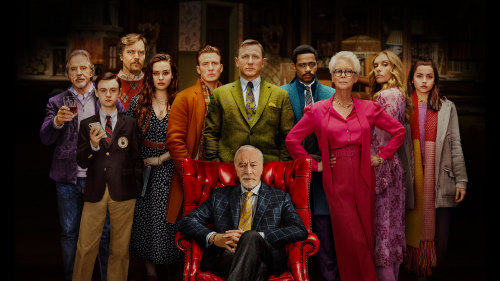
"KNIVES OUT" (2019) Review

image


"KNIVES OUT" (2019) Review

Over the past seven to eight years, I have developed something of a mixed opinion of Rian Johnson as a filmmaker. I have only seen three of his films - 2012's "LOOPER", the 2017 STAR WARS movie, "STAR WARS: EPISODE VIII - THE LAST JEDI" and his recent film, the 2019 Oscar nominated film, "KNIVES OUT". I became a fan of "LOOPER". I disliked "THE LAST JEDI". In fact, I disliked "THE LAST JEDI" so much that I was almost reluctant to see his new film, "KNIVES OUT" in the movie theaters.

In the end, my curiosity won out and I saw "KNIVES OUT" in the theaters. Also written by Johnson, the movie proved to be an unusual mystery. Let me explain. "KNIVES OUT" begins with the Thrombey family gathering at the Massachusetts home of wealthy mystery novelist, Harlan Thrombey, to celebrate his 85th birthday. The following morning, Harlan's housekeeper, Fran, finds him dead in his private room, with his throat slit. The local police - Detective Lieutenant Elliot and Trooper Wagner - are convinced that Harlan had committed suicide. But the private detective accompanying them - Benoit Blanc - is convinced that Harlan had been murdered. It seems Blanc had been hired by anonymous party to investigate the novelist's death. When Blanc, Elliot and Wagner learn that Harlan's relationships with his family were strained, they find themselves with a list of suspects:

*Linda Thrombey Drysdale - Harlan's daughter, a real estate mogul who had started her company with his money
*Walter "Walt" Thrombey - Harlan's only living son, the CEO of his father's publishing company, whom the novelist wants to fire so that the former can forge his own career
*Richard Drysdale - Linda's husband, who helps her run her company and who is cheating on her with another woman
*Hugh Ransom Drysdale - Linda and Richard's son and Harlan's older grandson; a spoiled playboy whom Harlan had recently disowned
*Joni Thrombey - Harlan's daughter-in-law, widow of the novelist's deceased son, and a self-help guru; who has been stealing money from Harlan's estate
*Megan "Meg" Thrombey - Joni's daughter and Harlan's granddaughter, a college student whose education is threatened by the recent conflict between her mother and grandfather
*Donna Thrombey - Walt's wife and Harlan's daughter-in-law
*Jacob Thrombey - Walt and Donna's son and Harlan's younger grandson, who holds alt-right views


Blanc and the two police officers eventually turn to Marta Cabrera, Harlan's nurse and caregiver, for information on the family. It seems Marta had a close friendship with Harlan. But more importantly, neither Blanc or the cops are aware that Marta knows the true details behind Harlan's death and that it involved her accidentally administering him an overdose of morphine instead of his usual medication. Marta spends most of the film struggling to prevent Blanc, Elliot and Wagner from learning the truth behind her role in Harlan's death . . . unaware that a member of the family had set everything in motion in order to kill Harlan and benefit financially from his death.

"KNIVES OUT" was an interesting movie. And very unusual. Was it unusual in a good way or in a bad way? If I must be honest, I found some aspects of the movie rather questionable - only a few - but I can honestly say that its flaws had nothing to do with the unusual aspects of it. One problem I had with "KNIVES OUT" was its revelation scene of the story's true villain. I am not claiming that it was implausible. But . . . how can I put this? I found it a bit reaching. Just from looking at Harlan's toxicology report, Benoit Blanc was able to quickly unravel the mystery leading to the author's death. That toxicology report almost became a deus ex machina. I more than admire how Johnson used his story to examine the United States' outlook and treatment of immigrants - especially those from non-European countries. But with characters like Lieutenant Elliot and Fran, Johnson also had the opportunity to examine this country's attitudes toward race and class. And he never took it. Apparently, like Matthew Weiner and Joss Whedon, Rian Johnson can only deal with one issue at a time, even when he has the opportunity to touch upon more than one. My final problem with "KNIVES OUT" proved to be the status of Benoit Blanc in the story. I get it. He is private detective who was hired by an unknown client to solve the mystery surrounding Harlan Thrombey's death. My question is why the local police had more or less allowed Blanc to lead this investigation? Worse, the narrative bothered to explain how this happened, considering that no one - including Blanc - knew the identity of his client. According to the movie, Blanc had a high reputation as a private detective. So what? This is no guarantee that he would be allowed to lead the investigation into Harlan's death.

I would never be the first to say that "KNIVES OUT" was a perfect film. My complaints in the previous paragraph pretty much states otherwise. However, I cannot deny that this was not only a first-rate mystery, but a rather unusual one. Very unusual and very original. And I love originality in a story - especially when it is well written. Before I had even seen the film, I had assumed that its narrative would focus on the Benoit Blanc character investigating Harlan Thrombey's death. And it did . . . during its first thirty minutes or so. But when the narrative revealed that Harlan had sliced his own throat to save Marta's nursing career (and prevent her mother from being deported as an undocumented citizen) by hiding that she had accidentally given him the wrong medication, it focused on the latter's attempt to prevent Blanc and the police from focusing on the real details behind the author's death. And if I must be frank, I have never encountered such a narrative before. At least one I can recall.

Johnson also did an excellent job in conveying the politics behind Harlan's suicide and Marta's efforts to hide the truth behind his death. As I had stated earlier, Harlan feared that if Marta was punished for accidentally giving him the wrong medication, her mother, an illegal immigrant, would suffer by association. This is understandable, considering the strong anti-immigrant stance taken by many countries in recent years. What I found very interesting was Johnson's portrayal of the Thrombeys' attitude toward Marta. The older members affectionately call her "kid" and constantly remind her that they regard her as an official member of the family. Some family members like Joni Thrombey and her daughter Meg loudly beat the drum for a liberal, pro-immigrant stance. Richard expresses "admiration" for Marta because he believes her family had entered the United States "legally", revealing a passive-aggressive racism. Walt never says anything in support or against undocumented workers. He simply treats Marta as "a member of the family". Only his 16 year-old son Jacob seems openly bigoted. In a way, even Harlan belongs on this list.

Yet, despite the family's stance that Marta is "one of them", they do occasionally treat her as a servant - as shown in one moment when Richard automatically hands Marta an empty tea, assuming that she works for the family and not simply as Harlan's nurse. And not one member of the family cannot remember where Marta was born. As far as the Thrombeys were concerned, she was either from Paraguay, Ecuador and in the case of Ransom - Linda and Richard's son - Brazil. As for Harlan's Anglo housekeeper, Fran, she barely exists as far as the family is concerned. I suspect this is due to the fact that Fran is not as close to Harlan as he is to Marta. In the end, their "liberalism" is all about kissing up to Harlan in order to use him as a walking ATM. Speaking of Ransom Drysdale, he proved to be quite the dark horse. The character hardly ever interact with Marta, until the reading of Harlan's will. Following that incident, he learns about her mistake with Harlan's medicine and decides to help her deceive Blanc and the police. However, the movie eventually reveals that he does so . . . not from the goodness of his own heart. Despite being closer in personality to the mystery author, Ransom ends up proving that he is still a product of a privileged upbringing.

"KNIVES OUT" provided some very interesting performances. The solid ones came from the likes of Marlene Forte, Riki Lindhome, Edi Patterson, Jaeden Martell, and Shyrley Rodriguez. The movie also featured surprising, yet entertaining appearances from M. Emmett Walsh as Harlan's aging security guard, Frank Oz as Harlan's long-suffering attorney, and K Callan, who portrayed Harlan's centenarian mother with her eyes and one or two words. Katherine Langford did a great job in conveying Meg Thrombey's ardent liberalism and hypocrisy at the same time. Riki Lindhome gave an effective performance as Walt Thrombey's brittle wife, Donna. Noah Segan was both funny and enduring as police Trooper Wagner, who happened to be a fan of Harlan's novels. And Lakeith Stanfield gave a wry, yet humorous performance as the laconic Detective Lieutenant Elliot.

And then . . . we have those portraying the senior members of the Thrombey family. Toni Collette was very amusing, yet slightly mannered as Harlan's daughter-in-law, Joni Thrombey. Listening to her accent, I found myself wondering if her character supposed to be from Southern California. Michael Shannon gave a very subtle, yet intense performance as Harlan's younger son, Walt, who had become too dependent on his publishing company for success. Don Johnson, on the other hand, was hilarious as Harlan's unfaithful son-in-law Richard Drysdale, whose sardonic and outgoing personality hid his dependence on his wife and a bigoted streak. Jamie Lee Curtis was wonderful as the blunt, no-nonsense Linda Thrombey Drysdale, who managed to carve a successful business in real estate on her own - with Daddy's money, of course. Despite her more sympathetic portrayal, Curtis did a great job in proving that she was just as spoiled and over-privileged as the rest of her family. Christopher Plummer was marvelous as the clever, yet warm-hearted Harlan Thrombey, who seemed to have become aware that his success as an author and publisher contrasted with his failure as a family patriarch.

I am certain that many fans of Disney's Marvel Cinematic Universe (MCU) would be surprised to see Chris Evans in the role of Harlan's over privileged grandson, Hugh Ransom Drysdale. What I enjoyed about Evans' performance was that it was subtle, sardonic and if I must be honest, rather surprise. At one point it seemed as if his Ransom felt genuine compassion for Marta's situation . . . until he reveals his willingness to help stemmed more from his desire to get some kind of financial reward from her. I have never heard of Ana de Armas before "KNIVES OUT", yet she has been an actress for the past fifteen years or so. Many have regarded her role as the movie's heroine, Marta Cabrera, as a star making performance. In fact, she managed to garner a Golden Globe nomination for Best Actress in a Motion Picture Comedy or Musical. Did she deserve it? Uh . . . yeah! De Armas gave a superb performance as the kind-hearted, yet besieged Marta who was forced to juggle between her grief over Harlan's death, the feeling of being overwhelmed by the changes in her circumstances and her struggle to prevent Benoit Blanc and the cops from learning the truth about her patient's death. The actress' performance was balanced by a deliberately theatrical performance from Daniel Craig as the story's main sleuth, Benoit Blanc. Judging from his "Deep South" accent and French name, I can only gather that the detective came from one of the Gulf States - probably Louisiana. Now, I would not call Craig's Southern accent accurate. And I believe that he would be the first to say so. But for some reason, it matched his character's overly dramatic personality. I usually do not like theatrical or hammy performances, but there are some occasions when they actually worked. And Craig's Benoit Blanc worked like spades. With great skill, the actor managed to combine Blanc's theatrical personality with a talent for observation that would rival Sherlock Holmes. Like his leading lady, Craig managed to earn a much-deserved Golden Globe nomination - for Best Actor in a Motion Picture Comedy or Musical.

I will be the first to admit that I had a few quibbles about "KNIVES OUT". But only a few. In the end, Rian Johnson managed to create a first-rate and original mystery that managed to take me by surprise on several occasions. He did this with excellent direction and a superb cast led by Daniel Craig and Ana de Armas.


image

Thursday, April 16, 2020

"KNIVES OUT" (2019) Photo Gallery


Below are images from "KNIVES OUT", a modern twist on the murder mystery film. Produced, written and directed by Rian Johnson; the movie stars Daniel Craig and Ana de Armas:


"KNIVES OUT" (2019) Photo Gallery


Monday, February 24, 2020

"The Demand For An Ideal Woman"


"THE DEMAND FOR AN IDEAL WOMAN"

Over seven months ago, the STAR WARS movie, "STAR WARS: EPISODE I - THE PHANTOM MENACE" had achieved a milestone. Twenty years has passed since it initial release in theaters in May 1999. However, there have been other recent or upcoming events within the STAR WARS franchise. One of them was the release of the third Sequel Trilogy movie in December 2019, "STAR WARS: EPISODE IX - THE RISE OF SKYWALKER" and the release of the Disney Plus series, "THE MANDALORIAN". And last year, a Young Adults (YA) novel called "Queen's Shadow", hit the bookstores. It was the first stand alone story about the Prequel Trilogy's leading lady, Padmé Amidala.

Many fans, especially women, celebrated the release of "Queen's Shadow". Written by EK Johnston, the novel focused on a period in Padmé's life, when her career underwent a transformation from the elected monarch of Naboo to a senator of Naboo. This meant that the novel was set sometime during those ten years between "THE PHANTOM MENACE" and "STAR WARS: EPISODE II - ATTACK OF THE CLONES". More importantly, this novel featured the first time that Padmé was the main protagonist in any STAR WARS movie, television production or novel. "Queen's Shadow" also led many fans to contemplate the idea of Padmé surviving the birth of her twin children, Luke and Leia, and becoming a leader for the early manifestation of the Rebel Alliance. More importantly, the novel and the 20th anniversary of "THE PHANTOM MENACE" has revived the fans' never ending complaint that filmmaker George Lucas should have portrayed Padmé as an ideal character . . . a feminist icon.

As a woman, the idea of a leading woman character as a feminist icon sounds very appealing. But as a lover of films and novels, I tend to harbor a strong wariness toward such characters - regardless of their gender. Recently, some fans have suggested that Padmé should have been the main character of the Prequel Trilogy (1999-2005) and not her husband, Anakin Skywalker. Considering that Anakin eventually became Darth Vader from the Original Trilogy (1977-1983), I found this suggestion a little hard to swallow. Even worse, I find the constant complaints that Lucas had "ruined" Padmé's character, due to the manner of her death in "STAR WARS: EPISODE III - REVENGE OF THE SITH", rather tiresome and pedantic. As I have pointed out in a previous article about Padmé, I found nothing wrong with a person succumbing to death due to a "broken heart" or allowing one's emotions to affect his/her health. Such deaths have actually occurred in real life. And considering that Padmé was in the third trimester of her pregnancy, had endured a series of traumatic events in her professional and personal life, including a recent attack by a jealous Anakin, the circumstances of her death did not surprise me, let alone anger me.

In regard to the idea that Padmé Amidala should have been the main protagonist of the Prequel Trilogy . . . this did not make any sense to me. Like Han Solo and Leia Organa in the Original Trilogy, Padmé was a major supporting character in the Prequel Trilogy. The real focus of the Prequel Trilogy was Anakin Skywalker, which made sense considering he proved to be the catalyst of the Jedi Order's downfall and rise of the Galactic Empire. And in his own way, Padmé and Anakin's son, Luke Skywalker, was the Original Trilogy's main character. Although Ewan McGregor was the leading actor in the second and third films of the Prequel Trilogy, Obi-Wan Kenobi was not the central character. It was still Anakin. And I do not recall any film in STAR WARS franchise being made solely about Obi-Wan. Oh yes, there are now plans for one, but due to the failure of "SOLO: A STAR WARS STORY" during the summer of 2018, Disney Studios had originally decided to curtail any Obi-Wan solo film. Yet, many did not complain at the time.

Many fans had bitched and moaned about how Lucas treated Padmé's character, because he had conveyed her weaknesses, as well as her strengths. He did the same with many male characters. Apparently, certain people cannot deal with a major female character's weaknesses being on display, unless she is either the main character or in a drama. What am I saying? Many people still cannot make up their mines on whether they want the Rey character from Disney's Sequel Trilogy to be ideal or flawed. On the other hand, I once came across an article - it might have come from "The Mary Sue Blog" but I am not sure - claimed that the problem with Padmé was not that she was not allowed to have flaws. This person claimed that the that moviegoers saw her as a problem solver who never gave up in the first two movies. The article also added that Padmé was not someone who would give up the will to live. A few years ago, I had written an ARTICLE that discussed Padmé's mistakes in all three Prequel Trilogy movies and argued that she was not the "flawless" or "ideal" character that many still regard her as.

I had also pointed out that in "STAR WARS: EPISODE III – REVENGE OF THE SITH", Padmé had experienced the loss of the Galactic Republic, the rise of the Galactic Empire, the loss of her husband to Palpatine and the Sith, and his physical attack on her in a brief space of time – within two days or less. As someone who had recently experienced personal loss, I understood why she had given in to emotional despair. I had only experienced one loss. Padmé did not. Just because she was able to not give up and overcome a situation in the past, did not mean that she would always be able to do this.

I still recall the "BUFFY THE VAMPIRE SLAYER" Season Five episode called (5.21) "The Weight of the World" in which the main protagonist, Buffy Summers, had went into a catatonic state after she failing to prevent her younger sister Dawn from being abducted by the season’s Big Bad, a hell demon called Glory. Buffy had failed to overcome her state of catatonic depression on her own. She needed help and she eventually got it in the form of one of her closest friends, Willow Rosenberg. There was no Willow to help Padmé deal with her emotional state during the downfall of the Republic and the Jedi Order. Padmé had no Willow to deal with the emotional trauma of Anakin's transformation into a Sith Lord or his attack upon her. Instead, she had to deal with going into premature labor and giving birth to twins. I hate to say this, but neither Obi-Wan Kenobi, Yoda or Bail Organa were as emotionally close to Padmé as Willow Rosenberg was close to Buffy Summers. And instead of providing emotional support to her, the two Jedi Masters and the senator were more focused on her going into labor and giving birth.

There is something about today's feminism that truly irritates me. Women (both in real life and in fiction) are not allowed to be flawed. Actually, I think today's feminists and sexist men have that trait in common. Both groups demand that women be ideal in a way THEY believe women should be ideal. For feminists, women should be some all knowing saint, who can kick ass and have a successful career outside of the home. For sexist men (or men in general), women should be attractive or beautiful bed warmers, home carers and emotional crutches. Women are expected to revolve their lives around the men in their lives. Women in real life are not allowed to be flawed - especially if they are famous. And fictional women - especially those who are major characters in an action story - are definitely NOT ALLOWED to be flawed. Especially someone like Padmé Amidala.

I do not believe that Lucas had subjected Padmé's character with weak writing. I think too many fans were too prejudiced to allow her to be a complex woman with both strengths and weaknesses. They had wanted . . . no, they had demanded she be some feminist icon. While complaining about Padmé's character, they would always compare her with her daughter, Princess Leia Organa aka Skywalker. The ironic thing is that Leia was no more of a feminist icon than her mother. Leia had her own set of flaws. Yes, she was an intelligent and capable political leader, who was also knowledgeable about military tactics and defending herself. Leia also possessed a tough demeanor and a sharp wit. On the other hand, Leia also harbored a hot temper, impatience and a penchant for being both judgmental and an emotional coward. Nor was she the type to be forgiving (except with certain people). Two of Leia's flaws - her temper and being judgmental - were on full display in the 1980 movie, "STAR WARS: EPISODE V - THE EMPIRE STRIKES BACK". In that film, she had supported Chewbacca’s angry and murderous attack upon Lando Calrissian, after the latter was forced to betray them to Darth Vader and the Empire. During that scene, both Leia and Chewbacca’s anger got the best of them at a time when it should not have. Neither had pondered over how the Empire had arrived on Bespin before them. Nor did they ever considered that Vader had coerced Lando into choosing between betraying Han and them or watching the Empire destroy Bespin and its citizens.

Many fans have also complained that George Lucas had failed to explore Padmé's backstory . . . especially in "THE PHANTOM MENACE" and "ATTACK OF THE CLONES". I found this complaint rather hypocritical. Lucas had never bothered to explore Leia or her future husband Han Solo's backstory in the Original Trilogy films. Yet, no one or very few people have complained about this. When Disney Studios finally green-lighted a movie about Han's backstory, many film goers and media outlets like "The Mary Sue Blog" bitched and moaned about how it was not necessary. I suspect they had made this complaint, because it was easier than criticizing how Disney Studios/Lucasfilm had handled the movie's production and theatrical release. Is it any wonder that I found this complaint that a movie about Han's backstory was not necessary, but Padmé's was? And to this day, no one has complained about a lack of Leia's backstory in the 1977-1983 films.

What I find even more ironic is that these same fans have complained that the Rey character from the Sequel Trilogy, produced and released by a Disney Studios controlled Lucasfilm was a Mary Sue. They found her character one-dimensional, a bit too ideal and her skills in the Force too implausible to believe. Mind you, I agree with them. But I do find it ironic that they erroneously celebrate Leia for being ideal, complain about Padmé's less than ideal characterization . . . and complain that someone like Rey is too ideal. Ah, the fickleness of human nature.

Look, I am happy that a novel about Padmé Amidala has been written. And I find it interesting that STAR WARS fans will get a chance to peek into those years between "THE PHANTOM MENACE" and "ATTACK OF THE CLONES". But I must admit that I found myself getting irritated that so many have used the novel's upcoming release to criticize George Lucas' portrayal of her character. It seems obvious to me that a great deal of their criticism is wrapped around a lot of hypocrisy, an inability to understand human nature and a definite lack of attention toward what actually happened to Padmé in the Prequel Trilogy. I cannot help but feel that some people need to realize that in contemplating feminism, they also need to factor in the concept of human nature . . . and good writing. Good writing or a strong character is not one who can do no wrong or be strong, 24/7. A strong character, for me, is someone who possesses both strengths and weaknesses . . . or virtues and flaws. As far as I am concerned, George Lucas had included all in his creation of Padmé Amidala.