Showing posts with label sebastian stan. Show all posts

Friday, October 25, 2019

"Destruction in Comic Book Movies"


"DESTRUCTION IN COMIC BOOK MOVIES"

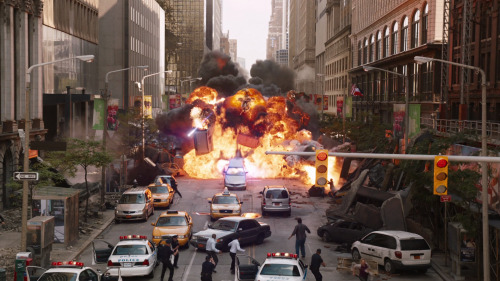
Two things happened to me recently.  One, I just finished a re-watch of the 2012 movie, “THE AVENGERS”.  And two, I came across this ARTICLE praising the MCU’s portrayal of the destruction of Midtown Manhattan in the film’s final action sequence and in many other films from the franchise.  
image

Now . . . not only did that article praised the Battle of Manhattan sequence in the 2012 movie, I had stumbled across another article even claimed that “THE AVENGERS: AGE OF ULTRON” handled massive destruction better than the 2013 movie, “MAN OF STEEL”. It also claimed that "THE AVENGERS" managed to achieve this, as well.  And if I must be honest, the article featured mainly photographs and shallow reasons that in my eyes, had failed to hold up.  
I have come to the conclusion that the media and many moviegoers were and still are incredibly hypocritical when it came to the MCU and the DCEU franchises.  They did not pitch a fit over the destruction featured in movies like “THE AVENGERS” and “AGE OF ULTRON”.  And when the MCU had finally decided to address the issue in the 2016 movie, “CAPTAIN AMERICA: CIVIL WAR”, it was more or less shoved aside for the Bucky Barnes manhunt and used as a motive in Helmut Zemo’s convoluted revenge plot against the Avengers.   Come to think of it, no one had raised a fuss over the destruction in Greenwich, England in 2013's “THOR: THE DARK WORLD”, aside from one comment used as a joke in Season One of “AGENTS OF S.H.I.E.L.D.”.
image

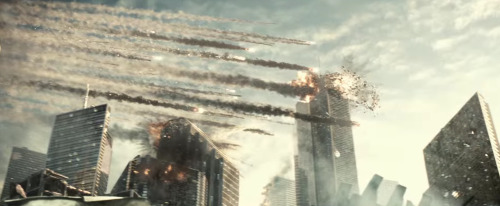
But when the Kryptonians under General Zod nearly destroyed downtown Metropolis with their World Machine in "MAN OF STEEL”, both the media and many moviegoers went into a SNIT FIT over the destruction.  They accused Zack Snyder and screenwriter David S. Goyer of going too far with the film’s sequence known as the “Black Zero Event”.  Many of them are still bitching about it to this day.  
Many articles and moviegoers had complained that Superman helped cause Metropolis’ destruction by not bothering to re-direct his fight against General Zod to a safer location.  In the 2013 movie, Superman had made two attempts to direct his fight against Zod away from Metropolis.  Unfortunately for him, Zod kept returning to Metropolis in his determination to kill Humans.  Many had also failed to notice that the Kryptonians’ World Machine was responsible for most of the destruction that was inflicted upon downtown Metropolis, while Superman was trying to destroy the damn thing.
In the end, the two Avengers movies received praise for its portrayal of the destruction of midtown Manhattan and Sokovia.  At the same time, many fans and critics have continued to criticize “MAN OF STEEL” for its destruction of Metropolis.  It is bad enough that some of those criticisms have been proven to be erroneous.  But many have failed to point out that the consequences of the movie’s “Black Zero Event” had a main role in the narrative for 2016′s “BATMAN V. SUPERMAN: DAWN OF JUSTICE”.   I am not only amazed at this hypocrisy, but also disgusted.


Thursday, September 12, 2019

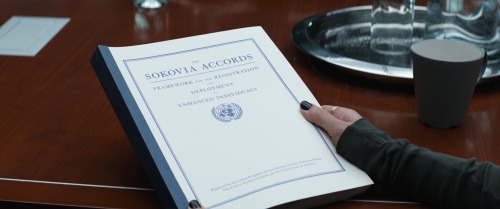
"The Sokovia Accords: A Narrative Blunder"

image


"THE SOKOVIA ACCORDS: A NARRATIVE BLUNDER"

Three years ago, the Marvel Cinematic Universe (MCU), along with Marvel Films and the Disney Studios, introduced to the world the thirteenth entry of the movie franchise, "CAPTAIN AMERICA: CIVIL WAR". Although the movie is officially regarded as a Captain America solo film, many moviegoers and critics tend to view it as an unofficial Avengers film. The film also introduced a new story arc to the franchise called the Sokovia Accords.

In reality, the Sokovia Accords is supposed to be a cinematic version of the Marvel Comics legislative law called the Mutant Registration Act and was the main focus behind the famous 2006-2007 seven-issue story arc known as "Civil War". In this story, the U.S. government passed a Superhero Registration Act, ostensibly designed to have super powered individuals act under official regulation, somewhat akin to law enforcement. Those superheroes opposed to the act, led by Captain America, found themselves in conflict with those like Iron Man and Ms. Marvel who supported the act. Spider-Man found himself caught in the middle and the X-Men took a neutral stance.

About a decade later, the MCU released "CAPTAIN AMERICA: CIVIL WAR" and introduced the world to the Sokovia Accords. For a while, I had wondered why Kevin Feige had allowed this story arc to be introduced in the middle of the franchise's on-going Infinity Stones arc. Then I had stumbled across an ARTICLE in which directors Anthony and Joe Russo had claimed the plot for the third Captain America movie was changed to compete against the DCEU's 2016 movie, "BATMAN V. SUPERMAN: DAWN OF JUSTICE". In this film, the U.S. government and the United Nations created the Sokovia Accords to regulate the actions of the Avengers and other enhanced beings in the wake of a deadly incident in Lagos, Nigeria; after Captain America and his team prevented a group of HYDRA terrorists from stealing biological weapons. Some of the Avengers - including Iron Man, War Machine, Black Panther and the Black Widow - supported the Accords for their own personal reasons. And some of them - the Falcon, Scarlet Witch and Captain America - refused to sign it. This schism between the Avengers, along with a bombing incident at the document's ratification in Vienna, widened the schism between the former teammates. Especially when Captain America's former best friend, Bucky Barnes aka the Winter Soldier, became the number one suspect behind the bombing.

"CAPTAIN AMERICA: CIVIL WAR" managed to successfully compete against "BATMAN V. SUPERMAN: DAWN OF JUSTICE". The MCU proved to be more financially successful. And it managed to acquire critical acclaim from most film critics, unlike the DCEU movie, which had received a good deal of negative review. And yet . . . the movie had failed to succeed with me. I found this surprising back in 2016, considering that I was more of a MCU fan than one of the D.C. Comics franchise. At least before I saw "BATMAN V. SUPERMAN: DAWN OF JUSTICE". Whereas I found myself harboring a low opinion of "CIVIL WAR", I became a fervent fan of the Zack Snyder film. And over the next three years, I have found it increasingly difficult to maintain my high opinion of the MCU. And a major factor of my burgeoning disappointment with the franchise proved to be the Sokovia Accords.

download.jpg CW_TCHAKAHD.jpg

Ever since 2016, I have harbored many misgivings about the Sokovia Accords arc. My first misgiving proved to be its portrayal in "CAPTAIN AMERICA: CIVIL WAR". I had assumed that the document would be the main factor to divide the Avengers. Instead, screenwriters Christopher Markus and Stephen McFeely included another subplot regarding the hunt for Bucky Barnes to divide the Avengers even further - especially Captain America and Iron Man - in the most contrived manner. One of the first advocates of the Sokovia Accords was King T'Chaka of Wakanda (father of the current Black Panther). Why? When the Avengers had prevented Brock Rumlow and other HYDRA operatives from stealing from that biological weapons lab in Nigeria, Scarlet Witch had used her telekinesis to divert the explosion from Rumlow's suicide bomb to another building that contained several Wakandan humanitarian workers. The problem with is scenario is that the 2018 movie, "BLACK PANTHER" made it clear that Wakanda was an isolationist country around the time of "CIVIL WAR" that did NOT involve itself in the affairs of other countries - including those on the African continent. Great. "BLACK PANTHER" managed to contradict certain plot points of "CIVIL WAR" and no one realized this. More importantly, King T'Chaka no longer had a reason to be an advocate of the Sokovia Accords. And the mistakes kept on going.


A major blooper regarding the Sokovia Accords had manifested in the 2018 movie, "ANT-MAN & THE WASP". In this film, Scott Lang aka Ant-Man found himself near the end of his house arrest, which manifested from his involvement with Captain America in "CIVIL WAR" and his violation of the Sokovia Accords. While incarcerated in the Raft (U.S. underwater prison for enhanced beings), Scott had mentioned Dr. Hank Pym, the first Ant-Man and creator of the Ant-Man suit. After being rescued from the Raft by Captain America; both Ant-Man and Clint Burton aka Hawkeye made a deal with the Federal courts and settled for two years of house arrest for violating the Accords. Both Hank Pym and his daughter Hope van Dyne became Federal fugitives because Hank had failed to register the Ant-Man suit. This proved to be problematic in so many ways. One, the Accords had not been ratified by the United Nations around the time of Scott's arrest, due to the bombing in Vienna. Two, Hank had first created the Ant-Man suit back in the 1980s and had been unaware of Scott’s use of the suit during the Avengers' battle at the airport in Berlin. After being freed by Steve, Scott had shrunken the suit and mailed it to his daughter Cassie, while declaring that it had been destroyed. If the suit was officially considered destroyed, why was Scott arrested anyway without the crucial evidence any prosecutor would need to convict him? Why were Hank and Hope declared as fugitives for failing to register a suit that officially no longer existed? Why did they become fugitives in the first place? Scott had used the Ant-Man suit without Hank's permission, something that he could or may have easily pointed out. The latter had created the suit some thirty years ago. And the Federal authorities remained unaware of Hank's creation of the Wasp suit and Hope's use of it. And she had played no role in the creation of the Ant-Man suit. Also, the writers did not need the Sokovia Accords as a reason for Scott to face conviction and house arrest. He had violated his parole when he left the United States to help Captain America, the Falcon, the Winter Soldier and others to deal with the potential threat of other HYDRA-created "Winter Soldiers".


Ever since I first saw "CAPTAIN AMERICA: CIVIL WAR", I found myself wondering about Thaddeus Ross' role in this story arc. By the time of the 2016 movie, he was no longer a general in the U.S. Army. He had become the new Secretary of State. It was Ross who had delivered the news of the Sokovia Accords to the Avengers. In his argument, he had pointed out the collateral damage caused - in his eyes and the eyes of others - by the Avengers. I found this idea ridiculous . . . to a certain extent. Asgardian Loki and a Chitauri army were mainly responsible for the damage inflicted upon downtown Manhattan in 2012's "THE AVENGERS". Malekith and the Dark Elves were responsible for the damage inflicted upon Greenwich, England in 2013's "THOR: THE DARK ELVES". The Royal Air Force had contributed to the damage . . . along with Thor. Obadiah Stane and his armored suit was responsible for the damage inflicted in downtown Los Angeles in 2008's "IRON MAN". As for the events in "THE AVENGERS: AGE OF ULTRON" . . . only two Avengers were responsible, Tony Stark (Iron Man) and Dr. Bruce Banner (the Hulk). They were the ones who had created the artificial intelligence (A.I.) known Ultron. The other Avengers were forced to help them clean up their mess. I noticed that no one had bothered to point this out. I also noticed that Ross had failed to bring up the Harlem battle between the Hulk and Abomination (Emil Blonsky) in 2008's "THE INCREDIBLE HULK". It seemed only natural that he would avoid the topic, considering that he played a major role in the creation of both the Hulk and Abomination. Also, the U.S. Army had managed to inflict a good deal of damage upon Harlem, while battling Abomination. I found it odd that neither Tony Stark and Natasha Romanoff, who both knew about Ross' role in the event, had said a word. Then again, I found it odd that Ross had become President Matthew Ellis's new Secretary of State in the first place. Why on earth did President Ellis select Ross to be his Secretary of State? Why did he think that a narrow-minded, uber-aggressive personality like Ross’ would be the right man for that particular position? Why did the MCU writers?


There is another aspect of the MCU's portrayal of the Sokovia Accords that I found mind boggling is that it was barely mentioned in the franchise's films between "CAPTAIN AMERICA: CIVIL WAR" and "THE AVENGERS: INFINITY WAR". I could understand that the document was not mentioned in films like "GUARDIANS OF THE GALAXY, VOL. 2" and "THOR: RAGNAROK". Both were set on worlds other than Earth. Well, Manhattan appeared briefly in the third film, but not long enough for the topic of the Accords to be brought up. However, I found it odd that Sokovia Accords were never mentioned in films like "DOCTOR STRANGE", "SPIDER-MAN: HOMECOMING" and "BLACK PANTHER", especially since these films were set on Earth. Considering that King T'Chaka's role in the creation of the Sokovia Accords had inadvertently led to his death, I found it odd that the document was never brought up in the 2018 movie. Did Wakanda drop its advocacy of the document, considering that the new King T'Challa gave refuge to Bucky Barnes? If not, why?


Even most of the MCU television shows had failed to mention the Sokovia Accords. In fact, I can only mention one that did - "AGENTS OF S.H.I.E.L.D." - and one that vaguely referenced the document - "JESSICA JONES". Most or all of the characters in Season Four of "AGENTS OF S.H.I.E.L.D.", including then former Director Philip J. Coulson, seemed to support the document. And I found this disappointing. Coulson and his team were willing to protect Inhumans and other enhanced people from xenophobic bigots like the organization called the Watchdogs. Season Four began with Inhuman Daisy Johnson aka Quake being on the run for her vigilante activities after leaving S.H.I.E.L.D. Seven episodes later, then S.H.I.E.L.D. Director Jeffrey Mace had cleared her name of past crimes . . . after she had agreed to sign the Sokovia Accords and re-join the agency. Everyone seemed fine with that, including Coulson. I found that disturbing. Season Two of the Marvel Netflix series, "JESSICA JONES", the Raft was mentioned as a possible destination for the title character's mother, another enhanced being who was proving to be dangerous to New York City's citizens and her adoptive sister, a talk-show host-turned dangerous vigilante. And yet . . . not one character managed to express disapproval of the Accords or that damn Raft. The Marvel Netflix franchise had featured three attorneys as major characters - Matt Murdock aka Daredevil, Franklin "Foggy" Nelson and Jeri Hogarth. and not one of them had discussed the legal ramifications of the Accords.


Ironically, only one person had ended up questioning the Sokovia Accords after "CAPTAIN AMERICA: CIVIL WAR". That person was Colonel James "Rhodey" Rhodes, USAF aka War Machine. What I find disturbing about the Marvel Cinematic Universe is that only one person has expressed disapproval of the Sokovia Accords since "CIVIL WAR". And that was James “Rhodey” Rhodes aka War Machine in "THE AVENGERS: INFINITY WAR". Yes, he had supported the Sokovia Accords in "CIVIL WAR". I did not find that surprising, since he was an Air Force officer. But nearly two years later, he had rejected the Accords when he had refused to obey Ross' order to arrest Captain America, the Falcon, Black Widow, Scarlet Witch, Vision and the Hulk following their return to the Avengers headquarters in "THE AVENGERS: INFINITY WAR". It took six films after "CIVIL WAR" for a MCU protagonist to either express disapproval of the Sokovia Accords or refuse to adhere to it. Yet, at the same time, Rhodey never really went into details over his eventual rejection of the document.


Why? Why did it take the MCU so long to find characters others than Captain America or the Falcon to express disapproval of the Accords? Why was the MCU so reluctant explore the legal ramifications of this document, especially since the franchise had went out of its way to introduce it in the first place? As several articles, including THIS ONE, have made clear - the Sokovia Accords is a violation of a citizen's right. It is a violation of the U.S. Constitution. Period. Any attorney, civil rights activist or civil rights organization could have easily pointed this out in any of the other Phase Three movies or MCU television shows. McFeely, Markus and other screenwriters could have easily pointed the unconstitutional aspect of the Sokovia Accords in "CIVIL WAR", "AGENTS OF S.H.I.E.L.D.", "JESSICA JONES", "INFINITY WAR" or any other MCU production set on Earth. Either McFeely, Markus and these other writers were idiots or for some reason, Kevin Feige had lost interest in exploring the consequences of the Accords. Perhaps Feige simply wanted to use the Accords as a plot device to battle "BATMAN V. SUPERMAN: DAWN OF JUSTICE" at the box office.


There is another aspect of the Sokovia Accords that many do not seem aware of or willing to discuss. The Sokovia Accords should not have been presented as a law in the MCU. Why? Because an accord is an agreement, not a law. Those enhanced beings who did not sign the Accord should NOT have been held accountable for using their powers, unless the latter were used for the usual crimes – robbery, burglary, kidnapping, murder, etc. Now, many would dismiss this criticism, claiming that "CAPTAIN AMERICA: CIVIL WAR" was a movie set in the world of comic books. Well, so were other similar documents. The Marvel Comics series, "Civil War" had the Mutant Registration Act. The document that affected enhanced beings and costumed vigilantes in Alan Moore's comic novel, "Watchmen" and Zack Snyder's 2009 movie adaptation of it was called the Keene Act. And "act" is a law. Mark Millar, Alan Moore and Zack Snyder had managed to get it right. Why had Christopher Markus and Stephen McFeely failed to do so? The problem with this is that if an enhanced being does not sign this accord, agreement or treaty; then their actions should not be dictated by it. The Sokovia Accords is an agreement, not a decree or a law.

If an enhanced or non-enhanced vigilante, who did not sign the accord, practices vigilantism, then that individual should be asked to cease such activity or face imprisonment for practicing vigilantism. To me, a vigilante is like a person pursuing a criminal or going into a foreign country to find a criminal without contacting the police or government agency. Nothing more, nothing less. Which is why I find it odd that in "SPIDER-MAN: FAR FROM HOME", Spider-man aka Peter Parker was never pursued by the police for his vigilante activities. Had he signed the Sokovia Accords and agree to cooperate with law enforcement? Do the Accords still exist by this latest MCU entry? If not, why is Spider-man practicing vigilantism without law enforcement breathing down his back?

In the end, I get the feeling that Kevin Feige and the MCU seem undecided on what to do with the Sokovia Accords arc. Worse, the franchise seems incapable of utilizing this story arc with any real competency. How can it if its writers do not know the difference between an accord and a law? But the more I think about the Sokovia Accords, the more I cannot help but feel that its creation was one of the biggest mistakes made by the Marvel Cinematic Universe.


Wednesday, July 3, 2019

"Nick Fury and the Fall of S.H.I.E.L.D."


"NICK FURY AND THE FALL OF S.H.I.E.L.D."

I feel that characters like Phil Coulson and Steve Rogers should kneel down and kiss Nicholas J. Fury’s ass for his actions in "CAPTAIN AMERICA: THE WINTER SOLDIER". Why? Because his actions before, during and after the 2014 movie prevented terrorist groups like HYDRA and an Inhumanity community called Afterlife to create more major catastrophes following the fall of the intelligence agency known as S.H.I.E.L.D. in the Marvel Cinematic Universe (MCU). 

In the past three years, I have noticed that a lot of MCU fans like to blame Fury for HYDRA’s infiltration of S.H.I.E.L.D. Why, I do not know. HYDRA's infiltration of the agency and other organizations had begun a few years before Fury's birth in 1951. In fact, a scene in "CAPTAIN AMERICA: THE WINTER SOLDIER" made it perfectly clear how HYDRA managed to infiltrate S.H.I.E.L.D. The newly formed agency had recruited HYDRA scientist Arnim Zola and a few other to form a think tank under the program known as Operation Paperclip. As many know, this program allowed S.H.I.E.L.D. and other intelligence services to recruit Nazi (or HYDRA) scientists for the benefit of their countries around the start of the Cold War. The 2014 movie also made it clear who had founded S.H.I.E.L.D. around this time - U.S. Army Colonel Chester Phillips, Peggy Carter and Howard Stark. 

Not only were Phillips, Carter and Stark responsible for Operation Paperclip; which allowed Arnim Zola to join S.H.I.E.L.D. and kick start HYDRA’s infiltration of the agency; they allowed this infiltration to grow for . . . how many decades? And even following Chester Phillips' death, Howard and Peggy allowed HYDRA mole Mitchell Carson to become the Head of Defense of S.H.I.E.L.D. Another HYDRA mole who eventually became part of S.H.I.E.L.D. was a former State Department diplomat named Alexander Pierce. Following Howard’s death and Peggy’s retirement, Pierce became Director of S.H.I.E.L.D. and later, the World Security Council’s Secretary. As Director of S.H.I.E.L.D., Pierce made one major mistake. He promoted Fury, whom he had first met while serving the State Department in Bogota, to the position of the agency’s new director after he joined the World Security Council.

Project Oversight was a S.H.I.E.L.D. program that involved three heavily armed, satellite-linked Helicarriers designed to proactively strike out against potential threats - usually humans- before they actually happened. I do not know who was originally responsible for the creation of this program - Pierce or Fury. Pierce wanted to use the helicarriers and Arnim Zola's algorithm to root out individuals that would oppose or threaten HYDRA's goals. Fury had supported Project Oversight, as a means to defend Earth from any future non-Human threat. He had even revealed the project to a disapproving Steve Rogers aka Captain America. But in the end, Fury had misgivings about it. By setting in motion the hijacking of a S.H.I.E.L.D. ship called the Lemurian Star, Fury had an excuse to order one of his top agents, Natasha Romanoff, to accompany Rogers and a STRIKE team to free the ship’s hostages. Natasha’s mission was to download information that proved to be very . . . very important. Moviegoers eventually learned that the files that Natasha had downloaded from the Lemurian Star revealed the history of HYDRA’s infiltration of S.H.I.E.L.D., Zola’s part in it and the real plans for Project Oversight. 

Think about it. If Fury had not developed misgivings about Project Oversight, no one would have learned the truth about it. And no one would have learned about HYDRA’s infiltration of S.H.I.E.L.D. and other organizations like the KGB, the World Security Council and the U.S. Senate. Worse, Alexander Pierce would have gone ahead with Project Oversight, which would have led to the deaths of many people. And even though S.H.I.E.L.D. had fallen, Fury once again stepped up to the bat and re-created the agency, with Phil Coulson as the new Director. Coulson and his team stood between the world and disaster on several occasions.

Ironically, instead of realizing that Fury's actions in "THE WINTER SOLDIER" had outed HYDRA and stopped both Project Oversight and the Centipede Project; both Steve Rogers in the 2014 movie and Phil Coulson in the current television series had went into rants by criticizing . . . or blaming Fury for failing to learn about HYDRA’s infiltration of S.H.I.E.L.D. in the past. Steve was angry over his discovery that his childhood friend, James "Bucky" Barnes, was still alive (after being declared dead during the last year of World War II) and a brainwashed HYDRA assassin. In his anger, he lashed out at Fury and used the latter as a scapegoat. Coulson was angry over Fury using the dangerous Project T.A.H.I.T.I. to resurrect him. His anger was more justified. Unfortunately, in the midst of his anger, Coulson also blamed Fury for HYDRA's infiltration of S.H.I.E.L.D. Coulson knew nothing of Howard Stark, Peggy Carter and Chester Phillips’ roles in the disastrous Operation Paperclip. But Steve did. He and Natasha had learned everything when they first downloaded the Lemurian Star’s file at an old S.H.I.E.L.D. base. He should have known better. 

But what I found astounding about all of this is that a good number of Marvel fans still continued to blame Nick Fury for HYDRA's infiltration of S.H.I.E.L.D. and the latter's downfall. If any of them had viewed that scene between Steve Rogers, Natasha Romanoff and Arnim Zola's computer image in "CAPTAIN AMERICA: THE WINTER SOLDIER", they should also know better than to blame Fury.

Sunday, June 10, 2018

"I, TONYA" (2017) Review


"I, TONYA" (2017) Review

Like others who had grown up in the mid-to-late 20th century, I remember the sports scandal that surrounded Olympic figure skaters, Nancy Kerrigan and Tonya Harding. The media wallowed in the scandal on television screens, newspapers and magazines. It all culminated when both women participated in the 1994 Winter Olympics Games in Lillehammer, Norway.

Several months after the '94 Olympic Games, NBC aired the 1994 television movie, "TONYA AND NANCY: THE INSIDE STORY". Actually, the television movie appeared two months after the Lillehammer games. Did I see it? No. In fact, I did not even bother to watch the two skaters' compete in the Olympic Games. I barely gave Harding or Kerrigan a thought through those years in which the scandal was mentioned or spoofed in a series of television episodes, movies, songs and documentaries. However, during the fall of 2017, I found myself watching the trailer for biopic about Harding called "I, TONYA". The trailer seemed so intriguing and somewhat off-the-wall that for the first time in twenty-three years, I found myself intrigued by the subject and decided to watch it.

Directed by Craig Gillespie and written by Steven Rogers (one of the film's co-producers), "I, TONYA" is basically a biography about Tonya Harding and her connection to the January 6, 1994 attack on rival Nancy Kerrigan. To be honest, Kerrigan played a supporting role - and not a very big one - in this biopic. This movie was all about Tonya. Starring Margot Robbie in the title role, "I, TONYA" followed Harding's life from the age of four to the immediate aftermath of the Lillehammer Games. The movie was written a mockumentary style that featured fictional interviews of Harding and others who had a major role in her life:

*Ex-husband Jeff Gillooly
*LaVona Golden, Tonya's husband
*Diane Rawlinson, Tonya's first and last skating coach
*Shawn Eckhardt, Gillooly's close friend and Tonya's so-called bodyguard
*Martin Maddox, a fictional character who is basically a composite of many television producers that exploited the 1994 scandal

Ironically, Nancy Kerrigan is the only major character in this movie who was not interviewed. Perhaps Gillespie and Robbie, who served as one of the film's other three producers, felt that the real Kerrigan would be offended at the thought of her cinematic counterpart being featured as a supporting character in a film about Harding. Judging from Kerrigan's reaction to the movie, they were right. Another aspect of this film that I found surprising is that it was basically a biopic about Harding. The latter did not share top billing with her rival in this film, unlike the 1994 television film. It turns out that screenwriter/co-producer Steven Rogers found Harding's personal life more complex and compelling. He also noticed that both Harding and her ex-husband, Jeff Gillooly, had very conflicting accounts of what really happened with Kerrigan and realized this would make an interesting narrative for a film.

Was "I, TONYA" an interesting film? Well . . . yes. Yes, it was. But it had its flaws. Actually, I could only find one major flaw in the film's narrative. For a film that allegedly was supposed to be about Harding from the viewpoints of several people, it seemed to me that aside from trainer Diane Rawlinson, only Harding's point-of-view really seemed to matter. Or the one audiences were expected to take seriously. Most of Jeff Gillooly's account of his relationship with Harding were portrayed with a grain of salt. At the same time, audiences were expected to accept his account of his relationship with Shawn Eckhardt as the real deal. This . . . contradiction seemed a bit hard to swallow at times. Look . . . I realize that Tonya Harding is at the center of this tale. But if one is going to utilize the narration of more than one character, all viewpoints should be equally judged on whether to take them seriously or not.

But you know what? I still found "I, TONYA" rather interesting. I also found it entertaining. One, screenwriter Steven Rogers and director Craig Gillespie took what could have been a basic Hollywood biopic and created what turned out to be one of the most original and somewhat bizarre film biographies I have ever seen, hands down. As I had earlier pointed out, Rogers and Gillespie utilized the "mockdocumentary" style to include scenes that feature interviews of the main characters. I thought this movie device was utilized with great wit, along with a dash of dark humor and great satisfaction for me. This was especially the case when both the screenwriter and director used it to break the "fourth wall" - a narrative device used when a character breaks away from the story to address the audience.

Many people have wondered why Rogers had focused his screenplay on Tonya Harding. Why not write a movie about both Harding and Nancy Kerrigan? Well . . . as I had earlier pointed out, such a story had already been told in that 1994 NBC television movie I had earlier mentioned. Rogers could have done a movie about Kerrigan and her family's struggles to support her skating career. It probably would have been a very uplifiting film. But if one looks into Harding's personal history . . . well, I might as well be frank . . . it is the stuff from which movie biopics are made. Between Harding's contentious and abusive relationships with both her mother La Vona Golden and first husband Jeff Gillooly, her earthy and frank personality and her more aggressive and modern style of skating that led her to clash with the judges . . . I mean, honestly, can you really blame both Steven Rogers and Craig Gillespie for choosing to do a movie about her? I certainly cannot. Between the off-the-wall directorial style that Gillespie had utilized and Rogers' sharp screenplay, is it any wonder that I found this movie so fascinating to watch? 

What I found even more fascinating is that the movie put the screws to everyone - Harding's mother, ex-husband, his friend Shawn Eckhardt, the men recruited to attack Kerrigan, the ice skating organizations (both national and international) and yes . . . even Harding herself. Whenever the script had the former ice skating making excuses for some of her questionable actions, it also revealed her excuses or comments as lies. But the most interesting moment occurred when Harding (as narrator) turned to the camera and made this comment about the media and the public's reaction to her legal travails:

" It was like being abused all over again. Only this time it was by you. All of you. You're all my attackers too."

Now . . . one could dismiss this as petulant complaining from the leading character's part. Perhaps it is. Perhaps it is not. But I could not help thinking there was a great deal of truth in those words. As much as the media and the public loves worshiping a celebrity, once the latter slips or make a mistake, both will bash or drag that celebrity through the mud for as long as they can. It almost seemed as if they revel in that celebrity's misfortune. Like I said, Harding and those close to her were not the only ones skewered in this film.

In order to make a movie work, one needs a first-rate story, director and cast. "I, TONYA" was very lucky to have Steven Rogers and Craig Gillespie as its screenwriter and director. It was also blessed with a first-rate cast. The movie featured solid performances from the likes of Julianne Nicholson, Mckenna Grace, the very entertaining Bobby Cannavale, Bojana Novakovic and Caitlin Carver. However, the performances that really impressed me came from four people - Margot Robbie, Sebastian Stan, Paul Walter Hauser and Allison Janney.

Paul Walter Hauser gave a very funny performance as the clueless Shawn Eckhardt, whose enthusiasm toward his role as Harding's "bodyguard" may have led him to go too far. Sebastian Stan gave a very complex performance as Harding's first husband, Jeff Gillooly. Stan portrayed his character with a combination of quiet charm and violent intensity. Frankly, he should have been nominated for his performance. The wonderful Allison Janney won both a Golden Globe Award and an Academy Award for her portrayal of Harding's sharp-tongued and abrasive mother, La Vona Golden. I could never decide whether the character was funny or horrifying. But thanks to Janney's performance, she was very interesting. Margot Robbie (who also served as one of the film's producers) is the last actress I could see portraying Tonya Harding. If I must be blunt, she is taller and better looking than the Olympic skater. And yet . . . she gave one of the best performances of her career (so far) as the ambitious and aggressive Harding. I really admire how Robbie managed to convey so many aspects of the skater's personality without being overwhelmed. She really earned her Golden Globe and Oscar nominations.

Aside from the story, the direction and performances, there were other aspects of "I, TONYA" that I admired. My mind was not particularly blown away by Nicolas Karakatsanis' cinematography. But I thought his work served both the film's story and setting rather well. I could also say the same about Jennifer Johnson's costume designs, which more than an adequate job of serving both the film's late 20th century setting and Harding's historic skating costumes. I do not recall Peter Nashel's score. But I must admit that I admire how he utilize well known tunes from the late 20th century throughout the film. The one technical aspect of "I, TONYA" that I truly admired was Tatiana S. Riegel's editing. I thought she did a superb job in the way she shaped Harding's tale from Gillespie's narrators, fourth walls and sequences on the ice rink. For her work, Riegel earned an Academy Award nomination for Best Editing and won the American Cinema Editors Award for Best Edited Feature Film – Comedy or Musical.

I never thought I would find myself watching a movie about Olympic ice skater, Tonya Harding. Hell, I never thought I would end up enjoying it. Yet, I did enjoy "I, TONYA" very much. I thought it was one of the most bizarre and fascinating biopics I have ever seen. In fact, thanks to director Craig Gillespie, screenwriter Steven Rogers and a superb cast led by Margot Robbie, "I, TONYA" proved to be one of my favorite movies of 2017.


image

"There's no such thing as truth. It's bullshit. Everyone has their own truth, and life just does whatever the fuck it wants."

Saturday, April 28, 2018

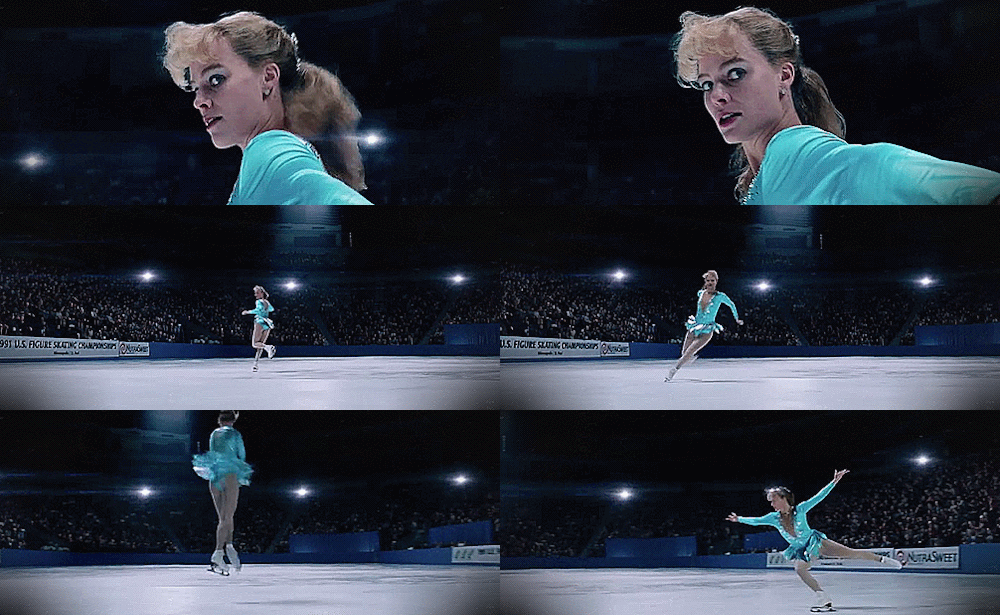
"I, TONYA" (2017) Photo Gallery


Below are images from "I, TONYA", the 2017 biopic about former Olympic skater, Tonya Harding. Directed by Craig Gillespie, the movie starred Margot Robbie, Sebastian Stan and Allison Janney: 


"I, TONYA" (2017) Photo Gallery


Monday, August 8, 2016

"CAPTAIN AMERICA: CIVIL WAR" (2016) Review


"CAPTAIN AMERICA: CIVIL WAR" (2016) Review

One of the more popular story lines to emerge from Marvel Comics was the 2006 story called "Civil War" in which many comic book characters from the company's franchise battled over a new law designed to have superpowered individuals act under Federal regulation. Kevin Fiege and Marvel Films decided to adapt this story line for the final film in their Captain America trilogy. 

"CAPTAIN AMERICA: CIVIL WAR" features some differences from the Marvel Comics comic series. The latter featured the Superhuman Registration Act, which would force those with superhuman abilities to register with the U.S. government . . . even at the expense of their secret identies. All those with special abilities - via magic, science, extra-terrestrials and even gods - would be forced to register. The 2016 movie featured the Sokovia Accords, a set of internationally ratified legal documents that provide regulation and frame-working for the military/law enforcement deployment of enhanced individuals, particularly the Avengers. To be honest, the difference between the Superhuman Registration Act and the Sokovia Accords strikes me as rather minimal.

However, the plot for "CAPTAIN AMERICA: CIVIL WAR" began with a flashback to 1991 when a mysterious assassin intercepts an automobile on an isolated road, carrying a case of super-soldier serum. The plot jumped some twenty-five years later to Lagos, Nigeria; where a team of Avengers under the command of Steve Rogers aka Captain America stop a HYDRA team led by Brock Rumlow aka Crossbones from stealing a biological weapon from a lab in Lagos. When Rumlow blows himself up, hoping to kill Steve; Wanda Maximoff aka tries to displace the blast into the sky with telekinesis. Unfortunately, the blast destroys a nearby building, killing several Wakandan humanitarian workers. Because of the Lagos incident, U.S. Secretary of State Thaddeus Ross informs the Avengers that the United Nations is preparing to pass the Sokovia Accords, which will establish a U.N. panel to oversee and control the team.

Some members of the Avengers support the Accords and decide to follow Tony Stark aka Iron Man, who continues to feel guilt over his creation of the A.I. Ultron and the latter's destruction of Sokovia. Others decide to follow Steve, who remains suspicious of the governments' use of enhanced individuals. But when a bombing disrupts a conference in Vienna where the Accords were to be ratified and kills King T'Chaka of Wakanda, security footage indicates that the bomber is James "Bucky" Barnes aka the Winter Soldier, whom T'Chaka's son, T'Challa aka Black Panther, vows to kill. Steve, who has been searching for Bucky since the fall of S.H.I.E.L.D., becomes determined to find Bucky first before anyone else can harm him and find out what really happened in Vienna. The search for Bucky manifests into another story line when the latter and Steve begin to suspect that someone from HYDRA might behind

I must admit that when I first learned that the third Captain America movie would be an adaptation of Marvel's "Civil War", I was not happy. I felt certain that the movie would be more of an Avengers tale than another Captain America movie that would round off the character's trilogy. But I had decided to put aside such fears and see the movie. "CAPTAIN AMERICA: CIVIL WAR" had a great deal to offer. Exciting action sequences, plenty of travel, drama, thought provoking issues and especially some first-rate acting.

One aspect of "CAPTAIN AMERICA: CIVIL WAR" that really caught my attention were the issues presented in this story. And the issues in this story seemed to focus on guilt and responsibilities. This especially seemed to be the case for the Avengers in the wake of what happened in Sokovia and Lagos. Although Steve, Sam Wilson aka the Falcon, and especially Wanda feel guilty for what happened in Lagos; they would prefer to deal with the consequences on their own rather than allow the government to take control of their lives as Avengers. Tony, James "Rhodey" Rhodes aka War Machine, Vision and Natasha Romanoff aka Black Widow seemed to feel that the best course to deal with the consequences of the group's actions is to allow the government to control their actions. What is interesting is that while various governments and especially Thaddeus Ross want the Avengers to pay a high price for what happened in Sokovia and Lagos, Ross refuses to acknowledge guilt or pay the consequences for the battle in Harlem between Bruce Banner aka the Hulk and Emil Blonsky aka Abomination in "THE INCREDIBLE HULK". Someone had pointed out how friends found themselves on opposite sides of this conflict. I saw this theme played out with Natasha, who found herself opposing Clint Barton aka Hawkeye, Sam and Steve - three men with whom she had formed close friendships. This theme also played out with Wanda's growing friendship with Vision, when the pair of them took opposing sides on the Accords issue.

The past seemed to weigh heavily in this movie, as well. The ghost of Steve's past - in the form of one "Bucky" Barnes manifests on the heels of the Vienna bombing. Another ghost from Steve's past manifested in the form of Sharon Carter, a former S.H.I.E.L.D. agent, whom he had first met in "THE WINTER SOLDIER". Both Steve and Sam were surprised to discover that Sharon was the great-niece of his former love, Peggy Carter. One could say the same for Bucky, whose past as the brainwashed Winter Soldier is not only used to frame him for the Vienna bombing, but also manifests in the discovery of Howard and Maria Stark's fates. And while I found this revelation rather interesting, I did not find it particularly surprising, after the events of "THE WINTER SOLDIER". In fact, many fans of the franchise did not seem surprised. Tony's ghosts from the past also formed a cloud above this story. His and Bruce's creation of Ultron not only led to Sokovia's destruction, but also to his support of the Sokovia Accords. More importantly, Sokovia's destruction led a colonel from an elite Sokovian commando unit named Helmut Zemo to seek revenge for the deaths of his family during the battle against Ultron. And the newly ascended King T'Challa struggled to deal with his father's death, as he sought to kill Bucky for the death of his father King T'Chaka during the Vienna bombing.

But "CAPTAIN AMERICA: CIVIL WAR" is foremost an action film. And the movie featured some first-rate action sequences. Many film critics and moviegoers have been talking about the battle between the two Avengers factions at a Berlin airport. And yes, I found it impressive . . . somewhat. My favorite moment occurred when Scott Lang aka Ant-Man transformed himself into a giant, taking everyone by surprise. But if I must be honest, the airport sequence is not my favorite action scene in the movie. One of my favorites proved to be the chase sequence in Berlin in which the police, Steve, Sam and T'Challa pursued a fleeing Bucky. Another favorite turned out to be the movie's first action sequence in which Steve's Avenger team battled against Rumlow and his HYDRA team in Lagos.

The movie also featured some excellent acting. To be honest, I cannot think of a bad performance in this film. Once again, Chris Evans stepped up to the plate and provided another first-rate performance as Steve Rogers aka Captain America. For once, his Steve proved to be a more reflective man, who had learned to control his quick temper (until near the end of the film). I can also say the same for Robert Downey Jr., who gave another excellent performance as Tony Stark aka Iron Man.

Scarlett Johansson was excellent as former S.H.I.E.L.D. agent Natasha Romanoff aka Black Widow, who desperately tried to get Steve and Sam to cooperate with the government and sign the Accords. Anthony Mackie's portrayal of Sam Wilson aka the Falcon proved to be a little more emotional and satisfying, as his character openly expressed contempt toward the Sokovia Accords and minor distrust toward Bucky Barnes' re-appearance in Steve's life. Sebastian Stan continued his excellent performance as Bucky Barnes, now a desperate man trying to keep both his memories and his life intact. Don Cheadle's performance throughout most of the movie struck me as solid. But I must admit that he really stepped up his game and gave a very poignant performance in his last scene in which he and Tony discuss the near tragic circumstances of the Berlin airport fight. Both Elizabeth Olsen and Paul Bettany clicked on screen as Wanda Maximoff aka Scarlet Witch and Vision. This was especially apparent in one scene in which Wanda becomes aware that Vision has been trying to prevent her from leaving the Avengers' headquarters.

Chadwick Boseman made a very impressive debut as T'Challa aka Black Panther. Boseman did an excellent job in portraying T'Challa's barely controlled anger over his father's death and his obsession in exacting revenge. Eight years after "THE INCREDIBLE HULK", William Hurt repeated his role as Bruce Banner's main adversary, Thaddeus Ross, who has become the U.S. Secretary of Defense and main supporter of the Sokovia Accords. And he was a lot more subtle and scary in this film than he was in the 2008 movie. Daniel Brühl gave a very subtle, yet intense performance as Helmut Zemo, the former Sokovian commando who wanted revenge against the Avengers for the deaths of his family. Alfre Woodard gave a very sublte, yet emotional performance as a woman who had confronted Tony about the death of her son in Sokovia. The movie also featured some solid performances from Jeremy Renner, Paul Rudd, Emily VanCamp, Tom Holland, John Slattery, Hope Davis and Frank Grillo.

Despite my admiration for the movie's cast, the action sequences and some of the issues raised in"CAPTAIN AMERICA: CIVIL WAR", I had a major problem with it. In fact, I had several problems with it. First of all, the whole idea behind the Sokovia Accords really made no sense to me. I could say that this whole matter began because several Wakandan civilians were killed, when Steve and Wanda were trying to stop Rumlow from harming others through self-detonation. But it really began with the Chitauri invasion of New York in "THE AVENGERS". Then came the fallout from the destruction of the HYDRA sponsored helicarriers in "THE WINTER SOLDIER", along with Iron Man and the Hulk's battle in South Africa and the destruction of Sokovia in "AGE OF ULTRON" and finally, the Lagos incident in this film. For some reason, people like Thaddeus Ross want to solely blame the Avengers for the civilian fallout and not the villains. In the case of the events of "AGE OF ULTRON", Tony, Bruce and Wanda were to blame. And Wanda . . . was not an Avenger at the time. What I could not understand is that neither Steve, Sam or anyone else who supported them had bothered to point this out. In fact, no one had bothered to point out Ross' own involvement in the Hulk v. Abomination battle that nearly destroyed Harlem in "THE INCREDIBLE HULK". You know . . . like Natasha?

Even if the Avengers had found themselves under government control, the possibility that innocent civilians might get hurt would always be possible. Not even the Avengers or any other costumed hero/heroine can save everyone. Yet, no bothered to point this out. I also noticed that Thaddeus Ross failed to mention the Hulk v. Abomination battle in Harlem. This is understandable, considering he was partially to blame for what happened. But why did no one pointed this out? And could someone please explain why the Accords were named after the Sokovia incident, instead of the incident in Lagos, which had kick-started the international community’s decision to create them in the first place? Martin Freeman portrayed a character from the Joint Counter Terrorist Centre, who helped Ross regulate the Avengers. The problem is that . . . he really did nothing in this movie, except appear and sneer first at Bucky and later, at the movie's villain. Frankly, I found his appearance in this movie a complete waste of time. Speaking of waste . . . Frank Grillo, who had portrayed Brock Rumlow aka Crossbones in "THE WINTER SOLDIER", reprised his character for this movie. And guess what happened to him? The poor schmuck was bumped off via a suicide bombing some twenty to thirty minutes into the film. Am I to believe that Rumlow, a major character in "THE WINTER SOLDIER", had been reduced to a cameo, plot device for the Lagos sequence . . . and nothing else? I guess so. In the end, Marvel ended up wasted Grillo's time, just as they had wasted Thomas Kretschmann's time in "AGE OF ULTRON".

I also had a problem with Tony Stark's discovery that Bucky Barnes was the HYDRA assassin who had killed his parents. This discovery led Tony to try to kill Bucky and Steve to come to his best friend's defense. Two years earlier, Natasha Romanoff and Nick Fury had released top secret S.H.I.E.L.D. and HYDRA files on the Internet, during the battle at the Triskelion in "THE WINTER SOLDIER". Through these files, Helmut Zemo discovered that Bucky was a brainwashed assassin used by HYDRA to kill Howard and Maria Stark back in 1991. If Zemo had been able to gain access to those files, why did Tony fail to do so? Why did he not make any attempt to access the files? A man, whose own father had been one of the co-founders of S.H.I.E.L.D. and a former enemy of HYDRA's? Considering Tony's nature, I find it difficult to believe that he never bothered to make the attempt. I have a deep suspicion that screenwriters Christopher Markus and Stephen McFeely may have deliberately ignored this issue so they would have an excuse for Tony to suddenly react to Zemo's revelation. How sloppy . . . and manipulative.

And then there is the problem of Robert Downey Jr. The actor was first cast in "CIVIL WAR". However, he refused to do the movie, unless he was made a co-star. And Marvel gave in to his demands, but they so desperately wanted him in another Marvel film. Why did they allow Downey Jr., who portrayed Iron Man, to become a co-star in a Captain America movie? The name in the movie's title is Captain America. I do not recall the name of Iron Man being in the title. So, why did Kevin Fiege and Marvel allow Downey Jr. to hijack half of Chris Evans’ third solo film? Especially since Evans was the lead in one of Marvel's biggest hits - both financially and critically. Why did a Captain America movie end up giving as much attention to Tony’s character arc as it did to Steve's? Why did the movie’s screenplay featured a five-to-ten minute scene in which Tony Stark recruited Peter Parker aka Spider-Man for his team and did not bother to show how Steve recruited Clint Barton and Scott Lang? In a Captain America movie?

You know, Marvel could have saved the Civil War story line for an Avengers film and wrapped up Steve’s connection to HYDRA in this film. This movie could have focused upon Steve's efforts to help Bucky and put HYDRA behind him for good. The movie "ANT-MAN" featured former S.H.I.E.L.D. official/HYDRA mole Mitchell Carson alive and well at the end, with a sample of Darren Cross' Yellow Jacket serum in his possession. They could have tied this up with the Winter Soldier program . . . or create another plot featuring HYDRA. The narrative for "CIVIL WAR" could have focused on the Winter Soldier program, allowed Helmut Zemo to remain a HYDRA agent, allowed Steve’s friendships with both Sam and Bucky to become more complex and allow his relationship with Sharon Carter to develop at a decent pace. Instead, Fiege and Marvel decided to (temporarily?) end the HYDRA story arc with former S.H.I.E.L.D. director Phil Coulson and ATCU director Glenn Talbot blowing up HYDRA bases . . . off screen in an "AGENTS OF S.H.I.E.L.D." episode called (3.18) "Singularity". I found this so unsatisfying. And since Marvel and Fiege decided that this third Captain America movie should be more about the Sokovia Accords, this left Sam and Bucky engaged in a long and stupid running joke regarding their mutual competition for Steve's friendship. The latter's romance with Sharon proved to be very rushed. And instead of admitting this, some fans are blaming actress Emily VanCamp and the Sharon Carter character, instead of the movie's screenwriters and producers. They have also began promoting the idea of Steve becoming bisexual and beginning a romance with Bucky (and not Sam, whom I suspect was not white enough for them). And I am not the only one who has noticed that Zemo’s motivation for revenge against the Avengers bore a strong resemblance to the Maximoff twins’ hostility toward Tony Stark in "AGE OF ULTRON".

"CAPTAIN AMERICA: CIVIL WAR" featured some excellent acting by a cast led by Chris Evans, some interesting issues on whether government intervention is a good thing or not, and some great action sequences, thanks to directors Anthony and Joe Russo. But for me, "CIVIL WAR" turned out to be nothing more than an Avengers movie shoved into a Captain America flick. And in the end, I found this rather unsatisfying and schizophrenic.