"ALICE IN WONDERLAND" (2010) Review
I never understood director Tim Burton’s decision to name his 2010 film, ”ALICE IN WONDERLAND”. I mean . . . why did he do it? His new movie was not another adaptation of Lewis Carroll’s 1865 novel, ”Alice's Adventures in Wonderland”. It was a sequel set thirteen years after the original story. So why use the shortened version of the title from Carroll’s original title?
Many of you might be wondering why I had just made a big deal about this movie’s title. For me, it represented an example of what I consider to be the numerous missteps that prevented me from embracing Burton’s 2010 film. Before I continue, I should confess that I have never been a Tim Burton fan. Never. I can only recall two of his movie that really knocked my socks off – 1994’s ”ED WOOD” and the 2007 Golden Globe nominee, ”SWEENY TODD”. I wish I could include ”ALICE IN WONDERLAND” in that category, but I cannot. The movie simply failed to impress me.
As I had stated earlier, ”ALICE IN WONDERLAND” was a sequel to Carroll’s original story. Thirteen years after her original adventures in Wonderland, Alice Kingsleigh has become a nineteen year-old young woman on the verge of accepting a wedding proposal from one Hamish Ascot, the son of her late father’s partner, Lord Ascot. Unfortunately, Hamish is a shallow and self-absorbed young man with very little character. Salvation arrived during Hamish’s very public marriage proposal, when Alice spotted a familiar figure – the same White Rabbit who had previously lured her to Wonderland – scampering across Lord Ascot’s estate.
History repeated itself when Alice fell down into the rabbit hole. However, she soon discovered that Wonderland (or Underland) had changed during her thirteen years absence. The Red Queen had managed to wreck havoc and assume control over most of Underland, thanks to her new ”champion” - a dragon known as the Jabberwocky. Only the realm of the Red Queen’s sister, the White Queen, has remained beyond the red-haired monarch’s reach. However, that situation threatened to change if the White Queen fails to acquire her own champion. A scroll called “the Oraculum” predicted that Alice will not only be the White Queen’s champion, but she will also defeat the Jabberwocky and end the Red Queen’s reign of terror. But due to her stubborn belief that Underland was and still is nothing but a dream, Alice was reluctant to take up the mantle of the White Queen’s champion.
Judging by the plot I had just described, ”ALICE OF WONDERLAND” should have been an enjoyable movie for me. Granted, Linda Woolverton’s script seemed like a typical ”slay the dragon” storyline that has been used in numerous fantasies. But it still had enough adventure, intrigue and personal angst for me to find it appealing. So, why did it fail to light my fire? Production designer Robert Stromberg created an interesting mixture of Gothic and animated styles for the film’s visuals in both the England and Wonderland sequences. Anthony Almaraz and his team of costume designers created lush and colorful costumes for the cast. And Dariusz Wolski’s photography brought out the best in the movie’s visual styles.
”ALICE IN WONDERLAND” could also boast some first-rate performances from the cast. Johnny Depp gave a wonderfully complicated performance as the Mad Hatter. His Mad Hatter was an interesting mixture of an extroverted personality and pathos, punctuated by bouts of borderline insanity. The Red Queen might possibly be one of Helena Bonham-Carter’s best roles. She struck me as the epitome of childishness, selfishness and cruelty. Crispin was slick, menacing and subtly funny as the Red Queen’s personal henchman, the Knave of Hearts. Anne Hathaway’s delicious portrayal of the White Queen reminded me of a Disney princess on crack. I really enjoyed it. Both Tim Piggott-Smith and Geraldine James (who were both in the 1985 miniseries, ”JEWEL IN THE CROWN”) gave solid performances as Alice’s potential in-laws - the kindly Lord Ascot and his shrewish and bullying wife, Lady Ascot. And Alan Rickman gave voice to the Blue Caterpillar in a deliciously sardonic performance. Despite my positive opinion of most of the film’s technical aspects and performances, it still failed to impress me. Why?
First of all, the movie rested upon the shoulders of Australian actress, Mia Wasikowska as the lead character, Alice Kingsleigh. Before the release of this film, Wasikowska had received critical acclaim for her portrayal of a suicidal teen in HBO’s ”IN TREATMENT”. It seemed a pity that she had failed to be just as impressive as Alice in ”ALICE IN WONDERLAND”. Some people had labeled her performance as ”subtle”. I thought it was ”insipid”. Or perhaps just plain boring. I swear I have never come across such a bland and boring performance in my life. No only did Wasikowska managed to make Alice’s battle against the Jabberwocky seem dull, she still came close to putting me to sleep in her character’s moments of triumph in the movie’s finale. It is a miracle that I eventually became a big fan of hers over the years. Or perhaps her own natural talent in this film had been overshadowed by poor direction.
Tim Burton’s direction of ”ALICE IN WONDERLAND” proved to be just as uninspiring as Wasikowska’s performance. Actually, I found myself thinking of the 1992 movie, ”DEATH BECOMES HER”. I was not comparing the visual effects between the two movies. Or the plots. Meryl Streep had uttered a word in the 1992 movie that perfectly described my opinion of Burton’s direction. Flaccid. "FLA-A-A-A-CI-I-ID!" How did a director with Burton’s reputation managed to take a solid fantasy adventure and make it one of the most boring films in recent Hollywood history is beyond me. His direction lacked any pep. Or spark. I had felt as if I was watching a piece of limp lettuce in action. I even began to wonder if Burton’s dull direction had affected Wasikowska’s performance. Then I remembered that actors like Depp and Bonham-Carter managed to rise above his direction. I might as well dump the blame of Wasikowska’s performance on her shoulders after all. Fortunately for her, she managed to provide superior performances in the future . . . in superior productions. As for Tim Burton . . . what is there to say? His direction had simply disappointed me.
I might as well say something about the movie’s 3-D effects. They were not only disappointing to me, but also a waste of time and the extra cash I had to pay for the movie tickets. I did not care for the 3-D effects in ”AVATAR” and a few other films, but it was an example of technical wizardry in compare to the 3-D photography shown in ”ALICE IN WONDERLAND”. Speaking of ”AVATAR”, I have one last thing to say in regard to 3-D . . . "Damn you, James Cameron!". Seriously. I would like to take the man’s head and bash it through a wall for introducing 3-D to the movie going experience. In the two movies I have seen featuring 3-D effects, I have found them unimpressive. Worse, I had to pay extra for the tickets because movie theaters are more willing to show the 3-D versions of movies like ”ALICE IN WONDERLAND”, instead of the 2-D versions. For the cash.
In short, ”ALICE IN WONDERLAND” had all of the hallmarks of a solid and entertaining movie experience for me. It was the continuation of a classic fantasy adventure. Talented actors like Johnny Depp, Helena Bonham-Carter, Crispin Glover and Anne Hathaway gave first-rate performances. And I must admit that the movie’s production designs and photography gave it a unique visual style.
But all of that could not save a movie hindered by pedestrian 3-D effects, a dull and insipid performance by Mia Wasikowska and an even more insipid direction by Tim Burton. Frankly, I think it is a miracle that this movie managed to become a box-office hit. What is even more ironic is that Burton produced a sequel to this movie, six years later. Unfortunately, "ALICE THROUGH THE LOOKING GLASS" proved to be a box office flop. And ironically, I found that movie a lot more entertaining.
Sunday, June 29, 2025
"ALICE IN WONDERLAND" (2010) Review
Monday, March 4, 2024
"HARRY POTTER AND THE PRISONER OF AZKABAN" (2004) Review
I have a confession to make. I was not much of a fan of the HARRY POTTER franchise - both novels and movies - before the summer of 2004. Before that period, I had seen the first two movies, "HARRY POTTER AND THE SORCERER'S STONE" and "HARRY POTTER AND THE CHAMBER OF SECRETS". But I had never read any of the novels written by J.K. Rowling. Then in June 2004, I saw the franchise's third movie, "HARRY POTTER AND THE PRISONER OF AZKABAN" and my views changed.
Based upon Rowling's 1999 novel, "HARRY POTTER AND THE PRISONER OF AZKABAN" follows the adventures of thirteen-year-old Harry Potter during his third year at the Hogwarts School of Witchcraft and Wizardry. The story begins with Harry enduring a visit by his Aunt Petunia Durnsley's sister-in-law, Marge Durnsley, who proves to be just as boorish, narrow-minded and arrogant as the other members of the family. When "Aunt" Marge makes an insulting remark about Harry's late parents, the thirteen-year-old loses his temper and inadvertently causes the woman to inflate before she floats out of the house and into the sky. Still in a rage over her remarks and the rest of the family's reaction, Harry packs his belongings and leaves the Durnsley home. The Knight Bus - a magical transit bus for Britain's wizarding world - picks him up and transports Harry to London and Diagon Alley, where he is informed by the Cornelius Fudge, the Minister of Magic that a prisoner from Azkaban Prison named Sirius Black has escaped from prison. According to Fudge, Black was a former follower of Harry's arch-nemesis, Lord Voldemort, and vows to kill the thirteen-year-old in order to finish his master's task from years ago.
During Harry's third year at Hogwarts, he has to deal with a brewing conflict between his two best friends - Ron Weasley and Hermione Granger - over their respective pets. Hogwarts acquire a new Defense Against the Dark Arts instructor, an old friend of Harry's father called Remus Lupin. Harry and his friends also acquire two new instructors - Divination teacher Sybill Trelawney, and Rubeus Hagrid, the old gamekeeper who has begun teaching Care of Magical Creatures. Unfortunately, when a hippogriff named Buckbeak attacks Harry's nemesis Draco Malfoy during Hagrid's first class, the animal's life is hung in the balance by the Ministry that is under the influence of Draco's father, Lucius Malfoy. But Harry's biggest problems are the still missing Sirius Black, who has been spotted near the school; and the Dementors - soul sucking creatures from Azkaban, sent to Hogwarts by the Ministry to find Black. Due to Harry's bleak past, the Dementors are naturally attracted to his presence.
The movie's literary source, the 1999 novel, is highly regarded by the franchise's fans. The novel also won several literary awards and nearly came close to being nominated for the Hugo Award. And although I view the novel's main plot as one of the best created by Rowling, I must admit that I found it difficult to harbor such a high opinion of the novel. There were certain flaws that the 2004 movie managed to avoid, thanks to Steve Kloves' script. For me, I was relieved to discover that "THE PRISONER OF AZKABAN" only featured one Quidditch match - the first one that featured Harry Potter's second encounter with the dementors. But the novel's subplot featuring Harry and his fellow Gryffindor players' efforts to win the Hogwarts Quidditch Cup was completely ignored in Kloves' screenplay. And I say . . . THANK GOD!. I have never been a fan of Quidditch to begin with. I also found the Quidditch Cup subplot unnecessary to the main narrative. Some fans have pointed out that Harry first met both Cedric Diggory and Cho Chang in the 1999 novel. But the introduction of the two characters were brief and played no real part in the saga's main narrative. Their roles in the narrative became a lot more important in the next two novels. So, Kloves' deletion of their characters struck me as the right thing to do. Aside from one or two matters, Kloves did a first-rate job in adapting Rowling's novel to the screen. This is not surprising, considering that "The Prisoner of Azkaban" was the last "short" novel in the series before the remaining four became "mega novels".
Looking back on the movie, it occurred to me that it possesses a very simple plot. More importantly, the story featured the next set of many mysteries surrounding Harry's parents and the part they played in his current connection to the still formless Lord Voldemort aka Tom Riddle Jr. And one of those mysteries featured their close friend, Sirius Black.
"THE PRISONER OF AZKABAN" had a few flaws. Actually, there were two aspects of the story that did not sit well with me. One, I grew tired of Rowling coming up with an excuse for any of Harry's transgressions. In this particular movie, Sirius Black's escape from Azkaban allowed Minister of Magic Cornelius Fudge to dismiss Harry's temperamental use of magic against Madge Durnsley. And thanks to the Invisibility Cloak and the Maurader's Map given to him by Fred and George Weasley, Harry was able to sneak out of Hogwarts Castle and explore the nearby town of Hogsmeade without any trouble or parental permission. Speaking of the Maurader's Map, Remus Lupin revealed that the following was written on the map:
"Messrs Moony, Wormtail, Padfoot, and Prongs
Purveyors of Aids to Magical Mischief-Makers
are proud to present THE MARAUDER'S MAP"
Any fan of Rowling's novels knows that "Messrs Moony, Wormtail, Padfoot, and Prongs" are Harry's father James Potter, and the latter's friends - Lupin, Peter Pettigrew and Sirius Black. Why did Steve Kloves' screenplay failed to reveal their identities to moviegoers? Lupin could have told Harry in one of the movie's final scenes. And why was Kloves so determined to portray Ron Weasley as "comic relief"? I read somewhere that Hermione Granger was one of his favorite characters. I assume this is why he allowed her to speak one of Ron's more famous lines - erasing one of the latter's more positive traits and unnecessarily building up Hermione's traits even more. This final criticism is also directed at both the novel and the movie. According to Hermione Granger, time travel is considered dangerous by the wizarding world. So why did Minerva McGonagall allowed Hermione - third year a student - to use a time turner to attend more classes in the first place? And why did Albus Dumbledore task Harry and Hermione with the story's final rescue job . . . and not do the job himself? I have one more minor complaint - and it involved the verbal showdown between Potions professor Severus Snape and fugitive Sirius Black, both who were former classmates . . . and enemies at Hogwarts. Both Alan Rickman and Gary Oldman gave excellent performances in the film. But I must admit that I found their performances in this little showdown rather over-dramatic. Dare I say it? Hammy? There was more ham and cheese coming from the pair than a high school cafeteria.
When I first read Rowling's novel, I noticed that it did not have much action until the final sequence regarding the Shrieking Shack and Hermione's time turner. And yet, this did not diminish the story one bit. In fact, the story for "PRISONER OF AZKABAN" felt more like a character-driven mystery, with a heavy emphasis on the past. It is the first time Harry really learns about his parents' past through characters like Remus Lupin and Sirius Black. This is the first time Harry had discovered some of the details that led to his parents' deaths. This story marked the first time Harry learned about his parents' close friends - Remus, Sirius and Peter Pettigrew. "PRISONER OF AZKABAN" also marked the first time that one of the franchise's stories had ended on a bittersweet note. All of these aspects of the film's narrative, along with some very satisfying scenes and Alfonso Cuarón's superb and original direction had combined to make the 2004 film a big favorite of mine in the HARRY POTTER franchise.
As I had just stated earlier, there were scenes that struck me as crowd-pleasing or very memorable. I found Harry's ride on the Night Bus both exhilarating and hilarious. Another favorite sequence of mine featured the introduction of the Dementors, during the students' northbound journey on the Hogwarts Express. I thought Cuarón and the movie's special effects team did an excellent job in creating Harry's ominous introduction to the supernatural beings. Speaking of dementors, I also enjoyed the movie's Quidditch match between the Gryffindor and Hufflepuff teams during a thunderstorm. This match featured Harry's second encounter with the Dementors - one that nearly killed him. I also enjoyed the movie's Christmas sequence at the Hogsmeade village. What started as a playful sequence in which Harry used his Invisible Cloak to sneak out of Hogwarts (he lacked parental permission to join his fellow students' excursion into the village), ended on an emotional note after Harry vowed revenge after learning that one of his father's close friends had betrayed his parents to Lord Voldemort.
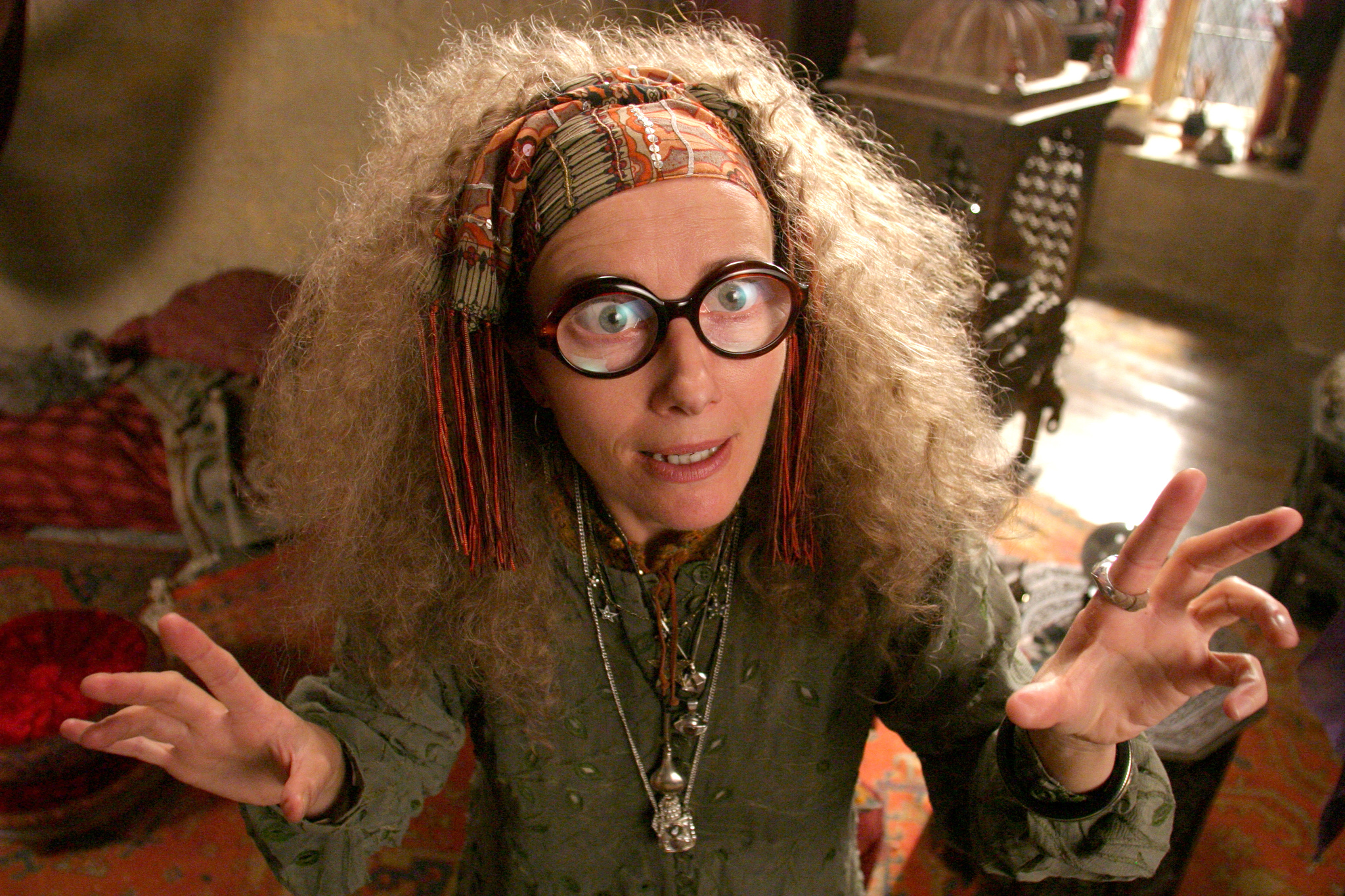
I also enjoyed those scenes that featured Remus Lupin's talent as a teacher, when he taught Harry and his classmates and later, Harry alone, about Boggarts and Dementors. Thanks to Emma Thompson's performance as the eccentric Divinity professor Sybil Trelawney, I really enjoyed the scenes featuring the students' lessons in that subject. More importantly, the movie featured one ominous scene in which Harry witnessed Trelawney unknowingly reveal a prediction regarding Voldemort and one of his minions. But I feel that without a doubt, the film's pièce de resistance proved to be the last third of the plot. I also enjoyed Professor Beginning with Harry, Ron and Hermione's visit to Rubeus Hagrid's hut in order to witness the execution of the hippogriff Buckbeak and ending with Harry and Hermione assisting in jailbreak; the entire sequence is brilliant example of fantasy, action and superb filmmaking from Alfonso Cuarón.
However, special effects and a first-rate narrative were not the only aspects that made "HARRY POTTER AND THE PRISONER OF AZKABAN" memorable for me. The movie also benefited from excellent performances from a first-rate cast. Now, a cast filled with actors and actresses of sterling reputations is not a guarantee of good performances. I still have memories of this film's successor - 2005's "HARRY POTTER AND THE GOBLET OF FIRE". Aside from one particular scene, "THE PRISONER OF AZKABAN" is blessed with first-rate performances. The movie had its share of solid performances - including from the likes of Richard Griffiths, Fiona Shaw and Harry Melling (who portrayed the Dursley family); a very entertaining Pam Ferris, who portrayed Vernon Dursley's sister, Marge Dursley; Timothy Spall in a brief, yet effective role as Peter Pettigrew and Julie Christie, who portrayed The Three Broomsticks owner Madam Rosmarta. More solid performances came from the likes of franchise regulars like Alan Rickman and his always entertaining performance as the surly Severus Snape, Robbie Coltrane (Rubeus Hagrid), Maggie Smith (Minerva McGonagall); James and Oliver Phelps as Fred and George Weasley, Tom Felton as Harry's nemesis Draco Malfoy, Mark Williams as Arthur Weasley, Julie Walters as Molly Weasley, and Robert Hardy as Minister of Magic Cornelius Fudge.
There were performances that I found memorable. The movie's three leads - Daniel Radcliffe, Rupert Grint and Emma Watson - gave excellent performances as Harry Potter, Ron Weasley and Hermione Granger respectively. In fact, I would say this film marked the first time they were able to ditch that heavy-handed style of acting that slightly tainted their performances in the first two films. Radcliffe did an excellent job of conveying Harry's struggles over his discovery that his parents had been betrayed. And I must admit that I found the interactions between Grint and Watson very entertaining as they portrayed Ron and Hermione's constant bickering and unwillingness to acknowledge their growing attraction to each other. I also enjoyed Robbie Coltrane's performance as Hogwarts gamekeeper-turned-Care of Magical Creatures professor, Rubeus Hagrid. I especially enjoyed Coltrane's scenes that featured Hagrid's awkward debut as a Hogwarts professor and his emotional attachment to the hippogriff Buckbeak.
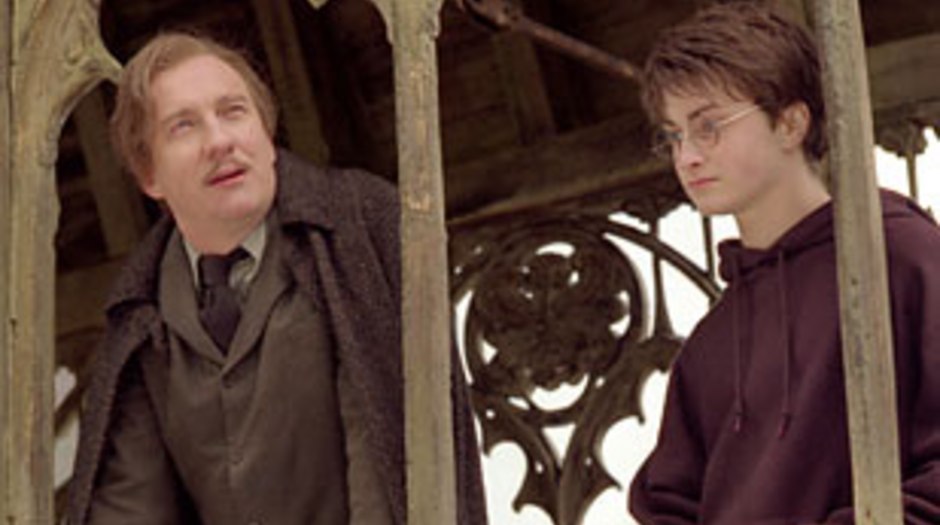
"HARRY POTTER AND THE PRISONER OF AZKABAN" marked the first appearances of four cast members. And all four gave excellent performances. One proved to be Gary Oldman as the chaotic and desperate Sirius Black, the wanted fugitive who unhappily proved to be Harry's godfather. Emma Thompson gave one of the funniest performances in the entire movie franchise as Divinity professor Sybill Trewlawney . . . who may or may not be a genuine seer. I was very impressed by David Thewlis' subtle, yet dynamic performance as Hogwarts' new Defense Against the Dark Arts professor Remus Lupin. Michael Gambon had a difficult act to follow when agreed to replace the late Richard Harris as Hogwarts' Headmaster Albus Dumbledore. And may I say that he did a superb job of capturing Dumbledore's enigmatic and commanding nature with his own style.
Granted, I had a few issues with "HARRY POTTER AND THE PRISONER OF AZKABAN""THE PRISONER OF AZKABAN" proved to be one of the most unusual entries in the HARRY POTTER franchise and quite possibly my absolute favorite. In fact, my opinion of the film has not changed one whit in nearly twenty years.
Tuesday, January 2, 2024
"HARRY POTTER AND THE PRISONER OF AZKABAN" (2004) Photo Gallery
Thursday, June 21, 2018
My Ranking of the Movies in the "DIE HARD" Franchise

2. "Live Free or Die Hard" (2007) - John McClane is ordered to escort a suspected hacker targeted by cyber terrorists led by former Federal tech employee Thomas Gabriel trying to steal from the U.S. government in this surprisingly well-made film. Justin Long, Timothy Olyphant and Mary Elizabeth Winstead co-starred.

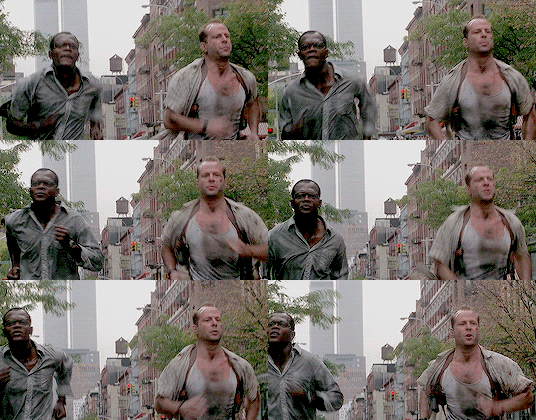
3. "Die Hard With a Vengeance" (1995) - McClane and a Harlem electronics storekeeper named Zeus Carver are forced to play mind games by terrorist Simon Gruber (brother of Hans), while he plots the robbery of the Federal Reserve Bank in New York City. Samuel L. Jackson and Jeremy Irons co-starred in this first-rate action film, marred only by an anti-climatic ending.
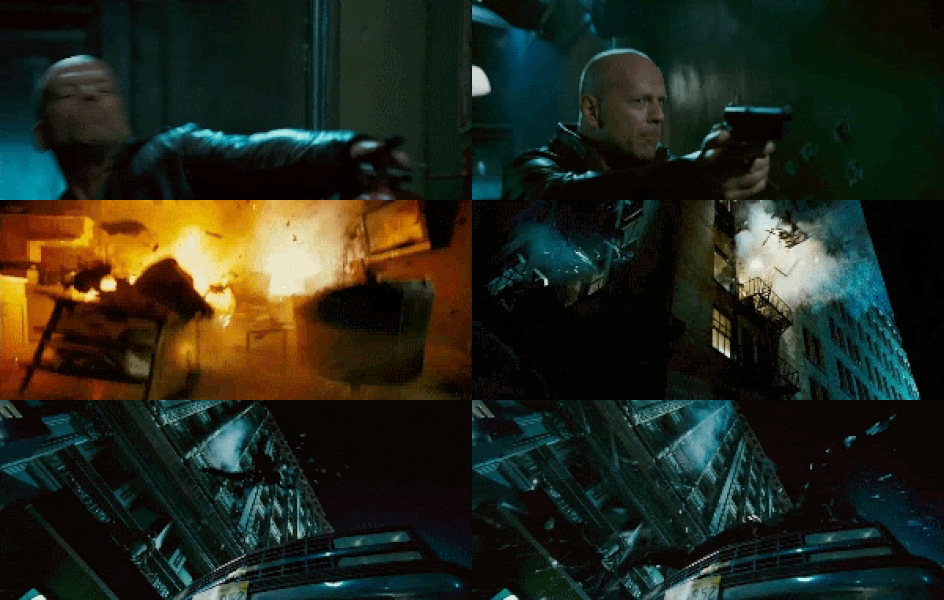
4. "A Good Day to Die Hard" (2013) - McClane finds himself helping his son Jack, a C.I.A. operative, protect a Russian ex-millionaire from terrorists who want to use him to access a source of valuable weapons-grade uranium. Jai Courtney, Yuliya Snigir and Sebastian Koch co-starred in this movie with a first-rate and original narrative that is marred by a running time shorter than it should have been.

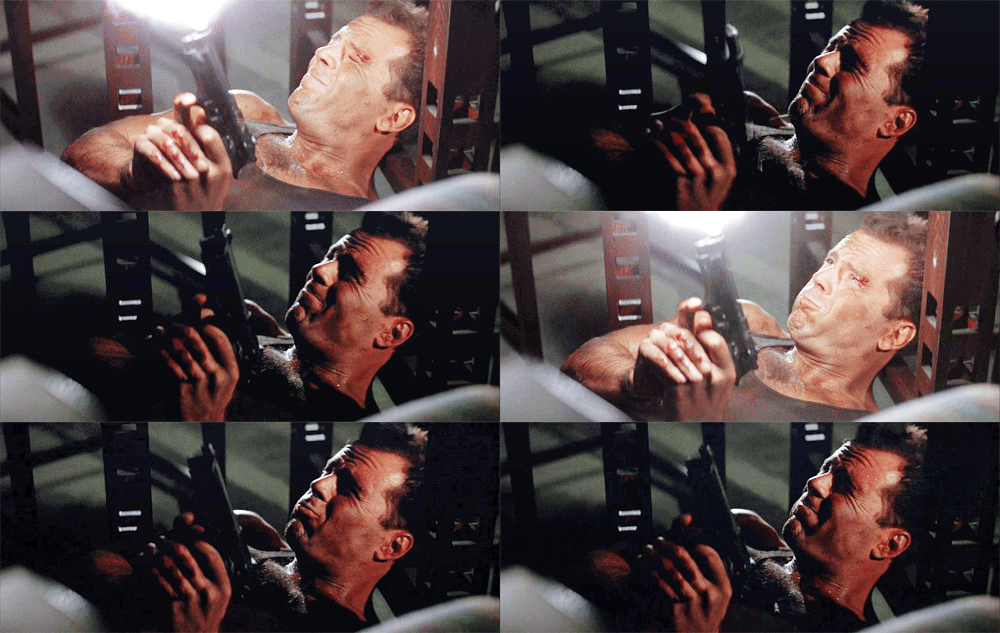
5. "Die Hard 2: Die Harder" (1990) - McClane ends up clashing with former Special Forces mercenaries at Dulles Airport on Christmas Eve, while waiting for his wife’s plane to land. William Sadler, John Amos, Dennis Franz and Bonnie Bedalia co-starred in what I believe is an entertaining film. But . . . I thought it tried too hard to copy the success of the 1988 movie.
Thursday, July 10, 2014
"DIE HARD" (1988) Review
Almost twenty-six years ago, 20th Century Fox released an action-adventure film that kicked off a movie franchise that has lasted with the addition of four other films and twenty-five years. I am speaking of the 1988 movie called "DIE HARD". And the ironic thing is that I had no intention of seeing the film when it first hit the movie theaters during that summer of '88.
Based on Roderick Thorp's 1979 novel called "Nothing Lasts Forever" (which sounds like a title for a Bond movie), "DIE HARD" was directed by John McTiernan. Many would be surprised to know that the 1979 movie was a sequel to an earlier Thorp novel published in 1966 called "The Detective", which was adapted into a 1968 movie that starred Frank Sinatra. Thorp had hoped a movie adaptation of the 1979 novel would also star Sinatra. But the singer-actor was not interested in a sequel to his movie. Later, the novel was being considered as a sequel to the Arnold Schwartzenegger 1985 movie, "COMMANDO". But Schartzenegger was not interested. Oh dear. Finally, the novel became a literary source for "DIE HARD". However, the Fox studio executives were not thrilled at the idea of Bruce Willis being cast as the movie's lead, due to his reputation as a comedic television actor. But cast he was . . . and the rest is Hollywood history.
"DIE HARD" told the story of off-duty NYPD detective John McClane, who arrived in Los Angeles to reconciled with his estranged wife, Holly Gennero McClane. Husband and wife had clashed several months earlier when she accepted a job promotion with the Nakatomi Corporation that sent her to Los Angeles. A hired limousine driver named Argyle drives McClane to the Nakatomi Plaza building in Century City for the company's Christmas party. While, the detective changes clothes, the party is disrupted by the arrival of terrorist Hans Gruber and his armed followers. The latter seize control of the tower and the partygoers as hostages. Only McClane, armed with a pistol, manages to evade capture. Gruber's intentions are revealed, when he interrogates Nakatomi executive Joseph Takagi for the code to the building's vault that holds $640 million in bearer bonds. When Takagi refuses to cooperate, Gruber executes him. McClane manages to kill one of Gruber's men, taking the latter's weapon and radio. He uses the radio to contact the Los Angeles Police Department during a gunfight with more of Gruber's men on the roof. The L.A.P.D. eventually sends patrolman Sergeant Al Powell to investigate. When McClane drops one of Gruber's dead associates on Powell's patrol car roof, the latter finally summons the police force to respond. The incident also draws the attention of an ambitious local news reporter named Richard Thornburg, who is determined to learn McClane's identity. Despite the arrival of Deputy Chief Dwayne Robinson, numerous men that include a S.W.A.T. team, and later the F.B.I., McClane and Holly eventually realizes that matters have grown worse for both of them.
Most moviegoers and critics view "DIE HARD" as the best in the franchise. Is it the best? Hmmm . . . I really cannot say. As much as I love the movie, I certainly do not consider it perfect. The movie possesses flaws that I had not noticed during previous viewings and one particular flaw that I have noticed since I first saw it years ago. One aspect about "DIE HARD" that I found particularly annoying was the movie's pacing. Director John McTiernan did a pretty good job with the movie's pacing. Unfortunately, two-thirds into the movie, McTiernan began to lose steam and the pacing began to drag. Trimming the story would not have helped. I had no problem with the narrative during this film's period. But I did have a problem with the director's pacing. One of Roger Ebert's complaints about "DIE HARD" was its unflattering portrayal of the Los Angeles Police Department. And if I must be brutally honest, I share his complaint. I am not a great admirer of the L.A.P.D. or any police force. But the police's incompetency portrayed in the movie struck me as damn near unrealistic. I feel that McTiernan and screenwriters Steven E. de Souza and Jeb Stuart went a bit to the extreme to make John McClane look good. And if I must be brutally frank, the movie does feature some rather cheesy dialogue - especially from the villains. However, my biggest complaint regarding "DIE HARD" - the one flaw I have been aware of since I first saw the film - occurred in the final action scene. Back in the 1980s, it was popular in action or thriller movies to temporarily "resurrect" a villain/villainess before killing him or her for good. This happened with Glenn Close's character in the 1987 movie, "FATAL ATTRACTION". This also happened to Alexander Godunov's character in "DIE HARD". And you know what? I hate this kind of showy action. I found it stupid and cringe-worthy when I first saw the movie. And I still find it a major blot on this otherwise first-rate movie.
Flaws or no flaws, "DIE HARD" is without a doubt, a first-rate action thriller that helped defined the genre during the 1980s. While reading the plot for Roderick Thorp's 1978 novel, I was surprised to discover how much it resembled the 1988 film. There were some changes made in the latter. The main hero acquired a new name and shed at least two decades in age. Instead of a daughter, McClane's wife ended up as one of the hostages. The franchise's producers used the daughter character in the fourth film, "LIVE FREE OR DIE HARD". The German terrorist - renamed Hans Gruber - was more interested in pulling a heist than making a political statement. The Al Powell character is at least fifteen years older. And unlike Thorp's novel, "DIE HARD" ended on a more optimistic note for the two main characters.
Producers Lawrence Gordon and Joel Silver were lucky to gather such a talented cast and director for this movie. Thanks to the actors and director John McTiernan, "DIE HARD" featured some excellent dramatic moments. My favorite dramatic scenes include the tense quarrel between John and Holly before Gruber's arrival at the Christmas party, Gruber's interrogation of Joseph Takagi for the codes to the executive vault, Holly's tense interactions with Gruber, Takagi employee Harry Ellis' attempt to convince McClane to surrender to Gruber, McClane's accidental encounter with Gruber, and the many radio conversations between McClane and Powell. I found the latter especially impressive, considering that Bruce Willis and Reginald VelJohnson spent most of the movie apart.
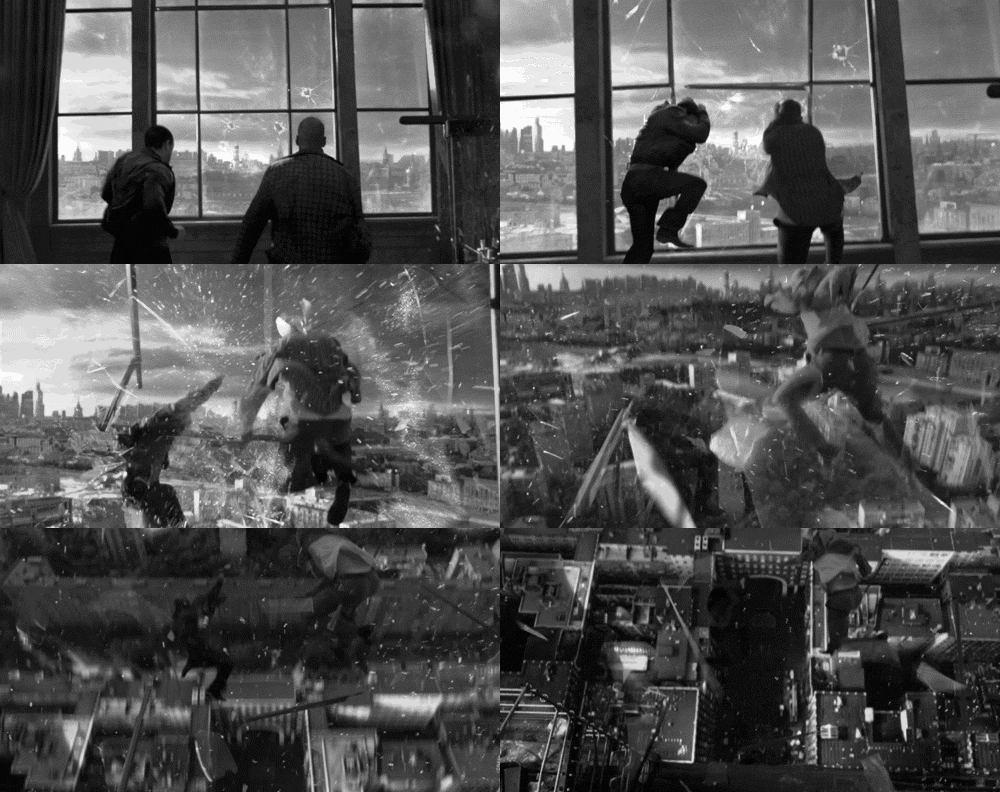
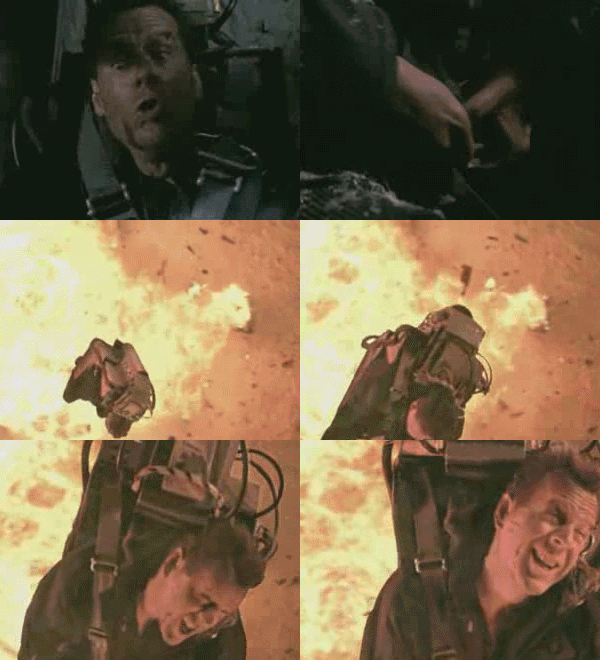
But "DIE HARD" is, above all, an action film. And thanks to some members of the cast, a group of talented stuntmen and crew, the action sequences featured in the movie proved to be very memorable. If I had to choose those scenes that really impressed me, they would have to be the ones that featured Al Powell's awareness of the presence of terrorists at the Nakatomi Tower thanks to some gunfire and a dead body that landed on his patrol car, the S.W.A.T. team's failed assault on the building, and McClane's retaliation against the terrorists' massacre of the S.W.A.T. team (using explosives strapped to a chair). I was also impressed by the brief, yet final confrontation between the McClanes and Gruber. But for me, the most spectacular sequence turned out to be the rooftop explosion that claimed the lives of more Gruber men and two F.B.I. agents hovering above in an helicopter. Well-known cinematographer Jan de Bont and the special effects team really outdid themselves in that particular sequence.
As I had earlier pointed out, "DIE HARD" featured some outstanding performances. Bruce Willis was already a television star thanks to the 1980s series, "MOONLIGHTING". But his superb, yet tough performance as the besieged N.Y.P.D. detective John McClane not only made him an action star, but also a bonafide movie star. I believe that Holly Gennero McClane proved to be one of Bonnie Bedelia's best roles, thanks to her excellent performance as McClane's passionate and no-nonsense wife. "DIE HARD" also made a star of Alan Rickman, thanks to his deliciously sardonic performance as the ruthless Hans Gruber. In fact, his Gruber happens to be one of my favorite cinematic villains of all time. Reginald VelJohnson's career also benefited from his first-rate performance as the compassionate L.A.P.D. officer, Sergeant Al Powell.
There were other performances in "DIE HARD" that caught my attention. Ballet dancer Alexander Godunov gave a very competent performance as Gruber's right-hand man, Hans, who wants revenge for McClane's killing of his younger brother. Hart Bochner was very entertaining as Holly's gauche co-worker, Harry Ellis. However, I must admit that I found the character somewhat one-dimensional. William Atherton was very memorable as the ambitious and slimy news reporter, Richard Thornburg. Clarence Gilyard revealed a talent for comic acting, in his excellent portrayal of Gruber's sardonic and cold-blooded computer specialist, Theo. Andreas Wisniewski was excellent as Hans' younger brother, the no-nonsense Karl. Robert Davi and Grand L. Bush (who reunited in the 1989 James Bond movie, "LICENSE TO KILL") made a great screen team as the arrogant F.B.I. Special Agents Johnson and Johnson. De'voreaux White, someone I have not seen in years, provided his own brand of sharp humor and the movie's best line as McClane's limousine driver, Argyle. And finally, the late Paul Gleason proved to be very entertaining as the not-so-bright Deputy Police Chief Dwayne Robinson.
I find myself back at that moment in which I pondered over the reputation of "DIE HARD". Do I still believe it is one of the best action movies ever made? Perhaps. Perhaps not. I have seen my share of action movies that strike me as equally good - including other films in the DIE HARD franchise. And the movie does have its share of flaws. But "DIE HARD" is also a personal favorite of mine, thanks to John McTiernan's excellent direction, a first-rate adaptation of Roderick Thorp's novel, superb action-sequences and outstanding performances from a stellar cast led by Bruce Willis. Over twenty-five years have passed since the movie's initial release. And honestly . . . it has not lost one bit of its magic.
Fox Plaza Tower in Century City, CA aka the Nakatomi Tower