Showing posts with label robbie coltrane. Show all posts

Monday, March 4, 2024

"HARRY POTTER AND THE PRISONER OF AZKABAN" (2004) Review


"HARRY POTTER AND THE PRISONER OF AZKABAN" (2004) Review

I have a confession to make. I was not much of a fan of the HARRY POTTER franchise - both novels and movies - before the summer of 2004. Before that period, I had seen the first two movies, "HARRY POTTER AND THE SORCERER'S STONE" and "HARRY POTTER AND THE CHAMBER OF SECRETS". But I had never read any of the novels written by J.K. Rowling. Then in June 2004, I saw the franchise's third movie, "HARRY POTTER AND THE PRISONER OF AZKABAN" and my views changed.

Based upon Rowling's 1999 novel, "HARRY POTTER AND THE PRISONER OF AZKABAN" follows the adventures of thirteen-year-old Harry Potter during his third year at the Hogwarts School of Witchcraft and Wizardry. The story begins with Harry enduring a visit by his Aunt Petunia Durnsley's sister-in-law, Marge Durnsley, who proves to be just as boorish, narrow-minded and arrogant as the other members of the family. When "Aunt" Marge makes an insulting remark about Harry's late parents, the thirteen-year-old loses his temper and inadvertently causes the woman to inflate before she floats out of the house and into the sky. Still in a rage over her remarks and the rest of the family's reaction, Harry packs his belongings and leaves the Durnsley home. The Knight Bus - a magical transit bus for Britain's wizarding world - picks him up and transports Harry to London and Diagon Alley, where he is informed by the Cornelius Fudge, the Minister of Magic that a prisoner from Azkaban Prison named Sirius Black has escaped from prison. According to Fudge, Black was a former follower of Harry's arch-nemesis, Lord Voldemort, and vows to kill the thirteen-year-old in order to finish his master's task from years ago.

During Harry's third year at Hogwarts, he has to deal with a brewing conflict between his two best friends - Ron Weasley and Hermione Granger - over their respective pets. Hogwarts acquire a new Defense Against the Dark Arts instructor, an old friend of Harry's father called Remus Lupin. Harry and his friends also acquire two new instructors - Divination teacher Sybill Trelawney, and Rubeus Hagrid, the old gamekeeper who has begun teaching Care of Magical Creatures. Unfortunately, when a hippogriff named Buckbeak attacks Harry's nemesis Draco Malfoy during Hagrid's first class, the animal's life is hung in the balance by the Ministry that is under the influence of Draco's father, Lucius Malfoy. But Harry's biggest problems are the still missing Sirius Black, who has been spotted near the school; and the Dementors - soul sucking creatures from Azkaban, sent to Hogwarts by the Ministry to find Black. Due to Harry's bleak past, the Dementors are naturally attracted to his presence.

The movie's literary source, the 1999 novel, is highly regarded by the franchise's fans. The novel also won several literary awards and nearly came close to being nominated for the Hugo Award. And although I view the novel's main plot as one of the best created by Rowling, I must admit that I found it difficult to harbor such a high opinion of the novel. There were certain flaws that the 2004 movie managed to avoid, thanks to Steve Kloves' script. For me, I was relieved to discover that "THE PRISONER OF AZKABAN" only featured one Quidditch match - the first one that featured Harry Potter's second encounter with the dementors. But the novel's subplot featuring Harry and his fellow Gryffindor players' efforts to win the Hogwarts Quidditch Cup was completely ignored in Kloves' screenplay. And I say . . . THANK GOD!. I have never been a fan of Quidditch to begin with. I also found the Quidditch Cup subplot unnecessary to the main narrative. Some fans have pointed out that Harry first met both Cedric Diggory and Cho Chang in the 1999 novel. But the introduction of the two characters were brief and played no real part in the saga's main narrative. Their roles in the narrative became a lot more important in the next two novels. So, Kloves' deletion of their characters struck me as the right thing to do. Aside from one or two matters, Kloves did a first-rate job in adapting Rowling's novel to the screen. This is not surprising, considering that "The Prisoner of Azkaban" was the last "short" novel in the series before the remaining four became "mega novels".

Looking back on the movie, it occurred to me that it possesses a very simple plot. More importantly, the story featured the next set of many mysteries surrounding Harry's parents and the part they played in his current connection to the still formless Lord Voldemort aka Tom Riddle Jr. And one of those mysteries featured their close friend, Sirius Black.

"THE PRISONER OF AZKABAN" had a few flaws. Actually, there were two aspects of the story that did not sit well with me. One, I grew tired of Rowling coming up with an excuse for any of Harry's transgressions. In this particular movie, Sirius Black's escape from Azkaban allowed Minister of Magic Cornelius Fudge to dismiss Harry's temperamental use of magic against Madge Durnsley. And thanks to the Invisibility Cloak and the Maurader's Map given to him by Fred and George Weasley, Harry was able to sneak out of Hogwarts Castle and explore the nearby town of Hogsmeade without any trouble or parental permission. Speaking of the Maurader's Map, Remus Lupin revealed that the following was written on the map:

"Messrs Moony, Wormtail, Padfoot, and Prongs
Purveyors of Aids to Magical Mischief-Makers
are proud to present THE MARAUDER'S MAP"


Any fan of Rowling's novels knows that "Messrs Moony, Wormtail, Padfoot, and Prongs" are Harry's father James Potter, and the latter's friends - Lupin, Peter Pettigrew and Sirius Black. Why did Steve Kloves' screenplay failed to reveal their identities to moviegoers? Lupin could have told Harry in one of the movie's final scenes. And why was Kloves so determined to portray Ron Weasley as "comic relief"? I read somewhere that Hermione Granger was one of his favorite characters. I assume this is why he allowed her to speak one of Ron's more famous lines - erasing one of the latter's more positive traits and unnecessarily building up Hermione's traits even more. This final criticism is also directed at both the novel and the movie. According to Hermione Granger, time travel is considered dangerous by the wizarding world. So why did Minerva McGonagall allowed Hermione - third year a student - to use a time turner to attend more classes in the first place? And why did Albus Dumbledore task Harry and Hermione with the story's final rescue job . . . and not do the job himself? I have one more minor complaint - and it involved the verbal showdown between Potions professor Severus Snape and fugitive Sirius Black, both who were former classmates . . . and enemies at Hogwarts. Both Alan Rickman and Gary Oldman gave excellent performances in the film. But I must admit that I found their performances in this little showdown rather over-dramatic. Dare I say it? Hammy? There was more ham and cheese coming from the pair than a high school cafeteria.

When I first read Rowling's novel, I noticed that it did not have much action until the final sequence regarding the Shrieking Shack and Hermione's time turner. And yet, this did not diminish the story one bit. In fact, the story for "PRISONER OF AZKABAN" felt more like a character-driven mystery, with a heavy emphasis on the past. It is the first time Harry really learns about his parents' past through characters like Remus Lupin and Sirius Black. This is the first time Harry had discovered some of the details that led to his parents' deaths. This story marked the first time Harry learned about his parents' close friends - Remus, Sirius and Peter Pettigrew. "PRISONER OF AZKABAN" also marked the first time that one of the franchise's stories had ended on a bittersweet note. All of these aspects of the film's narrative, along with some very satisfying scenes and Alfonso Cuarón's superb and original direction had combined to make the 2004 film a big favorite of mine in the HARRY POTTER franchise.

As I had just stated earlier, there were scenes that struck me as crowd-pleasing or very memorable. I found Harry's ride on the Night Bus both exhilarating and hilarious. Another favorite sequence of mine featured the introduction of the Dementors, during the students' northbound journey on the Hogwarts Express. I thought Cuarón and the movie's special effects team did an excellent job in creating Harry's ominous introduction to the supernatural beings. Speaking of dementors, I also enjoyed the movie's Quidditch match between the Gryffindor and Hufflepuff teams during a thunderstorm. This match featured Harry's second encounter with the Dementors - one that nearly killed him. I also enjoyed the movie's Christmas sequence at the Hogsmeade village. What started as a playful sequence in which Harry used his Invisible Cloak to sneak out of Hogwarts (he lacked parental permission to join his fellow students' excursion into the village), ended on an emotional note after Harry vowed revenge after learning that one of his father's close friends had betrayed his parents to Lord Voldemort.

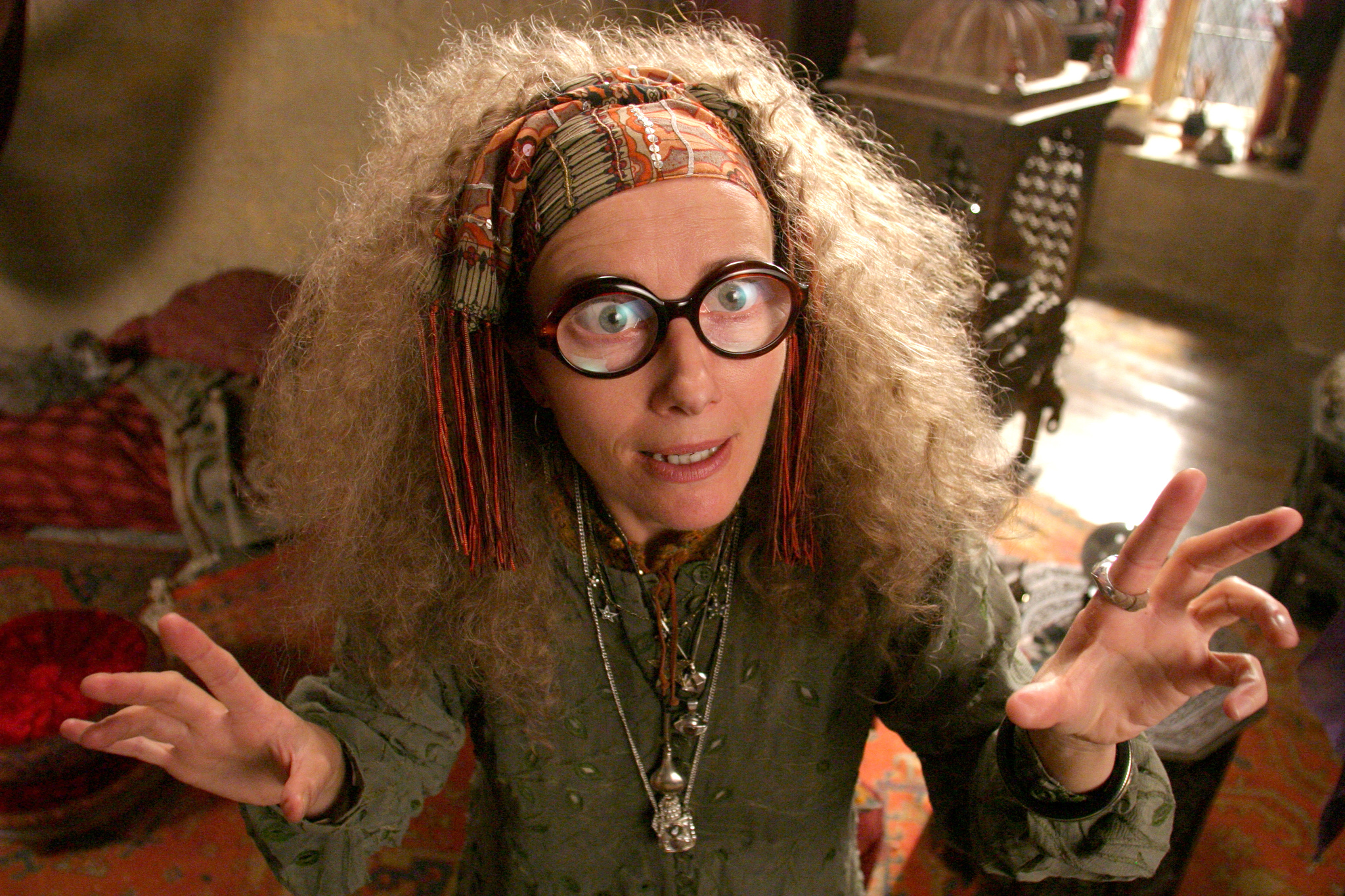
I also enjoyed those scenes that featured Remus Lupin's talent as a teacher, when he taught Harry and his classmates and later, Harry alone, about Boggarts and Dementors. Thanks to Emma Thompson's performance as the eccentric Divinity professor Sybil Trelawney, I really enjoyed the scenes featuring the students' lessons in that subject. More importantly, the movie featured one ominous scene in which Harry witnessed Trelawney unknowingly reveal a prediction regarding Voldemort and one of his minions. But I feel that without a doubt, the film's pièce de resistance proved to be the last third of the plot. I also enjoyed Professor Beginning with Harry, Ron and Hermione's visit to Rubeus Hagrid's hut in order to witness the execution of the hippogriff Buckbeak and ending with Harry and Hermione assisting in jailbreak; the entire sequence is brilliant example of fantasy, action and superb filmmaking from Alfonso Cuarón.

However, special effects and a first-rate narrative were not the only aspects that made "HARRY POTTER AND THE PRISONER OF AZKABAN" memorable for me. The movie also benefited from excellent performances from a first-rate cast. Now, a cast filled with actors and actresses of sterling reputations is not a guarantee of good performances. I still have memories of this film's successor - 2005's "HARRY POTTER AND THE GOBLET OF FIRE". Aside from one particular scene, "THE PRISONER OF AZKABAN" is blessed with first-rate performances. The movie had its share of solid performances - including from the likes of Richard Griffiths, Fiona Shaw and Harry Melling (who portrayed the Dursley family); a very entertaining Pam Ferris, who portrayed Vernon Dursley's sister, Marge Dursley; Timothy Spall in a brief, yet effective role as Peter Pettigrew and Julie Christie, who portrayed The Three Broomsticks owner Madam Rosmarta. More solid performances came from the likes of franchise regulars like Alan Rickman and his always entertaining performance as the surly Severus Snape, Robbie Coltrane (Rubeus Hagrid), Maggie Smith (Minerva McGonagall); James and Oliver Phelps as Fred and George Weasley, Tom Felton as Harry's nemesis Draco Malfoy, Mark Williams as Arthur Weasley, Julie Walters as Molly Weasley, and Robert Hardy as Minister of Magic Cornelius Fudge.

There were performances that I found memorable. The movie's three leads - Daniel Radcliffe, Rupert Grint and Emma Watson - gave excellent performances as Harry Potter, Ron Weasley and Hermione Granger respectively. In fact, I would say this film marked the first time they were able to ditch that heavy-handed style of acting that slightly tainted their performances in the first two films. Radcliffe did an excellent job of conveying Harry's struggles over his discovery that his parents had been betrayed. And I must admit that I found the interactions between Grint and Watson very entertaining as they portrayed Ron and Hermione's constant bickering and unwillingness to acknowledge their growing attraction to each other. I also enjoyed Robbie Coltrane's performance as Hogwarts gamekeeper-turned-Care of Magical Creatures professor, Rubeus Hagrid. I especially enjoyed Coltrane's scenes that featured Hagrid's awkward debut as a Hogwarts professor and his emotional attachment to the hippogriff Buckbeak.

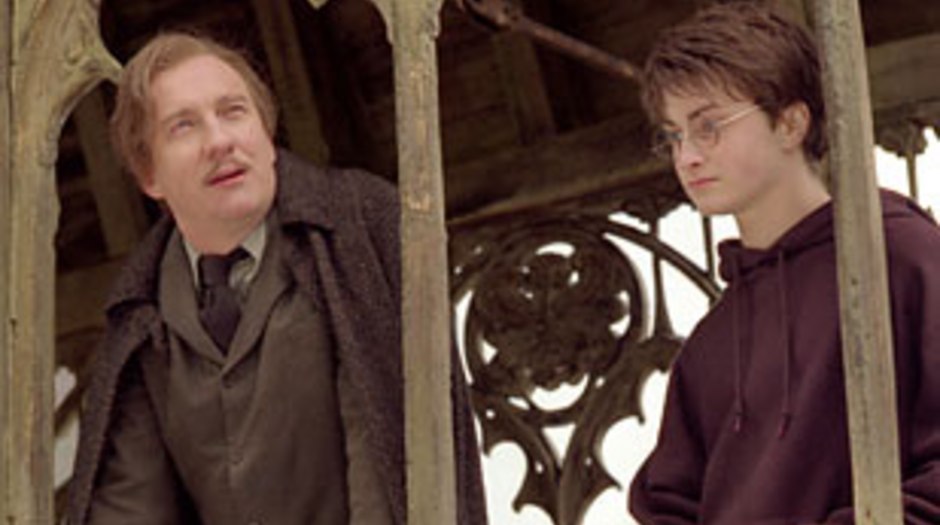
"HARRY POTTER AND THE PRISONER OF AZKABAN" marked the first appearances of four cast members. And all four gave excellent performances. One proved to be Gary Oldman as the chaotic and desperate Sirius Black, the wanted fugitive who unhappily proved to be Harry's godfather. Emma Thompson gave one of the funniest performances in the entire movie franchise as Divinity professor Sybill Trewlawney . . . who may or may not be a genuine seer. I was very impressed by David Thewlis' subtle, yet dynamic performance as Hogwarts' new Defense Against the Dark Arts professor Remus Lupin. Michael Gambon had a difficult act to follow when agreed to replace the late Richard Harris as Hogwarts' Headmaster Albus Dumbledore. And may I say that he did a superb job of capturing Dumbledore's enigmatic and commanding nature with his own style.

Granted, I had a few issues with "HARRY POTTER AND THE PRISONER OF AZKABAN""THE PRISONER OF AZKABAN" proved to be one of the most unusual entries in the HARRY POTTER franchise and quite possibly my absolute favorite. In fact, my opinion of the film has not changed one whit in nearly twenty years.


Tuesday, January 2, 2024

"HARRY POTTER AND THE PRISONER OF AZKABAN" (2004) Photo Gallery


Below are images from "HARRY POTTER AND THE PRISONER OF AZKABAN", the 2004 adaptation of J.K. Rowling's 1999 novel. Directed by Alfonso Cuarón, the movie starred Daniel Radcliffe, Rupert Grint and Emma Watson:


"HARRY POTTER AND THE PRISONER OF AZKABAN" (2004) Photo Gallery


Tuesday, May 28, 2019

"GOLDENEYE" (1995) Review


"GOLDENEYE" (1995) Review

What can I say about 1995’s "GOLDENEYE"? For one, it marked a series of firsts for the Bond franchise. The movie happened to be Pierce Brosnan’s first outing as James Bond. "GOLDENEYE" also turned out to be Dame Judi Dench’s first time portraying Bond’s MI-6 boss, "M". And the movie also proved to be a first Bond film for director Martin Campbell, who will return eleven years later to direct 2006’s "CASINO ROYALE"

After 1989’s ”LICENSE TO KILL”, I found myself frustrated by talk that it was time for EON Productions to give up on Timothy Dalton as Bond and find a new actor. To be frank, I did not want them to give up on Dalton. I thought he could have done at least one or two more Bond films in the 1990s. Needless to say, a lengthy lawsuit and Dalton’s reluctance to return to the role had put an end to my hopes. I was quite prepared to dislike ”GOLDENEYE”, until I heard that Pierce Brosnan had took over the Bond role. As much as I had grown to love Dalton’s interpretation of Bond, I had always been a Brosnan fan since his four-year stint as TV detective, ”REMINGTON STEELE”. I felt certain that he would be the right man for the job.

Needless to say, ”GOLDENEYE” proved me right. Brosnan’s introduction as the British agent proved to be a major success. The man had the talent and the presence to pull off the job. I must confess that originally, he did not strike me as possessing his own originally style to portray Bond. Critic Roger Ebert once described Brosnan’s Bond as a combination of both Sean Connery and Roger Moore’s styles. To be honest, Ebert’s comments did not impress me very much. True, Brosnan’s style seemed like a combination of his two predecessors on the surface. But in time, I realized that he had his own style – that of a well-dressed dandy who hid his emotions and insecurities behind a poser façade. And yet, sometimes that façade cracked whenever faced by betrayal . . . as it did when he learned that his late colleague – Alec Trevelyan (Agent 006) - had faked his death in order to create a crime syndicate and eventually wreck havoc upon Britain with the aid of a stolen Russian weapons system. Many claimed that Brosnan did not really come into his own as Bond until his next film, ”TOMORROW NEVER DIES” (1997). Frankly, I disagree. I think that Brosnan did a very good job in establishing himself as the James Bond of 1990s, right off the bat.

Looking back on the Brosnan era, I realize that the Irish-born actor had been very lucky with his leading ladies. And that luck began with Izabella Scorupco, the Polish-Swedish actress who portrayed Natalya Simonova, a Level 2 programmer at Russia’s Severnaya Satellite Control Station. With her exotic looks and no-nonsense attitude, Scorupco seemed to have no trouble at all keeping up with the more experienced Brosnan. Her Natalya is an intelligent and plucky woman who proved to be a very tenacious survivor . . . no matter what came her way. My only problem with the Natalya character was her tendency to use the ”Boys with toys” phrase or comment upon Bond’s destructive uses of vehicles. I found it tiresome after the second or third time. 

Brosnan had even better luck with the actor who portrayed 006 Agent-turned Janus crime syndicate leader – Alec Trevelyan. What can one say about Sean Bean? This guy is a true professional and his Alec Trevelyan turned out to be – at least in my opinion – one of the best Bond villains in the franchise. Because he was trained as a MI-6 agent, he proved to be a true match for Bond, as a nemesis. This was never more apparent than in the exciting martial arts fight between the two in the film’s last 30 minutes. Did I have any complaints about Bean’s performance? Nope. Did I have any problems with his character? Unfortunately, yes. Poor Alec Trevelyan seemed to suffer the same malaise as other Bond villains – setting up the agent for an over-the-top death. Shame. He could have been the best amongst the bunch.

As I had stated before, ”GOLDENEYE” marked Dame Judi Dench’s first appearance as the head of the British Secret Service – M. I am a great admirer of Dame Judi, but her debut as M seemed a bit stiff to me. I realize that her character is supposed to be new in the position, but I got the feeling that not only did the character went through great lengths to prove that she could be Bond’s supervisor, the actress also went to great lengths to prove that she could portray a ruthless and no-nonsense head of intelligence. Thankfully, Dame Judi will get better in the role. 

Bond is assisted by two characters in ”GOLDENEYE” - CIA agent Jack Wade (portrayed by former Bond villain, Joe Don Baker) and former KGB-turned-entrepreneur Valentin Zukovksy (Robbie Coltrane). Baker was his usual competent self and he had some good moments during Bond’s initial meeting with Wade. But eventually, I found the character a little tiresome, especially with his nicknames for Bond – namely “Jim” and “Jimbo”. Coltrane seemed more effective to me. He was just as funny as he was in 1999’s ”THE WORLD IS NOT ENOUGH”, but Zukovsky came off as a little more intimidating in this film.

Trevelyan also had his assistants – namely former Soviet pilot Xenia Onatopp (Famke Jenssen) and the computer geek Boris Grishenko, who had betrayed Natalya and other programmers at the Severnaya Satellite Control Station. I had been worried that Jenssen would prove to be as over-the-top (please, no jokes) as Barbara Carrera’s Fatima Blush in ”NEVER SAY NEVER AGAIN”. Thankfully, my fears proved groundless. Well . . . somewhat. There were moments when Onatopp’s penchant for rough sex seemed a little tiresome. However, those moments seemed few and far in between. As for Alan Cummings (both he and Jenssen would go on to portray costumed mutants in the comic book franchise, ”X-MEN” with other Bond girl Halle Berry), his Boris Grishenko seemed at times very amusing and at other times, downright annoying. I must admit that he and Scorupco managed to create a nice little screen chemistry. And Minnie Driver had a hilarious cameo as Zukovsky's girlfriend, who happened to be a singer with a lack of talent.

The plot for ”GOLDENEYE” revolved around former MI-6 agent Alec Trevelyan’s desire to exact revenge upon Great Britain for betraying his family and other Leniz Cossacks (former Nazi collaborators) to the Soviet Union following World War II. Trevelyan’s parents managed to survive the purge, but they eventually committed suicide in the face of survivor’s guilt. After Alec learned of his bloody past, he decided to get his revenge. He defected secretly during a routine mission in Soviet Russia with Bond and immersed himself in the underground world of the Russian Mafia. Nine years later, Trevelyan emerged as the mysterious Janus – leader of the Janus Crime Syndicate. And how does he get his revenge? First, he stole “keys” to the secret Russian EMP weapon, "GoldenEye", before disappearing into Cuba. With the keys to “GoldenEye”, he planned to electronically rob every bank in the UK setting off the GoldenEye blast – crippling every electronic device in the Great Britain and disguising his theft. Not a bad plot. Of course Bond and Natalya foiled him in the end.

Although the plot seemed to have similar nuances to those “megalomaniacal” plots to destroy the superpowers and rule the world . . . it seems bearable without going over the top. And despite the almost out-of-this-world aura of Trevelyan’s scheme, director Martin Campbell managed to film ”GOLDENEYE” as a tight and suspenseful thriller with good performances and believable action sequences like Trevelyan and Onatopp’s theft of the NATO Tiger fighter helicopter, General Ourumov and Onatopp’s theft of the GoldenEye satellite keys, Natalya’s survival of the massacre and destruction of the Severnaya Satellite Control Station, Bond and Natalya’s escape from both the Russian holding cell (the tank chase aside) and their escape from Trevelyan’s ICBM train. But the piece-de-resistance for me turned out to be the Bond/Trevelyan fight. I have commented upon how much I enjoyed it. But I more than enjoyed it. For me, it was the best hand-to-hand fight scene in the entire franchise. I consider it superior to the Bond/Grant fight in ”FROM RUSSIA WITH LOVE”. However, I doubt that many would agree with me.

However, there were scenes that defy reality . . . and logic. I never could understand why Trevelyan did not simply have Bond shot dead in that icon graveyard, instead of setting both him and Natalya up to be blown up inside that Tiger helicopter. Bond’s escape from that chemical weapons facility in the pre-title sequence . . . a tad unbelievable. Although the tank chase through St. Petersburg is considered one of the best in the franchise, I hated it. I am sorry but I do. By including a tank in a chase scene, it simply bogged down the story for me. And I am not particularly fond of the finale at Trevelyan’s Cuban facility. The acting seemed in danger of going over-the-top and the method of how Trevelyan finally met his death (having the entire complex) fall upon him seemed to ridiculous to believe. He should have died after that fall he had suffered. 

If there is one thing about ”GOLDENEYE” I truly hated, it was the theme song, performed by diva Tina Turner. Poor Ms. Turner. I think she had the bad luck to perform what I consider to be the absolute worst song in the entire Bond franchise. And the musical score (written by Eric Serra), with its computerized tones combined with music to be . . . I will simply state that I hated it as much as I did the song. End of story.

Despite its flaws, I still enjoy ”GOLDENEYE” very much, after twelve years. It possessed enough good performances and action sequences to be a worthwhile entry for EON Productions. As far as I am concerned, ”GOLDENEYE” is probably Brosnan’s best Bond film and Campbell’s second best film overall. And it is number eight on my list of favorite Bond films.

Friday, April 1, 2016

"THE ADVENTURES OF HUCK FINN" (1993) Review


"THE ADVENTURES OF HUCK FINN" (1993) Review

Looking back, I realized that I have seen very few movie and television adaptations of Mark Twain's novels - especially those that featured his two most famous characters, Tom Sawyer and Huckleberry Finn. I take that back. I have seen a good number of adaptations, but it has been a long time since I have viewed any of them. Realizing this, I decided to review the 1993 Disney adaptation of Twain's 1885 novel, "The Adventures of Huckleberry Finn".

According to Wikipedia"THE ADVENTURES OF HUCK FINN" mainly focused the first half of Twain's novel. After watching the film, I realized that Wikipedia had made an error. The movie focused on four-fifths of the narrative. It ignored the novel's last segment - namely Huck Finn's reunion with his friend, Tom Sawyer, at the Arkansas plantation owned by the latter's uncle. Actually, director/screenwriter Stephen Sommers combined the aspects of both this chapter and the previous one in which Huck meets the two con men - "The Duke" and "The King" - along with the Wilkes sisters into one long segment for the movie's second half. In fact, Sommers named the town in which the Wilkes sisters lived after Tom's Uncle Phelps. I know what many are thinking . . . "THE ADVENTURES OF HUCK FINN" is not a completely faithful adaptation of Twain's novel. Considering that I have yet to come across a movie or television production that is not completely faithful of a source novel or play, I find such complaints unnecessary. At least for me. Especially since I had very little problems with Sommers' adaptation in the first place.

Anyone familiar with Twain's novel knows what happened. A Missouri boy named Huckleberry Finn (who first appeared in Twain's 1876 novel, "The Adventures of Tom Sawyer") is living with a pair of widowed sisters - the Widow Douglas and Miss Watson - when his drunken and violent father, "Pap" Finn, reappears in his life, determined to get his hands on the money left to Huck by his late wife. After Huck spends a terrifying night with a drunken Pap, he decides to fake his death and head for Jackson's Island in the middle of the Mississippi River. There, he discovers Jim, Miss Watson's slave and one of Huck's closest friends, hiding out as well. Jim had escaped after learning Miss Watson's decision to sell him down the river. Huck initially condemns Jim for running away. But due to their friendship, he decides to help Jim escape and join the latter on a trip down the Mississippi to Cairo, Illinois. There, Jim hopes to find river passage up the Ohio River to freedom. Unfortunately, their plans fail fall apart and the two friends end up facing a series of adventures and different characters as they find themselves heading down the Mississippi River.

To be honest, I have never read a review of "THE ADVENTURES OF HUCK FINN". In fact, I have never seen the movie in theaters. Which is a shame. Because this film is damn good. I had seen the version that aired on PBS back in 1985. And I never thought any version could top it. Well, this particular version did not top it . . . so to speak. But, I do not regard it as inferior to the 1985 version. I believe that both movies are truly first-rate. I just happen to prefer this version, which was written and directed by Stephen Sommers. I do recall how many critics had initially dismissed the film, believing it had"Disneyfied" what is regarded by many as Mark Twain's masterpiece . . . well, at least in the many years following his death.

Sommers' screenplay had managed to "Disneyfied" Twain's story in one way. It avoided the use of the word "nigger" to describe Jim Watson and other African-American characters. Instead, some characters called Jim "boy" in a very insulting and derogatory manner. But there were other changes made to Twain story. Huck's joke to Jim by pretending he was dead was erased. And as I had stated earlier, the last segment that featured Jim being sold to an Arkansas plantation owned by Tom Sawyer's uncle, along with Huck's reunion with his best friend, had been removed. Personally, I had no problems with the removal of Tom's appearance. Like many literary critics - including those who admired the novel - I have never liked that particular subplot. Instead, Sommers had decided to end the story with a major sequence featuring Huck and Jim's "partnership" with the two con men who posed as the long-lost brothers of a dead rich man named Wilkes. This allowed Sommers to name Wilkes' town after Tom Sawyer's uncle Phelps. Sommers also allowed Huck to experience Tom's fate in the story. By getting rid of Huck and Jim's reunion with Tom, Sommers managed to end the movie on a more exciting note, instead of the anti-climatic one that seemed to mar Twain's story.

But there is one thing that Sommers did not do . . . he did not softened the anti-slavery and anti-racism themes from Twain's novel. Sommers not only retained the strong sense of travel and adventure along the Mississippi River in the story, he did an effective job of maintaining the author's anti-slavery and anti-racism themes. This was apparent in scenes that featured Huck and Jim's debate about the presence of non-English speaking people in the world, the two con men's discovery of Jim's status as a runaway slave and their blackmail of the two friends and finally, Huck and Jim's attempt to make their escape from Phelps' Landing to a northbound steamboat. To reinforce the theme, Sommers even allowed Jim to be caught by the Grangerford family and forced to become one of their field slaves - something that did not happen in Twain's novel. More importantly, Jim's decision to run from Miss Watson would have an impact on their friendship, which had already been established before the story began. This was apparent in Huck's reluctance to help Jim escape and the latter's knowledge of Pap's death . . . something he kept from the boy throughout most of the story. Jim's status as a runaway, along with the two con men's dealings at Phelps' Landing culminated in an exciting conclusion that resulted with a rather scary lynch mob after Huck and Jim's hides.

But it was not just Sommers' adaptation of Twain's story that I found satisfying. "THE ADVENTURES OF HUCK FINN" is a visually beautiful film. And the producers can thank veteran Hollywood filmmaker Janusz Kaminski for his beautiful photography. His rich and sharp colors, which holds up very well after 22 years, really captured the beauties of the film's Natchez, Mississippi locations. His photography also added to the film's early 19th century Mississippi Valley setting. However, Kaminski's photography was not the only aspect that allowed Sommers to beautifully recapture the film's setting. I was also impressed by Randy Moore's art direction and Michael Warga's set decorations - especially at a riverboat landing in which Huck, Jim and the two con men meet a former resident of Phelps' Landing. I noticed that Betsy Heimann's career in Hollywood mainly consisted of movie projects set in the present day. As far as I know, "THE ADVENTURES OF HUCK FINN" was her only movie project set in the past. I find this a pity, because I was very impressed by her costumes for the movie. In fact, I found them quite beautiful, especially her costumes for Anne Heche, Renée O'Connor and Dana Ivey.

However, the costumes also brought up a small issue I had with the movie. Exactly when is this movie set? Was it set during the 1820s or the 1830s? During a scene between Huck and young Susan Wilks, the former (who was impersonating the Duke and the King's Cockney valet) pointed out that George IV reigned Great Britain. Which meant the movie could be set anywhere between January 1820 and June 1830. But Heimann's costumes for the women, with its fuller skirts, seemed to indicate that the movie was definitely set in the 1830s. So, I am a little confused. I am also confused as to why Huck had failed to tell Billy Grangerford that the captured Jim was his servant. Why did he pretend that he did not know Jim? The latter could have been spared a brutal beating at the hands of the family's overseer. I congratulate Sommers for using the Grangerford sequence to reveal more on the brutality of 19th century American slavery. But he could have easily done this by allowing both Huck and Jim to witness the whipping of a Grangerford slave. I also had a problem with Bill Conti's score. Well . . . at least half of it. On one hand, Conti's score meshed well with the story and its setting. However . . . I noticed that some parts of his score had not originally been created for this movie. Being a long time fan of John Jakes' "North and South" Trilogy and the three television adaptations, I had no problem realizing that Conti had lifted parts of the score he had written for the 1985 miniseries, "NORTH AND SOUTH" and used it for this movie. 

I might have a few quibbles about "THE ADVENTURES OF HUCK FINN". But I certainly had no complaints about the film's cast. The movie was filled with first-rate performances from the movie's supporting cast. Colorful performances included those from Dana Ivey and Mary Louise Wilson as the kind-hearted Widow Douglas and her more acerbic sister Miss Watson; Ron Perlman, who was both scary and funny as Huck's drunken father Pap Finn; Francis Conroy as the verbose shanty woman from Huck tries to steal food; Garette Ratliff Henson as the friendly Billy Grangerford; Tom Aldredge as the suspicious Dr. Robinson, who rightly perceives that the two con men are not his late friend's brothers; Curtis Armstrong as the slightly brainless and naïve former resident of Phelps' Landing, who told the "Duke and King" everything about the Wilks family; and James Gammon as the tough sheriff of Phelps' Landing, who seemed to have a naïve regard for the two con men. Anne Heche, along with Renée O'Connor (Gabrielle from "XENA: WARRIOR PRINCESS") and Laura Bundy portrayed the three Wilks sisters - Mary Jane, Julia and young Susan. Both Heche and O'Connor gave charming performances. But I found Bundy rather funny as the suspicious Susan, especially in her interactions with Elijah Wood.

Of all the actors I could have imagined portraying the two con men - the King and the Duke - neither Jason Robards or Robbie Coltrane enter my thoughts. In fact, I could never imagine the gruff-voiced, two-time Oscar winner and the Scottish actor known for portraying Rubeus Hagrid in the "HARRY POTTER" movie franchise as a pair of 19th century Mississippi Valley con artists, let alone an effective screen team. Not only did the pair give great performances, but to my surprise, managed to create a very funny comedy pair. Who knew? But the pair that really carried "THE ADVENTURES OF HUCK FINN" turned out to be Elijah Wood as the titled character, Huckleberry Finn and Courtney B. Vance as Jim Watson. Someone once complained that Wood was too young to portray Huck Finn in this movie. How on earth did he come up with this observation? Wood was at least twelve years old when he portrayed Huck. Not only was he not too old, he gave a superb performance as the intelligent, yet pragmatic Missouri boy. More importantly, Wood did an excellent job serving as the film's narrator. Equally superb was Courtney B. Vance, who in my opinion, turned out to be the best cinematic Jim Watson I have ever seen. Vance did an excellent job in conveying the many facets of Jim's nature - his sense of humor, lack of education, pragmatism and intelligence. Vance made sure that audiences knew that Jim was uneducated . . . and at the same time, a very intelligent man. The best aspect of Wood and Vance's performances is that the pair made a superb screen team. I have no idea how they felt about each other in real life. On screen, they sparkled like fireworks on the Fourth of July.

"THE ADVENTURES OF HUCK FINN" may not be a literal adaptation of Mark Twain's novel. It is clear that writer-director made some changes. And I must admit that the movie possessed a few flaws. But in the end, I felt it was a first-rate adaptation of the novel that bridled with energy, color, pathos, suspense, humor and a sense of adventure. And one can thank Stephen Sommers for his excellent script and energetic direction, along with the superb cast led by Elijah Wood and Courtney B. Vance. It is one Twain adaptation I could never get tired of watching over and over again.