Showing posts with label david thewlis. Show all posts

Monday, March 4, 2024

"HARRY POTTER AND THE PRISONER OF AZKABAN" (2004) Review


"HARRY POTTER AND THE PRISONER OF AZKABAN" (2004) Review

I have a confession to make. I was not much of a fan of the HARRY POTTER franchise - both novels and movies - before the summer of 2004. Before that period, I had seen the first two movies, "HARRY POTTER AND THE SORCERER'S STONE" and "HARRY POTTER AND THE CHAMBER OF SECRETS". But I had never read any of the novels written by J.K. Rowling. Then in June 2004, I saw the franchise's third movie, "HARRY POTTER AND THE PRISONER OF AZKABAN" and my views changed.

Based upon Rowling's 1999 novel, "HARRY POTTER AND THE PRISONER OF AZKABAN" follows the adventures of thirteen-year-old Harry Potter during his third year at the Hogwarts School of Witchcraft and Wizardry. The story begins with Harry enduring a visit by his Aunt Petunia Durnsley's sister-in-law, Marge Durnsley, who proves to be just as boorish, narrow-minded and arrogant as the other members of the family. When "Aunt" Marge makes an insulting remark about Harry's late parents, the thirteen-year-old loses his temper and inadvertently causes the woman to inflate before she floats out of the house and into the sky. Still in a rage over her remarks and the rest of the family's reaction, Harry packs his belongings and leaves the Durnsley home. The Knight Bus - a magical transit bus for Britain's wizarding world - picks him up and transports Harry to London and Diagon Alley, where he is informed by the Cornelius Fudge, the Minister of Magic that a prisoner from Azkaban Prison named Sirius Black has escaped from prison. According to Fudge, Black was a former follower of Harry's arch-nemesis, Lord Voldemort, and vows to kill the thirteen-year-old in order to finish his master's task from years ago.

During Harry's third year at Hogwarts, he has to deal with a brewing conflict between his two best friends - Ron Weasley and Hermione Granger - over their respective pets. Hogwarts acquire a new Defense Against the Dark Arts instructor, an old friend of Harry's father called Remus Lupin. Harry and his friends also acquire two new instructors - Divination teacher Sybill Trelawney, and Rubeus Hagrid, the old gamekeeper who has begun teaching Care of Magical Creatures. Unfortunately, when a hippogriff named Buckbeak attacks Harry's nemesis Draco Malfoy during Hagrid's first class, the animal's life is hung in the balance by the Ministry that is under the influence of Draco's father, Lucius Malfoy. But Harry's biggest problems are the still missing Sirius Black, who has been spotted near the school; and the Dementors - soul sucking creatures from Azkaban, sent to Hogwarts by the Ministry to find Black. Due to Harry's bleak past, the Dementors are naturally attracted to his presence.

The movie's literary source, the 1999 novel, is highly regarded by the franchise's fans. The novel also won several literary awards and nearly came close to being nominated for the Hugo Award. And although I view the novel's main plot as one of the best created by Rowling, I must admit that I found it difficult to harbor such a high opinion of the novel. There were certain flaws that the 2004 movie managed to avoid, thanks to Steve Kloves' script. For me, I was relieved to discover that "THE PRISONER OF AZKABAN" only featured one Quidditch match - the first one that featured Harry Potter's second encounter with the dementors. But the novel's subplot featuring Harry and his fellow Gryffindor players' efforts to win the Hogwarts Quidditch Cup was completely ignored in Kloves' screenplay. And I say . . . THANK GOD!. I have never been a fan of Quidditch to begin with. I also found the Quidditch Cup subplot unnecessary to the main narrative. Some fans have pointed out that Harry first met both Cedric Diggory and Cho Chang in the 1999 novel. But the introduction of the two characters were brief and played no real part in the saga's main narrative. Their roles in the narrative became a lot more important in the next two novels. So, Kloves' deletion of their characters struck me as the right thing to do. Aside from one or two matters, Kloves did a first-rate job in adapting Rowling's novel to the screen. This is not surprising, considering that "The Prisoner of Azkaban" was the last "short" novel in the series before the remaining four became "mega novels".

Looking back on the movie, it occurred to me that it possesses a very simple plot. More importantly, the story featured the next set of many mysteries surrounding Harry's parents and the part they played in his current connection to the still formless Lord Voldemort aka Tom Riddle Jr. And one of those mysteries featured their close friend, Sirius Black.

"THE PRISONER OF AZKABAN" had a few flaws. Actually, there were two aspects of the story that did not sit well with me. One, I grew tired of Rowling coming up with an excuse for any of Harry's transgressions. In this particular movie, Sirius Black's escape from Azkaban allowed Minister of Magic Cornelius Fudge to dismiss Harry's temperamental use of magic against Madge Durnsley. And thanks to the Invisibility Cloak and the Maurader's Map given to him by Fred and George Weasley, Harry was able to sneak out of Hogwarts Castle and explore the nearby town of Hogsmeade without any trouble or parental permission. Speaking of the Maurader's Map, Remus Lupin revealed that the following was written on the map:

"Messrs Moony, Wormtail, Padfoot, and Prongs
Purveyors of Aids to Magical Mischief-Makers
are proud to present THE MARAUDER'S MAP"


Any fan of Rowling's novels knows that "Messrs Moony, Wormtail, Padfoot, and Prongs" are Harry's father James Potter, and the latter's friends - Lupin, Peter Pettigrew and Sirius Black. Why did Steve Kloves' screenplay failed to reveal their identities to moviegoers? Lupin could have told Harry in one of the movie's final scenes. And why was Kloves so determined to portray Ron Weasley as "comic relief"? I read somewhere that Hermione Granger was one of his favorite characters. I assume this is why he allowed her to speak one of Ron's more famous lines - erasing one of the latter's more positive traits and unnecessarily building up Hermione's traits even more. This final criticism is also directed at both the novel and the movie. According to Hermione Granger, time travel is considered dangerous by the wizarding world. So why did Minerva McGonagall allowed Hermione - third year a student - to use a time turner to attend more classes in the first place? And why did Albus Dumbledore task Harry and Hermione with the story's final rescue job . . . and not do the job himself? I have one more minor complaint - and it involved the verbal showdown between Potions professor Severus Snape and fugitive Sirius Black, both who were former classmates . . . and enemies at Hogwarts. Both Alan Rickman and Gary Oldman gave excellent performances in the film. But I must admit that I found their performances in this little showdown rather over-dramatic. Dare I say it? Hammy? There was more ham and cheese coming from the pair than a high school cafeteria.

When I first read Rowling's novel, I noticed that it did not have much action until the final sequence regarding the Shrieking Shack and Hermione's time turner. And yet, this did not diminish the story one bit. In fact, the story for "PRISONER OF AZKABAN" felt more like a character-driven mystery, with a heavy emphasis on the past. It is the first time Harry really learns about his parents' past through characters like Remus Lupin and Sirius Black. This is the first time Harry had discovered some of the details that led to his parents' deaths. This story marked the first time Harry learned about his parents' close friends - Remus, Sirius and Peter Pettigrew. "PRISONER OF AZKABAN" also marked the first time that one of the franchise's stories had ended on a bittersweet note. All of these aspects of the film's narrative, along with some very satisfying scenes and Alfonso Cuarón's superb and original direction had combined to make the 2004 film a big favorite of mine in the HARRY POTTER franchise.

As I had just stated earlier, there were scenes that struck me as crowd-pleasing or very memorable. I found Harry's ride on the Night Bus both exhilarating and hilarious. Another favorite sequence of mine featured the introduction of the Dementors, during the students' northbound journey on the Hogwarts Express. I thought Cuarón and the movie's special effects team did an excellent job in creating Harry's ominous introduction to the supernatural beings. Speaking of dementors, I also enjoyed the movie's Quidditch match between the Gryffindor and Hufflepuff teams during a thunderstorm. This match featured Harry's second encounter with the Dementors - one that nearly killed him. I also enjoyed the movie's Christmas sequence at the Hogsmeade village. What started as a playful sequence in which Harry used his Invisible Cloak to sneak out of Hogwarts (he lacked parental permission to join his fellow students' excursion into the village), ended on an emotional note after Harry vowed revenge after learning that one of his father's close friends had betrayed his parents to Lord Voldemort.

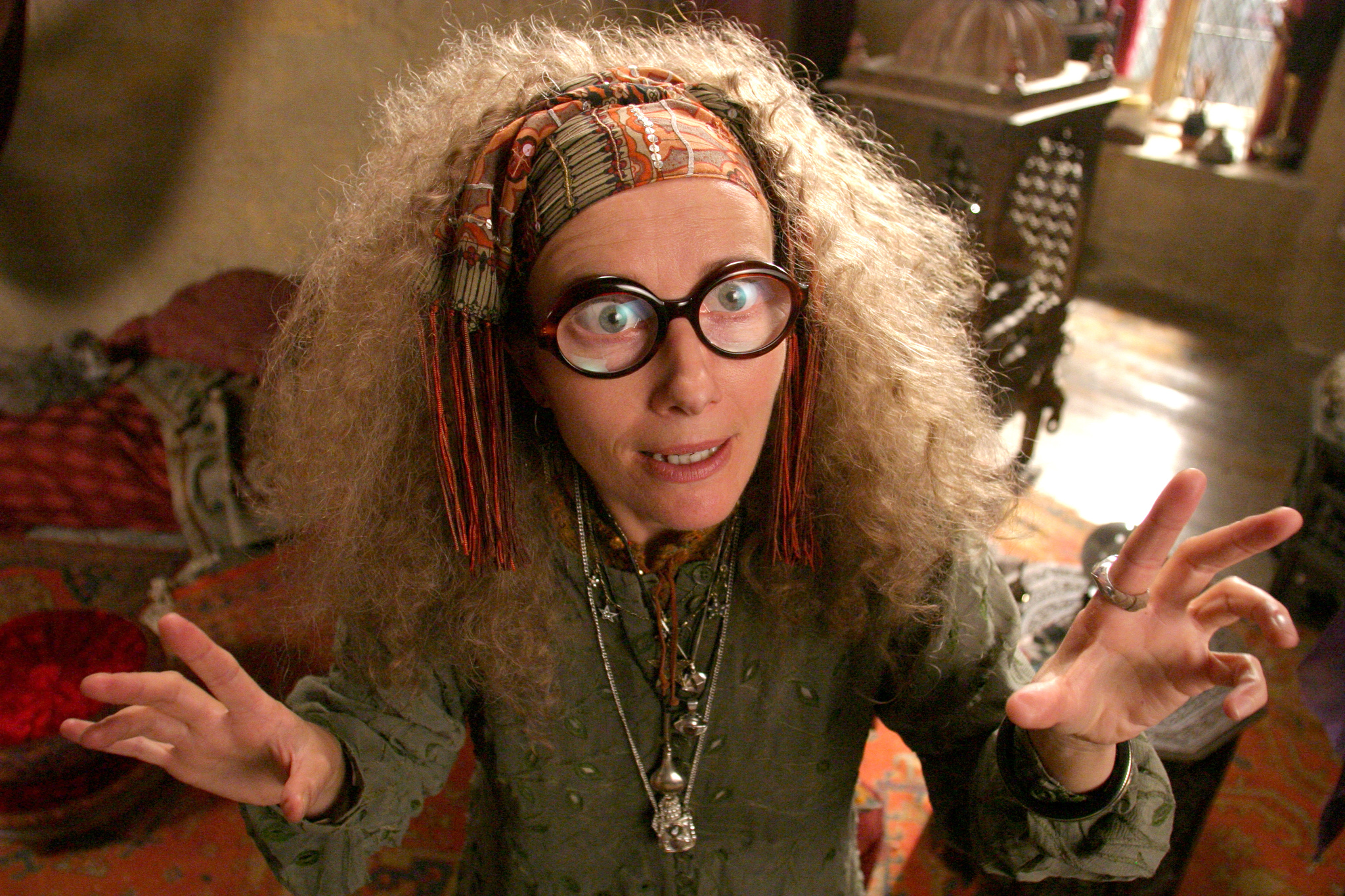
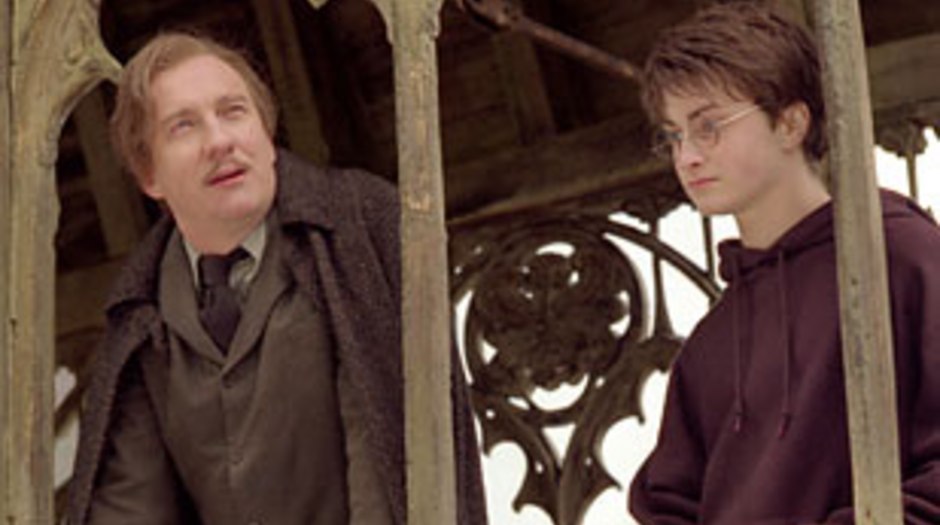
I also enjoyed those scenes that featured Remus Lupin's talent as a teacher, when he taught Harry and his classmates and later, Harry alone, about Boggarts and Dementors. Thanks to Emma Thompson's performance as the eccentric Divinity professor Sybil Trelawney, I really enjoyed the scenes featuring the students' lessons in that subject. More importantly, the movie featured one ominous scene in which Harry witnessed Trelawney unknowingly reveal a prediction regarding Voldemort and one of his minions. But I feel that without a doubt, the film's pièce de resistance proved to be the last third of the plot. I also enjoyed Professor Beginning with Harry, Ron and Hermione's visit to Rubeus Hagrid's hut in order to witness the execution of the hippogriff Buckbeak and ending with Harry and Hermione assisting in jailbreak; the entire sequence is brilliant example of fantasy, action and superb filmmaking from Alfonso Cuarón.

However, special effects and a first-rate narrative were not the only aspects that made "HARRY POTTER AND THE PRISONER OF AZKABAN" memorable for me. The movie also benefited from excellent performances from a first-rate cast. Now, a cast filled with actors and actresses of sterling reputations is not a guarantee of good performances. I still have memories of this film's successor - 2005's "HARRY POTTER AND THE GOBLET OF FIRE". Aside from one particular scene, "THE PRISONER OF AZKABAN" is blessed with first-rate performances. The movie had its share of solid performances - including from the likes of Richard Griffiths, Fiona Shaw and Harry Melling (who portrayed the Dursley family); a very entertaining Pam Ferris, who portrayed Vernon Dursley's sister, Marge Dursley; Timothy Spall in a brief, yet effective role as Peter Pettigrew and Julie Christie, who portrayed The Three Broomsticks owner Madam Rosmarta. More solid performances came from the likes of franchise regulars like Alan Rickman and his always entertaining performance as the surly Severus Snape, Robbie Coltrane (Rubeus Hagrid), Maggie Smith (Minerva McGonagall); James and Oliver Phelps as Fred and George Weasley, Tom Felton as Harry's nemesis Draco Malfoy, Mark Williams as Arthur Weasley, Julie Walters as Molly Weasley, and Robert Hardy as Minister of Magic Cornelius Fudge.

There were performances that I found memorable. The movie's three leads - Daniel Radcliffe, Rupert Grint and Emma Watson - gave excellent performances as Harry Potter, Ron Weasley and Hermione Granger respectively. In fact, I would say this film marked the first time they were able to ditch that heavy-handed style of acting that slightly tainted their performances in the first two films. Radcliffe did an excellent job of conveying Harry's struggles over his discovery that his parents had been betrayed. And I must admit that I found the interactions between Grint and Watson very entertaining as they portrayed Ron and Hermione's constant bickering and unwillingness to acknowledge their growing attraction to each other. I also enjoyed Robbie Coltrane's performance as Hogwarts gamekeeper-turned-Care of Magical Creatures professor, Rubeus Hagrid. I especially enjoyed Coltrane's scenes that featured Hagrid's awkward debut as a Hogwarts professor and his emotional attachment to the hippogriff Buckbeak.

"HARRY POTTER AND THE PRISONER OF AZKABAN" marked the first appearances of four cast members. And all four gave excellent performances. One proved to be Gary Oldman as the chaotic and desperate Sirius Black, the wanted fugitive who unhappily proved to be Harry's godfather. Emma Thompson gave one of the funniest performances in the entire movie franchise as Divinity professor Sybill Trewlawney . . . who may or may not be a genuine seer. I was very impressed by David Thewlis' subtle, yet dynamic performance as Hogwarts' new Defense Against the Dark Arts professor Remus Lupin. Michael Gambon had a difficult act to follow when agreed to replace the late Richard Harris as Hogwarts' Headmaster Albus Dumbledore. And may I say that he did a superb job of capturing Dumbledore's enigmatic and commanding nature with his own style.

Granted, I had a few issues with "HARRY POTTER AND THE PRISONER OF AZKABAN""THE PRISONER OF AZKABAN" proved to be one of the most unusual entries in the HARRY POTTER franchise and quite possibly my absolute favorite. In fact, my opinion of the film has not changed one whit in nearly twenty years.


Tuesday, January 2, 2024

"HARRY POTTER AND THE PRISONER OF AZKABAN" (2004) Photo Gallery


Below are images from "HARRY POTTER AND THE PRISONER OF AZKABAN", the 2004 adaptation of J.K. Rowling's 1999 novel. Directed by Alfonso Cuarón, the movie starred Daniel Radcliffe, Rupert Grint and Emma Watson:


"HARRY POTTER AND THE PRISONER OF AZKABAN" (2004) Photo Gallery


Sunday, October 29, 2017

"WONDER WOMAN" (2017) Review


image


“WONDER WOMAN” (2017) Review

Since the release of “MAN OF STEEL” back in 2013, the D.C. Comics Extended Universe (DCEU) franchise has been in a conundrum. Although the 2013 film and with the two movies that followed - “BATMAN V. SUPERMAN: DAWN OF JUSTICE” and “SUICIDE SQUAD” - were all box office hits, they had been heavily condemned by many film critics. Then along came “WONDER WOMAN”, the first superhero movie that featured a woman in the lead since 2005. 

Directed by Patty Jenkins, “WONDER WOMAN” is basically a flashback on the origins of Princess Diana of Thymerica aka Diana Prince aka Wonder Woman. Some time after the events of “BATMAN V. SUPERMAN: DAWN OF JUSTICE”, Diana received a package at her Antiquities Curator office at the Louvre Museum. It came from Bruce Wayne aka Batman and it contained the original photographic plate of her, Steve Trevor and their comrades during World War I: 


image


The photographic plate led Diana to recall her past, starting with her childhood on Thymerica Island. While being raised by her mother, the Amazonian Queen Hippolyta, Diana learns about Zeus’ creation of mankind and his son Ares’ jealousy of his father’s creation and the latter’s attempts to destroy humans. After the other Mount Olympus gods were killed by Ares, because of their attempts to stop him, Zeus created a weapon for the Amazonians, a “Godkiller”, in case Ares decides to return. Although Queen Hippolyta has no trouble telling Diana about Zeus, Ares and the other Mount Olympus gods; she forbids her sister and military leader of the Amazons, Antiope, to train Diana. Eventually she relents and demands that Antiope train Diana harder than the other Amazons.

During the last year of World War I, Diana rescues an American military pilot named Captain Steve Trevor, after his plane crashes off Themyscira’s coast. The island is soon invaded by German sailors from a cruiser, pursuing Trevor. The Amazons engage and kill all of the German sailors, but Antiope sacrifices herself to save Diana. Interrogated with the Lasso of Hestia, Trevor informs the Amazons about World War I, his position as an Allied spy and his mission to deliver a notebook he had stolen from the Spanish-born chief chemist for the German Army, Dr. Isabel Maru. The latter is attempting to engineer a deadlier form of mustard gas for General Erich Ludendorff at a weapons facility in the Ottoman Empire. Against her mother’s wishes, Diana decides to help Steve’s war efforts by leaving Themyscira and accompanying him to London. Recalling Hippolyta’s tales about Ares, she believes the latter is responsible for the war and hopes to kill him with the help of the Lasso of Hestia and the “Godkiller” sword that Zeus had left behind.

As I had earlier pointed out, “WONDER WOMAN” received a great deal of critical acclaim. In fact, it proved to be the first film in the DCEU franchise to do so, leading many to regard it as better than its three predecessors. Do I feel the same about the movie? Not quite. Do not get me wrong, “WONDER WOMAN” struck me as a first-rate movie that I found very entertaining. As a woman, I found it personally satisfying that it proved to the first successful comic book heroine film. More importantly, it was also the first comic but the first to be directed by a woman. In the end, “WONDER WOMAN” became one of my top favorite movies from the summer of 2017. Many people were surprised that most of the film - namely the flashback - was set during the last month of World War I, especially since Wonder Woman’s origin began during World War II. It could be that Warner Brothers wanted to avoid any comparisons with Marvel’s Captain America, whose origin began around the same time. I am glad that the movie was mainly set during World War. One, I feel that it would have been compared to Marvel’s 2011 film, “CAPTAIN AMERICA: THE FIRST AVENGER”. But more importantly, the World War I setting meshed better with the film’s portrayal of one of the villains, Erich Ludendorff.  And without the World War I setting, I would have never experienced one of the best action sequences I had seen this summer - Wonder Woman’s foray into “No Man’s Land”, as seen in the images below:


image


image

Thinking about the "No Man’s Land" sequence reminded me of other action scenes in the movie that I found satisfying. Those scenes include a montage of Diana’s training as a warrior, the Amazons’ defense of Thymerica against invading German sailors, Diana and Steve’s encounter with a group of German spies in a London alley. The “No Man’s Land” sequence eventually led to another fight in which Diana, Steve and their companions led a liberation of the Belgian town Veld, which had been occupied by the Germans. You know what? It is possible that I may have enjoyed this sequence even more than the charge across “No Man’s Land”. One, it lasted longer. And the sequence featured more of a team effort between Diana, Steve, their three companions and troops from the Allied Powers. In fact, one scene featured Steve remembering an Amazonian tactic from the Thymerica battle and utilizing it with Diana in Veld. I literally smiled at that moment.

But “WONDER WOMAN” was not all about action scenes. Personally, I regard the movie as a character study of its lead character. Ever since Diana had informed Bruce Wayne that she had walked away from mankind for nearly a century in “BATMAN V. SUPERMAN: DAWN OF JUSTICE”, I have always wondered what led her to become that slightly cynical woman. For me, “WONDER WOMAN” told that story … to a certain extent, thanks to Allan Heinberg’s screenplay. The Princess Diana aka Diana Prince that we see in this film is an intelligent woman with a fierce sense of justice and duty. Whereas her mother and other fellow Amazons want to isolate themselves from humanity and the rest of the world at large, Diana views Steve’s arrival and his revelation about the war being raged to save humanity from what she believed was Ares’ destructive influence. Diana is also portrayed as a compassionate woman incapable of turning a blind eye to the devastating effects of war upon the Belgian civilian population and servicemen like Charlie, a Scottish sharpshooter and ally of Steve’s, who suffered from posttraumatic stress disorder (PSTD). She also possessed enough compassion to become aware of the discrimination that Steve’s other two friends faced - the Blackfoot warrior and smuggler Chief Napi and the French Moroccan secret agent, Sameer.

But Diana’s belief in Ares’ role in the Great War also revealed some negative aspects of her personality. One aspect of Diana’s personality in this film was her naivety. There were scenes in which her naivety about the “world of man” that I found humorous - namely her shopping trip with Steve’s assistant, Etta Camp; her introduction to ice cream; and her discussions with Steve about human sexuality. But there were plenty of times when I found her naivety very frustrating - especially in those scenes in which Steve tries to explain the true ambiguous nature of human beings and the war. A good example was Diana’s interruption of the Allied Powers’ high command and her attempt to instruct the generals on how to “run a war”. Many found this scene as an example of Diana’s feminine empowerment. I found it as an example of her naivety and a bit of arrogance on her part. In these scenes, Diana seemed to display a stubborn, almost hard-headed and blind reluctance to let go of her misguided beliefs. Because of this unwillingness to believe she might be wrong about matters, Diana killed one of the characters believing him to be Ares without any real proof. I found this moment rather frightening. This hard-headed trait revealed what I believe was one example of Diana’s penchant for extreme behavior. Diana’s angry and frightening reaction to Steve’s sacrifice was another example. And the hard lessons she had learned about humanity, along with personal tragedy, led to her almost century long foray into emotional isolation. In many ways, Diana’s journey is that if an idealist, whose positive assumptions had been ripped away in the most painful manner.

While watching “WONDER WOMAN”, it seemed obvious to me that Patty Jenkins is more than a competent director. She is obviously first-rate. Mind you, I do not believe that she possesses Zack Snyder’s razor-sharp eye for imagery. And yet, judging from the sequences of the Thymerica battle, Diana and Steve’s arrival in London; along with the outstanding “No Man’s Land” sequence, it seems obvious to me that Jenkins has a solid grasp of imagery and is capable of being a visually original director. It helped that cinematographer Matthew Jensen and film editor Martin Walsh contributed to Jenkins’ visual presentation of “WONDER WOMAN”. I would not consider the costume designs from “WONDER WOMAN” to be among the best of Lindy Hemming’s career and a costume designer. But I thought she did an excellent job in designing the Greco-style costumes for the Amazons - including Diana’s Wonder Woman costume. And I found her re-creation of the 1918 wartime costumes for the characters of both genders well done: 


Although I believe there is a great deal to admire about “WONDER WOMAN”, I do have a few complaints. One of them happened to be Jenkins’ use of slow-motion filming in many of the film’s action sequences. Yes, I realize that Jenkins was not the first director to use this form of filming action scenes. Her fellow DCEU director, Zack Snyder, was notorious for his use of this technique - especially in his pre-DCEU films. Unfortunately, I found myself getting tired of the slow-motion technique not long after ten to fifteen minutes into the film. I mean … good grief! Jenkins not only used it in the film’s every action sequence, but also in one scene that featuring one of the Amazons’ combat training sessions. I just got tired of it … really fast.

My second problem with the film centered around the final action scene between Wonder Woman and Ares. I had no problems with Ares’ revelation about his identity. And I certainly had no problems with his revelations about the true nature of humanity and the war itself. And I found Wonder Woman’s reactions to his revelations and Steve Trevor’s sacrifice rather interesting. But why … why in God’s name did Jenkins and Heinberg find it necessary to have Diana say the following line to Ares before their final duel?

“It’s about what you believe. And I believe in love. Only love will truly save the world.”

While the sentiment is lovely, it contradicted Diana’s cynical attitude and words to Bruce Wayne, following Clark Kent’s death in “BATMAN V. SUPERMAN: DAWN OF JUSTICE”:

“A hundred years ago I walked away from mankind; from a century of horrors… Men made a world where standing together is impossible.”

Now, one could say that Diana had acquired this attitude during the 97 years between her showdown with Ares and the incident with Doomsday. But she made it clear to Bruce that she had walked away “a hundred years”, which is roughly between the end of World War I and “BATMAN V. SUPERMAN”, save three years. Why did Jenkins and Heinberg allow her to spout that line about how love with save the world? Was this some emotional sop to those critics and moviegoers who wanted to pretend that Diana had managed to avoid wallowing in her grief over Steve and disappointment over Ares’ revelation? If so, that is bad writing . . . or bad timing. Jenkins and Heinberg could have saved the line for Diana’s narration at the end of the movie. After she had received the photographic plate and Steve’s watch from Bruce … and after she had finally lifted herself from her cynicism and detached air.

I certainly had no complaints about the movie’s performances. Mind you, there were two performances that failed to knock my socks off. One came from veteran actor Danny Huston, who found himself saddled with the clichéd riddled character of General Erich Ludendorff. Huston did not give a bad performance. Being a first-rate actor, he did the best that he could with the material given to him. But the screenwriter’s portrayal of the character reeked with the Hollywood cliché of an aggressive German military officer, straight from the “Ve haf vays of making you talk” school of screenwriting. And I believe this may have hampered Huston’s performance. I also had a slight problem with Eugene Brave Rock, who portrayed one of Steve Trevor’s allies, Chief Napi. Rock was not a bad actor and I found him very likeable. But it was easy for me to see that he was not exactly the most experienced actor. And I was not surprised to discover that he had spent most of his film career as a stuntman and stunt trainer. When Ewan Bremner first appeared in the film, I suspected that he had been cast to portray another one of the many comic roles he has portrayed in the past. However, his character Charlie proved to be another kettle of fish. Thanks to Bremner’s skillful performance, Charlie proved to be a tragic figure whose peace of mind had been ravaged by the violence of war. Elena Anaya, whom I have never heard of before this film, gave an intelligent and intense performance asIsabel Maru aka Doctor Poison, the Spanish-born chemist recruited to create chemical weapons for the German Army and specifically, for General Ludendorff. Unlike the latter, Dr. Maru is a villainess straight from the pages of the D.C. Comics titles for Wonder Woman. And yet, thanks to Anaya’s performance, she was not portrayed in a ham-fisted manner. But I must admit that I adored Saïd Taghmaoui’s portrayal of French Moroccan secret agent, Sameer. I found his performance charming, witty and very intelligent. And in my view, he had the best line in the movie (about Diana, of course):

“I am both frightened… and aroused.”

Connie Nielsen’s portrayal of Diana’s mother, Queen Hippolyta of Thymerica proved to be more interesting that I had assumed it would be. Frankly, I thought Queen Hippolyta would be a somewhat bland parent figure, who was simply protective of her only daughter. In the end, Hippolyta’s protectiveness toward her daughter proved to have a major impact upon the latter. This same protectiveness, along with her world-weary response to Diana’s decision to leave Thymerica revealed the true, ambiguous nature of the character and Nielsen did an excellent job in conveying it. Robin Wright had an easier time in her portrayal of Diana’s aunt, Antiope. The actress not only did a great job, I was especially impressed at how she embraced the more physical aspects of the role. After all, Antiope was the Amazonian army’s lead general. I was very surprised to learn that the actress who portrayed Etta Candy, Steve Trevor’s assistant, was none other than Lucy Davis, who had a supporting role in the 1995 miniseries, “PRIDE AND PREJUDICE”. Personally, I adored her portrayal of Etta. Like Taghmaoui, she was a walking embodiment of charm and wit. I especially enjoyed Davis’ performance in the scene that featured Diana and Etta’s shopping trip. David Thewlis gave a superficially pleasant performance as the dignified Sir Patrick Morgan, a diplomatic liaison with the Imperial War Cabinet. I found him intelligent, subtle and a little tricky.

I have a confession to make. I have always liked Gal Gadot as a screen presence. Honestly. She has a very strong presence. But I have never considered her as a top-notch actress … until recent years. But I must admit that her portrayal of Princess Diana of Thymerica aka Diana Prince aka Wonder Woman really knocked my socks off. I was impressed at how Gadot managed to portray Diana during two distinctive phases in her life - the naive, yet stubborn young woman who seemed convinced that she knows what is best for the world in this film; and the cynical and weary woman who is somewhat contemptuous of the world in “BATMAN V. SUPERMAN: DAWN OF JUSTICE”. And she did such a marvelous job in conveying this two phases in Diana’s life … in two different films. Ms. Gadot has come a long way. I think Steve Trevor might one of my favorite roles portrayed by Chris Pine. Aside from the fact that he has great chemistry with Gadot, Pine gave a very entertaining portrayal of the American intelligence officer who first befriends Diana and later, falls in love with her. I found it fascinating to watch Pine convey Steve’s intelligence, cunning and wry sense of humor. I also found it fascinating to watch how Pine conveyed Steve’s struggles with Diana’s naivety, stubborness and impulsive behavior. And he did so with a great deal of skill.

“WONDER WOMAN” is the fourth film released through the D.C. Comics Extended Universe (DCEU). And like the other three, I found myself not only enjoying it very much, but also impressed by it. Aside from a few flaws, I thought director Patty Jenkins and screenwriter Allan Heinberg did a first-rate job in telling movie audiences the story of how Princess Diana of Thymerica became Wonder Woman … and how she also became that world weary woman from 2016’s “BATMAN V. SUPERMAN: DAWN OF JUSTICE”. And she did so with a first-rate movie crew and a wonderful cast led by Gal Gadot. 


image

Sunday, September 17, 2017

“WONDER WOMAN” (2017) Photo Gallery

kinopoisk.ru-Wonder-Woman-2958428

Below are images from "WONDER WOMAN", the latest entry in the D.C. Comics Extended Universe (DCEU) series and sequel to "BATMAN V. SUPERMAN: DAWN OF JUSTICE". Directed by Patty Jenkins, the movie stars Gal Gadot as Wonder Woman aka Diana Prince: 


"WONDER WOMAN" (2017) Photo Gallery

kinopoisk.ru-Wonder-Woman-2789376


kinopoisk.ru-Wonder-Woman-2835802


kinopoisk.ru-Wonder-Woman-2868893


kinopoisk.ru-Wonder-Woman-2908551


kinopoisk.ru-Wonder-Woman-2930749


kinopoisk.ru-Wonder-Woman-2930751


kinopoisk.ru-Wonder-Woman-2930753


kinopoisk.ru-Wonder-Woman-2930755


kinopoisk.ru-Wonder-Woman-2930756


kinopoisk.ru-Wonder-Woman-2954929


kinopoisk.ru-Wonder-Woman-2958418


kinopoisk.ru-Wonder-Woman-2958423


kinopoisk.ru-Wonder-Woman-2958424


kinopoisk.ru-Wonder-Woman-2958427


kinopoisk.ru-Wonder-Woman-2958429


kinopoisk.ru-Wonder-Woman-2958430


kinopoisk.ru-Wonder-Woman-2958431


kinopoisk.ru-Wonder-Woman-2958434


kinopoisk.ru-Wonder-Woman-2958435


kinopoisk.ru-Wonder-Woman-2958436


kinopoisk.ru-Wonder-Woman-2961251


kinopoisk.ru-Wonder-Woman-2961252


kinopoisk.ru-Wonder-Woman-2961253


kinopoisk.ru-Wonder-Woman-2961254


kinopoisk.ru-Wonder-Woman-2961255


kinopoisk.ru-Wonder-Woman-2968731


kinopoisk.ru-Wonder-Woman-2968732


kinopoisk.ru-Wonder-Woman-2968734


kinopoisk.ru-Wonder-Woman-2968735


kinopoisk.ru-Wonder-Woman-2968738


kinopoisk.ru-Wonder-Woman-2968739


kinopoisk.ru-Wonder-Woman-2968740


kinopoisk.ru-Wonder-Woman-2968741