"HARRY POTTER AND THE PRISONER OF AZKABAN" (2004) Review
I have a confession to make. I was not much of a fan of the HARRY POTTER franchise - both novels and movies - before the summer of 2004. Before that period, I had seen the first two movies, "HARRY POTTER AND THE SORCERER'S STONE" and "HARRY POTTER AND THE CHAMBER OF SECRETS". But I had never read any of the novels written by J.K. Rowling. Then in June 2004, I saw the franchise's third movie, "HARRY POTTER AND THE PRISONER OF AZKABAN" and my views changed.
Based upon Rowling's 1999 novel, "HARRY POTTER AND THE PRISONER OF AZKABAN" follows the adventures of thirteen-year-old Harry Potter during his third year at the Hogwarts School of Witchcraft and Wizardry. The story begins with Harry enduring a visit by his Aunt Petunia Durnsley's sister-in-law, Marge Durnsley, who proves to be just as boorish, narrow-minded and arrogant as the other members of the family. When "Aunt" Marge makes an insulting remark about Harry's late parents, the thirteen-year-old loses his temper and inadvertently causes the woman to inflate before she floats out of the house and into the sky. Still in a rage over her remarks and the rest of the family's reaction, Harry packs his belongings and leaves the Durnsley home. The Knight Bus - a magical transit bus for Britain's wizarding world - picks him up and transports Harry to London and Diagon Alley, where he is informed by the Cornelius Fudge, the Minister of Magic that a prisoner from Azkaban Prison named Sirius Black has escaped from prison. According to Fudge, Black was a former follower of Harry's arch-nemesis, Lord Voldemort, and vows to kill the thirteen-year-old in order to finish his master's task from years ago.
During Harry's third year at Hogwarts, he has to deal with a brewing conflict between his two best friends - Ron Weasley and Hermione Granger - over their respective pets. Hogwarts acquire a new Defense Against the Dark Arts instructor, an old friend of Harry's father called Remus Lupin. Harry and his friends also acquire two new instructors - Divination teacher Sybill Trelawney, and Rubeus Hagrid, the old gamekeeper who has begun teaching Care of Magical Creatures. Unfortunately, when a hippogriff named Buckbeak attacks Harry's nemesis Draco Malfoy during Hagrid's first class, the animal's life is hung in the balance by the Ministry that is under the influence of Draco's father, Lucius Malfoy. But Harry's biggest problems are the still missing Sirius Black, who has been spotted near the school; and the Dementors - soul sucking creatures from Azkaban, sent to Hogwarts by the Ministry to find Black. Due to Harry's bleak past, the Dementors are naturally attracted to his presence.
The movie's literary source, the 1999 novel, is highly regarded by the franchise's fans. The novel also won several literary awards and nearly came close to being nominated for the Hugo Award. And although I view the novel's main plot as one of the best created by Rowling, I must admit that I found it difficult to harbor such a high opinion of the novel. There were certain flaws that the 2004 movie managed to avoid, thanks to Steve Kloves' script. For me, I was relieved to discover that "THE PRISONER OF AZKABAN" only featured one Quidditch match - the first one that featured Harry Potter's second encounter with the dementors. But the novel's subplot featuring Harry and his fellow Gryffindor players' efforts to win the Hogwarts Quidditch Cup was completely ignored in Kloves' screenplay. And I say . . . THANK GOD!. I have never been a fan of Quidditch to begin with. I also found the Quidditch Cup subplot unnecessary to the main narrative. Some fans have pointed out that Harry first met both Cedric Diggory and Cho Chang in the 1999 novel. But the introduction of the two characters were brief and played no real part in the saga's main narrative. Their roles in the narrative became a lot more important in the next two novels. So, Kloves' deletion of their characters struck me as the right thing to do. Aside from one or two matters, Kloves did a first-rate job in adapting Rowling's novel to the screen. This is not surprising, considering that "The Prisoner of Azkaban" was the last "short" novel in the series before the remaining four became "mega novels".
Looking back on the movie, it occurred to me that it possesses a very simple plot. More importantly, the story featured the next set of many mysteries surrounding Harry's parents and the part they played in his current connection to the still formless Lord Voldemort aka Tom Riddle Jr. And one of those mysteries featured their close friend, Sirius Black.
"THE PRISONER OF AZKABAN" had a few flaws. Actually, there were two aspects of the story that did not sit well with me. One, I grew tired of Rowling coming up with an excuse for any of Harry's transgressions. In this particular movie, Sirius Black's escape from Azkaban allowed Minister of Magic Cornelius Fudge to dismiss Harry's temperamental use of magic against Madge Durnsley. And thanks to the Invisibility Cloak and the Maurader's Map given to him by Fred and George Weasley, Harry was able to sneak out of Hogwarts Castle and explore the nearby town of Hogsmeade without any trouble or parental permission. Speaking of the Maurader's Map, Remus Lupin revealed that the following was written on the map:
"Messrs Moony, Wormtail, Padfoot, and Prongs
Purveyors of Aids to Magical Mischief-Makers
are proud to present THE MARAUDER'S MAP"
Any fan of Rowling's novels knows that "Messrs Moony, Wormtail, Padfoot, and Prongs" are Harry's father James Potter, and the latter's friends - Lupin, Peter Pettigrew and Sirius Black. Why did Steve Kloves' screenplay failed to reveal their identities to moviegoers? Lupin could have told Harry in one of the movie's final scenes. And why was Kloves so determined to portray Ron Weasley as "comic relief"? I read somewhere that Hermione Granger was one of his favorite characters. I assume this is why he allowed her to speak one of Ron's more famous lines - erasing one of the latter's more positive traits and unnecessarily building up Hermione's traits even more. This final criticism is also directed at both the novel and the movie. According to Hermione Granger, time travel is considered dangerous by the wizarding world. So why did Minerva McGonagall allowed Hermione - third year a student - to use a time turner to attend more classes in the first place? And why did Albus Dumbledore task Harry and Hermione with the story's final rescue job . . . and not do the job himself? I have one more minor complaint - and it involved the verbal showdown between Potions professor Severus Snape and fugitive Sirius Black, both who were former classmates . . . and enemies at Hogwarts. Both Alan Rickman and Gary Oldman gave excellent performances in the film. But I must admit that I found their performances in this little showdown rather over-dramatic. Dare I say it? Hammy? There was more ham and cheese coming from the pair than a high school cafeteria.
When I first read Rowling's novel, I noticed that it did not have much action until the final sequence regarding the Shrieking Shack and Hermione's time turner. And yet, this did not diminish the story one bit. In fact, the story for "PRISONER OF AZKABAN" felt more like a character-driven mystery, with a heavy emphasis on the past. It is the first time Harry really learns about his parents' past through characters like Remus Lupin and Sirius Black. This is the first time Harry had discovered some of the details that led to his parents' deaths. This story marked the first time Harry learned about his parents' close friends - Remus, Sirius and Peter Pettigrew. "PRISONER OF AZKABAN" also marked the first time that one of the franchise's stories had ended on a bittersweet note. All of these aspects of the film's narrative, along with some very satisfying scenes and Alfonso Cuarón's superb and original direction had combined to make the 2004 film a big favorite of mine in the HARRY POTTER franchise.
As I had just stated earlier, there were scenes that struck me as crowd-pleasing or very memorable. I found Harry's ride on the Night Bus both exhilarating and hilarious. Another favorite sequence of mine featured the introduction of the Dementors, during the students' northbound journey on the Hogwarts Express. I thought Cuarón and the movie's special effects team did an excellent job in creating Harry's ominous introduction to the supernatural beings. Speaking of dementors, I also enjoyed the movie's Quidditch match between the Gryffindor and Hufflepuff teams during a thunderstorm. This match featured Harry's second encounter with the Dementors - one that nearly killed him. I also enjoyed the movie's Christmas sequence at the Hogsmeade village. What started as a playful sequence in which Harry used his Invisible Cloak to sneak out of Hogwarts (he lacked parental permission to join his fellow students' excursion into the village), ended on an emotional note after Harry vowed revenge after learning that one of his father's close friends had betrayed his parents to Lord Voldemort.
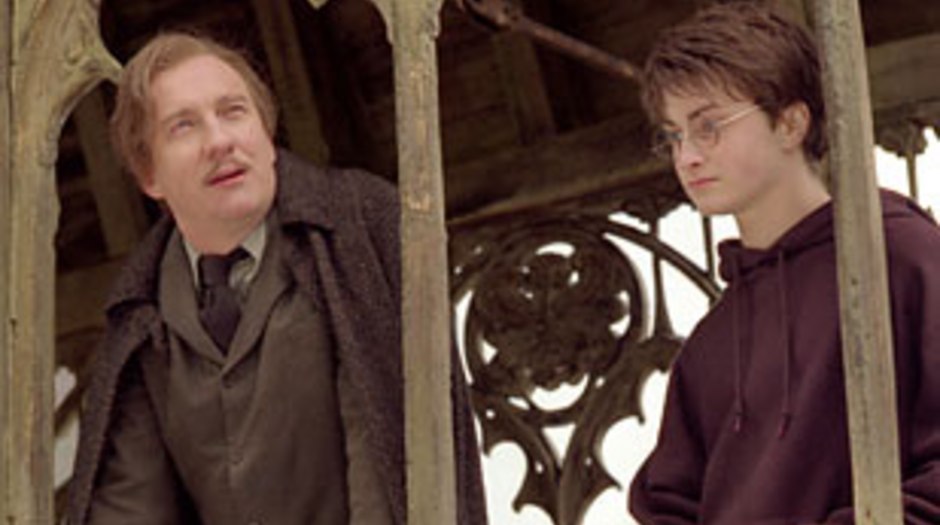
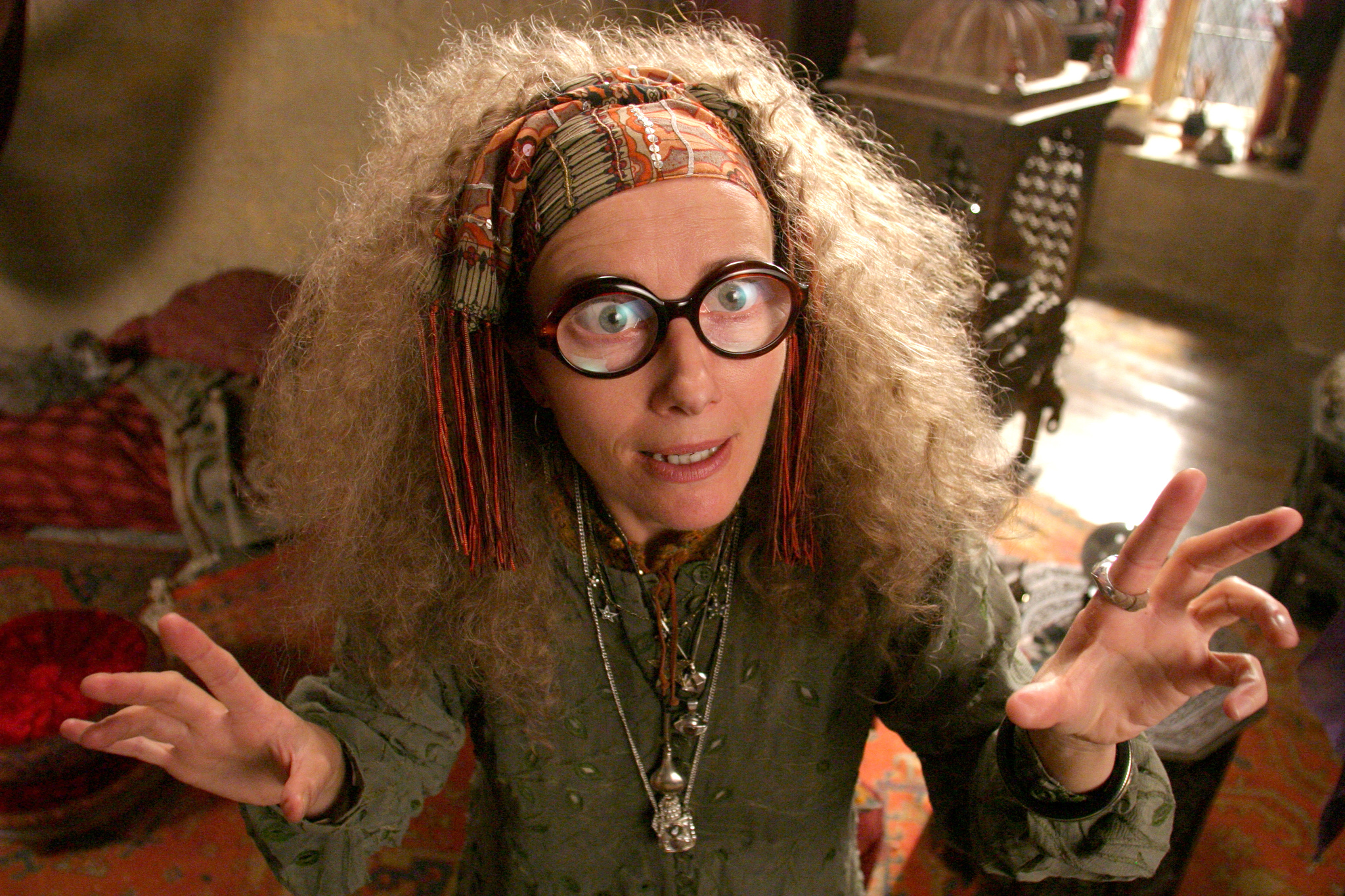
I also enjoyed those scenes that featured Remus Lupin's talent as a teacher, when he taught Harry and his classmates and later, Harry alone, about Boggarts and Dementors. Thanks to Emma Thompson's performance as the eccentric Divinity professor Sybil Trelawney, I really enjoyed the scenes featuring the students' lessons in that subject. More importantly, the movie featured one ominous scene in which Harry witnessed Trelawney unknowingly reveal a prediction regarding Voldemort and one of his minions. But I feel that without a doubt, the film's pièce de resistance proved to be the last third of the plot. I also enjoyed Professor Beginning with Harry, Ron and Hermione's visit to Rubeus Hagrid's hut in order to witness the execution of the hippogriff Buckbeak and ending with Harry and Hermione assisting in jailbreak; the entire sequence is brilliant example of fantasy, action and superb filmmaking from Alfonso Cuarón.
However, special effects and a first-rate narrative were not the only aspects that made "HARRY POTTER AND THE PRISONER OF AZKABAN" memorable for me. The movie also benefited from excellent performances from a first-rate cast. Now, a cast filled with actors and actresses of sterling reputations is not a guarantee of good performances. I still have memories of this film's successor - 2005's "HARRY POTTER AND THE GOBLET OF FIRE". Aside from one particular scene, "THE PRISONER OF AZKABAN" is blessed with first-rate performances. The movie had its share of solid performances - including from the likes of Richard Griffiths, Fiona Shaw and Harry Melling (who portrayed the Dursley family); a very entertaining Pam Ferris, who portrayed Vernon Dursley's sister, Marge Dursley; Timothy Spall in a brief, yet effective role as Peter Pettigrew and Julie Christie, who portrayed The Three Broomsticks owner Madam Rosmarta. More solid performances came from the likes of franchise regulars like Alan Rickman and his always entertaining performance as the surly Severus Snape, Robbie Coltrane (Rubeus Hagrid), Maggie Smith (Minerva McGonagall); James and Oliver Phelps as Fred and George Weasley, Tom Felton as Harry's nemesis Draco Malfoy, Mark Williams as Arthur Weasley, Julie Walters as Molly Weasley, and Robert Hardy as Minister of Magic Cornelius Fudge.
There were performances that I found memorable. The movie's three leads - Daniel Radcliffe, Rupert Grint and Emma Watson - gave excellent performances as Harry Potter, Ron Weasley and Hermione Granger respectively. In fact, I would say this film marked the first time they were able to ditch that heavy-handed style of acting that slightly tainted their performances in the first two films. Radcliffe did an excellent job of conveying Harry's struggles over his discovery that his parents had been betrayed. And I must admit that I found the interactions between Grint and Watson very entertaining as they portrayed Ron and Hermione's constant bickering and unwillingness to acknowledge their growing attraction to each other. I also enjoyed Robbie Coltrane's performance as Hogwarts gamekeeper-turned-Care of Magical Creatures professor, Rubeus Hagrid. I especially enjoyed Coltrane's scenes that featured Hagrid's awkward debut as a Hogwarts professor and his emotional attachment to the hippogriff Buckbeak.
"HARRY POTTER AND THE PRISONER OF AZKABAN" marked the first appearances of four cast members. And all four gave excellent performances. One proved to be Gary Oldman as the chaotic and desperate Sirius Black, the wanted fugitive who unhappily proved to be Harry's godfather. Emma Thompson gave one of the funniest performances in the entire movie franchise as Divinity professor Sybill Trewlawney . . . who may or may not be a genuine seer. I was very impressed by David Thewlis' subtle, yet dynamic performance as Hogwarts' new Defense Against the Dark Arts professor Remus Lupin. Michael Gambon had a difficult act to follow when agreed to replace the late Richard Harris as Hogwarts' Headmaster Albus Dumbledore. And may I say that he did a superb job of capturing Dumbledore's enigmatic and commanding nature with his own style.
Granted, I had a few issues with "HARRY POTTER AND THE PRISONER OF AZKABAN""THE PRISONER OF AZKABAN" proved to be one of the most unusual entries in the HARRY POTTER franchise and quite possibly my absolute favorite. In fact, my opinion of the film has not changed one whit in nearly twenty years.